Ibn Wahshiyya the Nabatean: An Arab Scholar Who Cracked Hieroglyphic Codes Five Centuries Before the Rosetta Stone

Who is Ibn Wahshiyya?
عرض النقاط الرئيسية
- Ibn Wahshiyya was an Iraqi Nabatean scholar interested in chemistry and linguistics, and he authored notable works on deciphering languages.
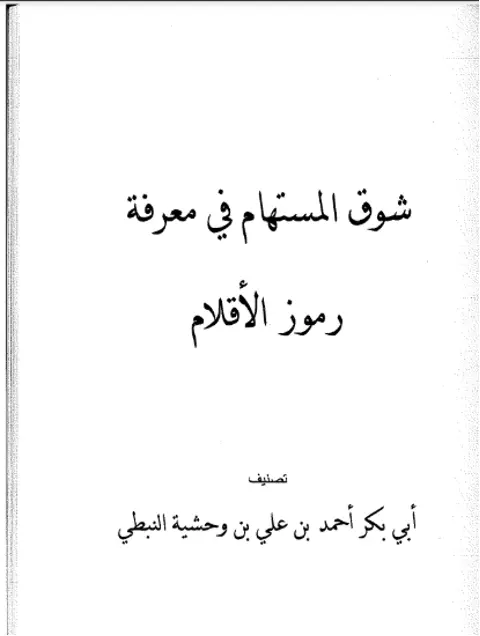
- One of his prominent works is the book "Shawq al-Mustaham fi Ma'rifat Rumuz al-Aqlam," which covered 89 different languages, including ancient Egyptian.
- Hieroglyphic writing was one of the writing systems for the ancient Egyptian language and not the language itself, as many believe.
- ADVERTISEMENT
- Besides hieroglyphics, ancient Egyptians used other scripts like Hieratic, Demotic, and Coptic for easier use.
- Ibn Wahshiyya deciphered hieroglyphics by observing that symbols had phonetic values and comparing them with Coptic and Arabic letters.
- It's believed that Ibn Wahshiyya's research and manuscript possibly paved the way for Champollion's later decipherment using the Rosetta Stone.
- Whether Champollion read Ibn Wahshiyya's manuscript or not, he used the same method of comparing Coptic and hieroglyphic texts.
His full name is "Abu Bakr Ahmad ibn Ali ibn al-Mukhtar," known as "Ibn Wahshiyya" the Nabatean or Chaldean, reflecting his origin. He was an Iraqi scholar born in Nabat and specialized in various sciences, with chemistry and linguistics piquing his interest most. He authored many books in these fields, including a famous linguistic work called "Shawq al-Mustaham fi Ma'rifat Rumuz al-Aqlam" and another titled "Shams al-Shumus wa Qamar al-Qamar fi Kashf Rumuz al-Huramsa."
A Single Book Covering 89 Languages, Including Ancient Egyptian Hieroglyphics
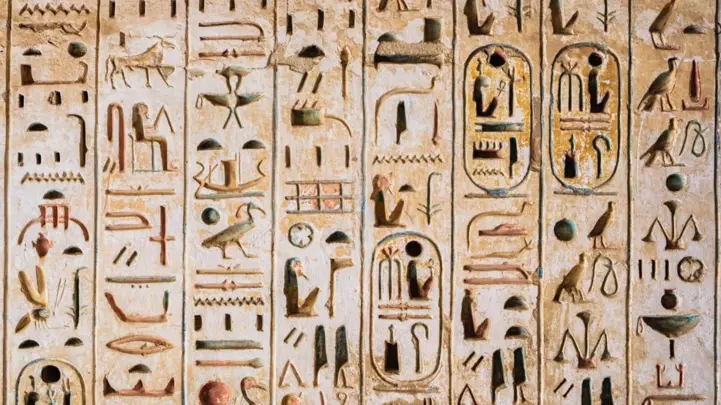
Hieroglyphic writing is just one of the methods used to write the ancient Egyptian language, yet many people confuse it with the language itself. However, hieroglyphic writing remained confined for centuries to religious and funerary texts, such as those in pyramids and both built and rock-cut tombs.
قراءة مقترحة
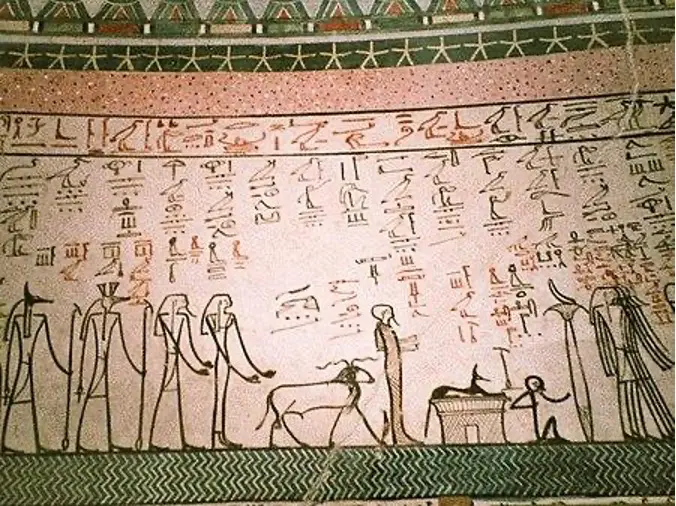
The ancient Egyptian language was also written in other scripts that were considerably easier than hieroglyphics, which were carved with chisels. Examples include Hieratic, Demotic, and Coptic scripts, written with reed pens and ink. During the later stages of ancient Egyptian civilization, particularly in the New Kingdom, a simplified script of the hieroglyphs emerged, used to inscribe the "Amduat" on the walls of the tomb of the greatest warrior king, Thutmose III, in the Valley of the Kings.
Hieroglyphics Are Not a Language
Hieroglyphic writing is just one of the methods used to write the ancient Egyptian language, yet many people confuse it with the language itself. However, hieroglyphic writing remained confined for centuries to religious and funerary texts, such as those in pyramids and both built and rock-cut tombs.
The ancient Egyptian language was also written in other scripts that were considerably easier than hieroglyphics, which were carved with chisels. Examples include Hieratic, Demotic, and Coptic scripts, written with reed pens and ink. During the later stages of ancient Egyptian civilization, particularly in the New Kingdom, a simplified script of the hieroglyphs emerged, used to inscribe the "Amduat" on the walls of the tomb of the greatest warrior king, Thutmose III, in the Valley of the Kings.
How Hieroglyphic Codes Were Deciphered by "Ibn Wahshiyya" and Later "Champollion"
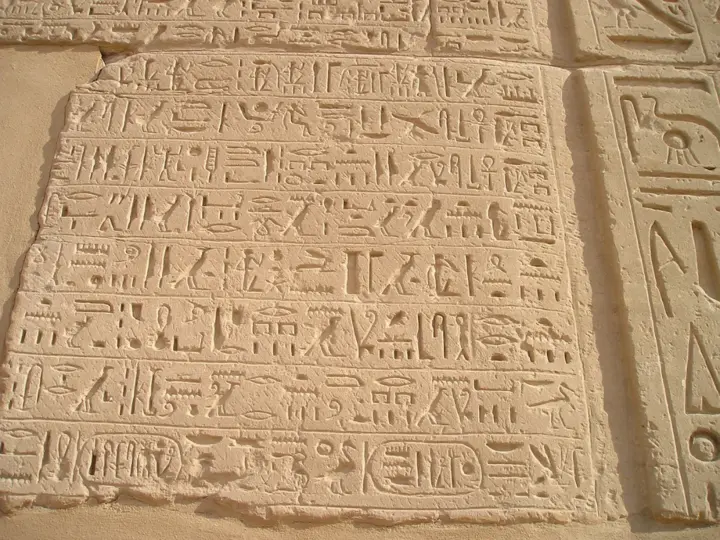
Deciphering hieroglyphic script wasn't easy due to its diverse signs. Unlike contemporary scripts like Phoenician, Akkadian, cuneiform, and even ancient Greek—which mostly used Coptic writing that entered Egypt with Alexander and later under the Ptolemaic rule for over two centuries—hieroglyphics lacked a single pattern.
The key to decoding these hieroglyphics by scholars like Ibn Wahshiyya was recognizing that the symbols carried phonetic values, with each symbol representing one or more sounds and combinations conveying meanings. The use of the Coptic language in writing Egyptian texts helped Ibn Wahshiyya explore this discovery. He compared the hieroglyphics to Coptic and later Arabic letters, realizing that these intricately drawn symbols—comprising straight and curved lines, animals, plants, and even dots—were not mere decorative motifs for temple and tomb walls but meaningful texts narrating ancient histories experienced by past Egyptians.
Ibn Wahshiyya Set the Path Followed by Others
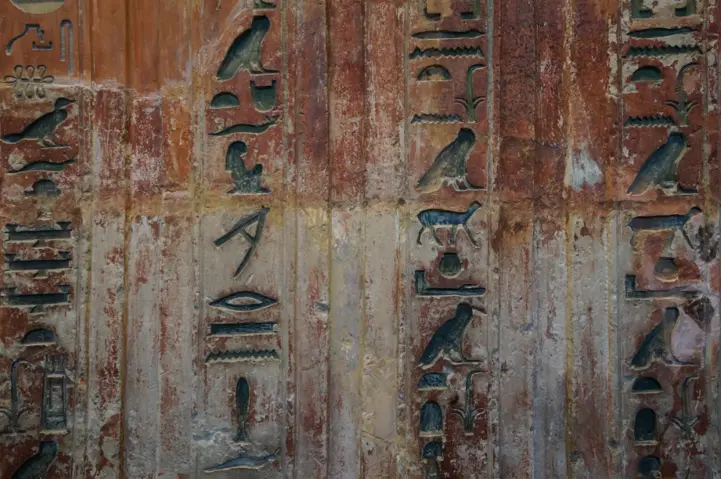
Some scholars believe that "Ibn Wahshiyya" laid down the steps that later guided "Champollion" and other researchers in trying to unravel these mysterious symbols that encapsulate the tales of the greatest civilization the world has ever seen. Although it is uncertain if "Champollion" consulted "Shawq al-Mustaham," translated by "Joseph von Hammer-Purgstall," whether he did or not, Champollion employed the same strategy as "Ibn Wahshiyya" by comparing texts written in Coptic and hieroglyphic scripts on a single stone—the Rosetta Stone—thus paving the way for decoding other texts with the key extracted using this method, first set forth by the Arab scholar "Ibn Wahshiyya the Nabatean."