The mobile phone has become essential to our daily lives, replacing many earlier inventions. It is now a modern way to communicate with friends, family, classmates, and colleagues. After the coronavirus pandemic, phones became even more important: they replaced classrooms and meeting rooms and became tools for education, work, and
ADVERTISEMENT
culture, as well as means of entertainment, communication, and social life.
Men's and women's needs differ, but this article focuses on some apps you may want to download and use in daily life. There are thousands of apps; here we recommend just a few.
1. Chloe App
Photo from Unsplash
The app helps you track your period more easily. Through the app you can monitor the regularity of your monthly cycle and find your fertile window and ovulation date using a scientific calculation method. The app helps you notice the changes that occur in your body during your cycle.
ADVERTISEMENT
It also reminds married women who use birth control when to take their pill and indicates the best days for conception for those trying to get pregnant. During pregnancy, the app helps you follow the months of pregnancy, record symptoms, and monitor fetal development.
On Google Play, about 10 million people around the world have downloaded the app and benefited from its services. You can download it from Google Play or the Apple Store depending on your device. The FLO app offers similar services. Download the app that best suits your needs from the two options.
2. Life360 Family Locator App
Photo from Pixabay
This is a personal safety app that girls, women, and children alike may need. Safety apps are among the most important tools today, yet many people do not have one on their phones. This app helps you see where family members are and keep track of your children arriving at school. It also lets you send your location to family members if you need help or feel at risk.
ADVERTISEMENT
The app provides a room to chat with family members who have downloaded the same app. If your phone is lost, you can access its location by tracking it from a loved one’s device.
3. FitNotes App
Photo from Unsplash
Many of us find it hard to follow a proper diet, and following a daily plan without a nutrition professional is even harder. This app helps by letting you enter your daily habits, hours of sleep, and work routine, from which it calculates suitable targets for weight loss in a scientific way. The app provides nutrition and exercise plans that fit your lifestyle.
If you go to the gym, the app can give you a plan that matches your workout routine. Google Fit offers similar services, and both apps are free—you don’t need a subscription to use them.
ADVERTISEMENT
Photo from Pixabay
Photo from Unsplash
If you love cooking, this app will be very useful. It opens a window to recipes from cuisines around the world. You will find many options, choose what suits your taste and your family’s, and enjoy a fresh cooking experience every time.
The app features audio guides and images that show how to prepare different recipes. If you’re looking for a drinks app, Mixology Drink Recipes will help you create beverages for the whole family.
5. SheRoes App
This is a great app for women: a women-only community where you can share experiences and learn from others to grow together. It supports and empowers you, and through it you can make friends. You can also learn how to start your own business and receive tips for work and relationships. It also provides psychological support through counseling.
ADVERTISEMENT
You can collaborate with others, buy and sell products, and attend classes or seminars. The app and website are managed by a group of specialists who help you manage your life better. The app is a safe, exclusive community for women.
Noha Mousa
ADVERTISEMENT
Illuminating the Universe: The Spectacular Light Displays of Stellar Explosions
ADVERTISEMENT
In the vast, mysterious depths of the universe, a symphony of astonishing light unfolds. These are the displays of stellar explosions—magnificent natural events that occur when stars end their lives in colossal blasts. They rank among the cosmos' most thrilling spectacles, offering mesmerizing shows of
ADVERTISEMENT
light, color, and energy.
Understanding Stellar Explosions: What They Are and How They Occur
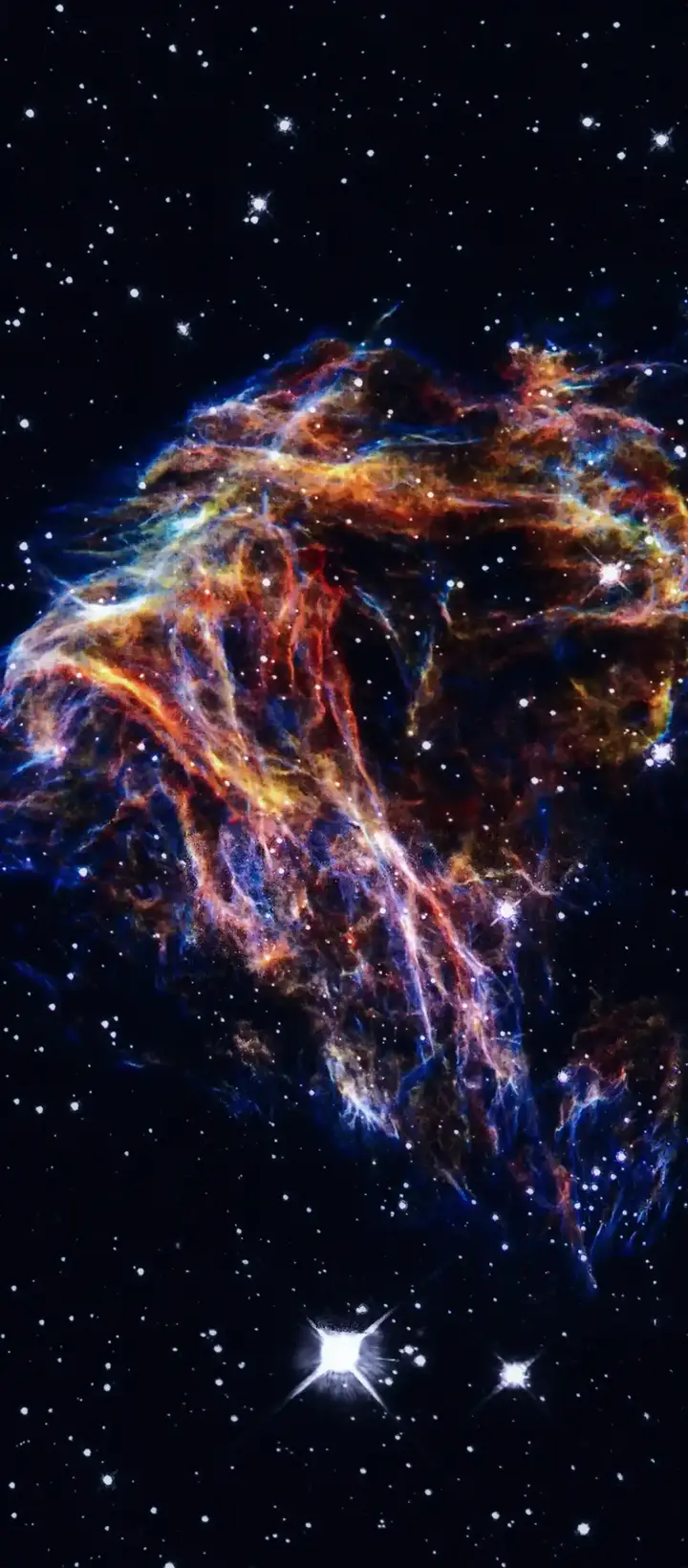
Photo via Me_PaulP on Pixabay
Stellar explosions are among the most awe-inspiring phenomena in the cosmos. They mark the end of a star's life, unleashing tremendous energy in massive blasts that light up the skies and create striking visual displays. Despite their beauty, understanding these events requires careful study and detailed analysis.
ADVERTISEMENT
These explosions happen when a star runs out of nuclear fuel and its internal pressure falls. Without enough thermal pressure to counter gravity, the star collapses. A dense core of neutrons and protons forms—commonly called a neutron star. At the moment of explosion, this dense core is subjected to enormous pressure and can be driven outward into space, releasing light, gamma rays, X-rays, and other radiation.
Determining what triggers stellar explosions demands extensive research into the stars' internal gravity, nuclear reactions, and thermal changes. Factors such as a star's mass, chemical composition, age, and size all play a role. By studying these factors we can better predict and analyze stellar explosions.
ADVERTISEMENT
Stellar explosions are extraordinary astronomical events. They produce vast displays of light, energy, and color that mark both an end and a beginning—returning material to space that can seed new stars and planets. Learning about this phenomenon deepens our understanding of the universe's evolution and advances astronomical science. Let us explore and appreciate this enchanting realm and its profound secrets.
Gamma Rays: The Bright Lights of Stellar Explosions
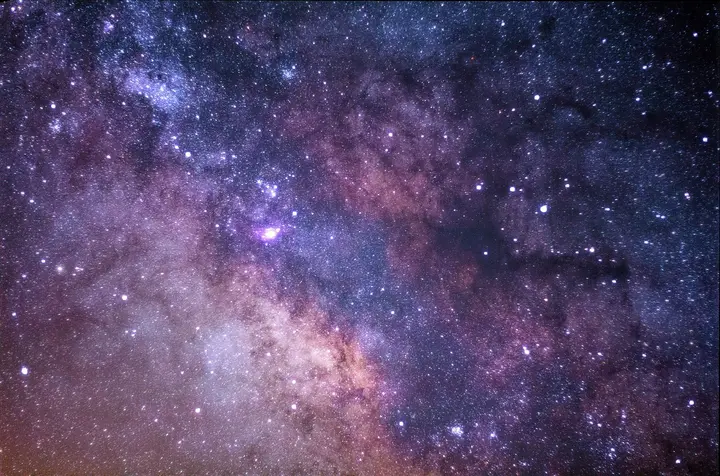
Photo via StockSnap on Pixabay
You may glimpse flickering bright light in the night sky. Much of this mysterious light comes from enormous stellar explosions that produce gamma rays. These are described in the text as the longest cosmic rays that reach Earth, and they carry many mysteries that draw scientists' curiosity.
ADVERTISEMENT
When a star ends its life in a massive explosion, a huge amount of energy is released. Much of this energy appears as gamma rays—among the most intense and penetrating forms of radiation we observe in the universe. Their effects can extend for thousands or even millions of light-years.
Gamma rays are characterized by extremely high energy and consist of particles or photons that travel through space at the speed of light. For astronomers, these rays open a window onto energetic cosmic events that we closely monitor and study.
These bright rays present many mysteries and technical challenges. They are not easy to detect or trace; observing them often requires powerful instruments such as space telescopes and satellite observatories to pinpoint their origin and understand their nature.
ADVERTISEMENT
Exploring gamma rays is an exciting scientific challenge that helps us learn how stars form and disintegrate and how those processes affect the surrounding universe. Detecting and analyzing gamma rays improves our picture of cosmic evolution and formation.
Through the study of gamma rays, we uncover immense energy and stunning light shows that highlight the universe's beauty. They remind us that much more is happening in the dark night than meets the eye, with remarkable stories unfolding in the displays of stellar explosions. Let us remain eager to uncover more of the universe's secrets and the gleaming gamma rays above.
What Stellar Explosions Can Reveal About the Formation of the Universe
ADVERTISEMENT
Photo via tombud on Pixabay
Stellar explosions have a remarkable ability to reveal secrets about how the universe formed and how its complex processes operate. When stars explode, they release vast amounts of energy and matter into space, giving us a unique chance to study their effects and trace cosmic history. Below are some of the things stellar explosions can teach us about the universe's formation:
1. Formation of Elements: Stellar explosions are a key factor in creating chemical elements in the universe. When stars explode, they release many elements into space, including heavy elements such as iron, gold, and silver.
2. Star Evolution: By studying stellar explosions, we can understand how stars evolve from birth to death. These eruptions provide valuable information about the physical and chemical processes inside stars that shape their formation and development.
ADVERTISEMENT
3. Age of the Universe: Examining stellar explosions and their effects helps us estimate the age of the universe and understand how it has changed over time. Stellar explosions serve as chronological markers that help pinpoint specific eras in cosmic history.
4. Cosmic Structures: Stellar explosions influence the formation of larger cosmic structures, such as new stars and galaxies. The gas and matter they release can clump together and form new stars, contributing to galaxy formation.
5. Dark Energy and Dark Matter: It is believed that studying stellar explosions may shed light on mysterious entities like dark energy and dark matter. These explosions could reveal previously unknown effects of energy and matter, helping us interpret the nature of these enigmatic phenomena.
ADVERTISEMENT
6. Life in the Universe: Stellar explosions give us a window into conditions that might support life elsewhere. By analyzing explosion patterns and their effects on planetary systems, we can search for signs of planets and star systems that could be hospitable to life.
There is no doubt that stellar explosions offer a unique way to unveil the universe's formation and its complex workings. By studying this spectacular phenomenon, we gain the chance to explore deep cosmic secrets and broaden our understanding.
The Impact of Stellar Explosions on Life on Earth
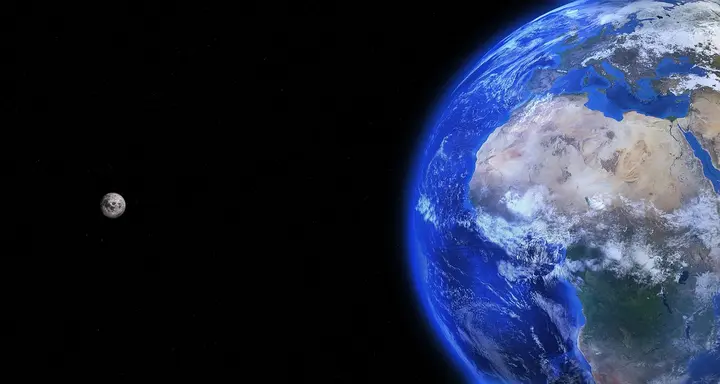
Photo via qimono on Pixabay
Stellar explosions are not only captivating cosmic light shows; they can also affect life on Earth. These explosive events can influence our planet's environment and organisms. How do their light and energy affect living things? Let us take a closer look.
ADVERTISEMENT
Cosmic Radiation Impact: Stellar explosions release huge amounts of energy, including cosmic radiation. This radiation can reach Earth and directly affect living organisms. It may cause changes to DNA and influence biological evolution. Such effects could alter heredity, reproduction, and the general health of some species.
Atmospheric Impact: Stellar explosions interact with Earth's atmosphere and can affect the ozone layer. Large amounts of cosmic radiation can damage part of the ozone layer, allowing more harmful ultraviolet light to reach the surface. This can impact plants, animals, and human health.
Formation of Heavy Elements: Stellar explosions are also sites for producing heavy elements like iron, gold, and silver. When massive stars explode, these elements are expelled into space. Earth can receive some of this material via comets or meteors, which may alter the planet's geological composition.
ADVERTISEMENT
Captivating Light Impact: Stellar explosions provide mesmerizing light displays that can affect our emotions and imagination. The awe they inspire can influence thought and creativity, and it may spur advances in science and the arts.
Stellar explosions have a notable impact on life on Earth. They present both challenges and opportunities for scientists studying the universe's depths and its complex interactions. Despite potential negative effects, these events also prompt reflection and inspiration, reminding us that we are part of a vast and beautiful cosmos.
The Physical Effects of Stellar Explosions on the Universe
Photo via Archange1Michael on Pixabay
Stellar explosions leave a distinctive mark on the universe, releasing vast amounts of light, energy, and charged particles. A major physical effect occurs when this explosive energy is ejected into space, triggering a range of phenomena that affect the cosmic environment. Let us examine some of these effects and how they shape the universe.
ADVERTISEMENT
When a star explodes, its material is violently expelled. Gas molecules and charged particles form an expanding cloud that stretches through space. Some of this material is pushed by stellar winds and other explosive forces. As these particles interact with surrounding gas and dust, they can create varied structures—such as spinning nebulae and bright knots of light. These physical effects can extend across enormous distances.
Beyond these visible changes, stellar explosions can also alter the velocities of nearby stars and planets. The force of expelled material may nudge a celestial body from its usual path, changing planetary orbits and affecting local gravitational fields. This movement underscores the power of the natural laws that govern the cosmos.
ADVERTISEMENT
Stellar explosions also release vast amounts of energy. They are significant sources of heat and radiation, releasing enough energy to heat surrounding regions and influence the distribution of material. This thermal energy affects local conditions and contributes to larger-scale changes in the universe's structure.
The consequences of stellar explosions are not limited to visible disruption; they also deepen our scientific understanding of the cosmos. Studying these events allows scientists to probe the universe's fundamental nature and uncover its hidden processes. Whatever their effects, stellar explosions offer a richer view of the universe and its intricate workings.
Shaping the Future: How Understanding Stellar Explosions Contributes to Future Space Research and Discovery
ADVERTISEMENT
Photo via TweSwe on Pixabay
In our advanced technological era, understanding stellar explosions plays an important role in guiding future space research and discovery. Studying this phenomenon improves our knowledge of planet, star, and galaxy formation and gives us deeper insight into the universe's secrets. As astronomical tools and techniques improve, we can record and analyze stellar explosions with greater precision, advancing space exploration.
By uncovering how stellar explosions work, we can identify the factors that influence them and better understand how stars change over time. This knowledge may help predict future stellar behavior and clarify stars' roles in forming planets. It also sheds light on how explosions affect surrounding gas and matter, helping us understand galaxy formation and structure.
ADVERTISEMENT
Studying stellar explosions may also open new ways to discover exoplanets and assess the possibility of life beyond Earth. If we learn to recognize explosion patterns and their effects on planetary systems, we could find signs of worlds that might host life. This possibility expands the horizons of future discovery.
Moreover, research into stellar explosions drives improvements in astronomical technology and the capabilities of space observatories and instruments. As our understanding grows, so does the accuracy and efficiency of the tools we use to observe and analyze new events. Better observation leads to deeper discoveries about the universe.
Our study of stellar explosions is not merely about admiring beautiful cosmic phenomena; it represents a genuine leap forward in space research and discovery. It points toward a future in which these events may help unlock the universe's secrets—and perhaps, one day, guide human exploration beyond our own star.
ADVERTISEMENT
Photo via jordygoovaerts0 on Pixabay
The light cast across the cosmos by stellar explosions inspires both astronomers and artists. These awe-inspiring displays reveal the power and beauty of the universe we inhabit. As research and technology advance, our understanding of these phenomena will continue to evolve, opening doors to new discoveries. Let us be ready to witness the dazzling light shows of stellar explosions and learn from them about the universe's beauty and deep secrets.
Cemre Yildirim
ADVERTISEMENT
Constantine: The City of Suspended Bridges in Algeria
ADVERTISEMENT
If you are captivated by Venice, the floating city of Italy, you will surely fall in love with Constantine. The city is layered with civilizations stretching back more than 2,500 years, a historical tapestry that even contains prehistoric remnants. Founded by Phoenician traders, it later became a
ADVERTISEMENT
Berber capital, then a Roman city, before joining the Islamic world, coming under Ottoman rule, and later French occupation; today it is a quintessential Arab city.
Constantine is built entirely on rocky cliffs carved by the Rhumel River, which divides the city into two parts and makes walking between them impractical. For that reason, suspended bridges were built to link the different districts.
ADVERTISEMENT
The city goes by many names. It is called the "City of Ancient Rock" because it stands atop stone, and the "City of Suspended Bridges" or "The Hanging City" because its bridges seem to hang in the sky. Poets have also dubbed it the "City of Air and Love" for its mild climate, the warmth of its people, and the orchards and trees that give it fresh, inspiring air. Its modern name, Constantine—sometimes called "Algeria's Constantinople"—comes from the Roman emperor Constantine, who rebuilt the city after the Byzantines destroyed it.
Constantine’s cultural and religious identity reflects the many civilizations and faiths that have converged there. In 2015 it was rightly named the Capital of Arab Culture, an honor marked by numerous cultural events and celebrations. The city fills its residents with pride and hospitality, and they welcome over a million visitors from around the world to share in its charm.
ADVERTISEMENT
Suspended Bridges in the City of Constantine
Photo via Unsplash
Eight bridges were built at different times to ease movement across the gorge. Standing on them gives you panoramic views of the city and its landmarks. The Sidi M'Cid Bridge, a structure that seems to touch the sky, was built by the French and is the highest, at 175 meters.
The Sidi Rached Bridge is named after a local saint whose tomb lies beneath it. The oldest bridge in the city is Bab El Kantra, built by the Turks. Other, smaller crossings include the Devil's Bridge, which spans the Rhumel and offers dramatic views of the gorge, and the Waterfalls Bridge, under which the Rhumel forms cascading falls. Because of the river’s abundance of water, there is a proposed project to turn part of it into large fish ponds. If you want to walk a bridge purely to enjoy the view, try the Elevator Bridge: an iron, pedestrian-only span that provides an excellent vantage point over the city.
ADVERTISEMENT
Historical and Cultural Landmarks in the City of Constantine
Photo via Pixabay
Constantine is a living historical panorama: prehistoric rock tombs, Roman arches, and the 19th-century Beys' Palace with its striking Islamic architecture all survive side by side. Traces of the French period remain, too, including the train station and the French theater, both fine examples of French architectural style.
The city is also known for its mosques, notably the Emir Abdelkader Mosque, the largest in North Africa, whose two minarets rise to 107 meters as if speaking to the clouds. Designed in an Andalusian style by Algerian, Moroccan, and Egyptian architects, the mosque can hold 15,000 worshippers. The diversity of Constantine’s architecture is a moral and aesthetic legacy, reflecting everyone who passed through and helped shape the city.
ADVERTISEMENT
Handicraft markets are integral to Constantine’s heritage. You will find specialized souks: a weaving market where items are embroidered with gold thread, a coppersmiths' market known for copperware, a butcher's market, and others—each focused on a single craft or trade.
Constantine has long been a city of scholars and thinkers, producing many scientists and intellectuals. Among its famous writers is the novelist Ahlam Mosteghanemi, who won the Naguib Mahfouz Medal for Literature, an award for contemporary novels. Standing amid the city as it seems to kiss the sky, it is easy to imagine why the place fosters creativity and reflection. The city is also famed for Andalusian music.