The Ma’rib Dam: Legacy of Ancient Engineering in Yemen

Located in central Yemen, the Marib Dam is one of the greatest engineering achievements of ancient times and considered one of the finest examples of stone architecture in the Arabian Peninsula. This massive structure is not only a testament to the ingenuity of ancient civilizations, but it was also a source of life for one of the most powerful kingdoms of the Arabian Peninsula for centuries.
Show key points
- The Marib Dam, located in central Yemen, is hailed as one of the most remarkable engineering feats of ancient times and a prime example of stone architecture in the Arabian Peninsula.
- Initially constructed between the second and first millennia BC, the dam underwent several phases of development and maintenance, highlighting its enduring importance to regional agriculture and society.
- Built to regulate seasonal rainwater and prevent devastating floods, the dam enabled sustainable irrigation that supported large-scale agricultural production in an arid environment.
- ADVERTISEMENT
- The prosperity granted by the dam's irrigation system helped the Sabaean Kingdom thrive economically and culturally, establishing it as a key player along vital trade routes like the Frankincense Route.
- Architecturally, the dam spanned 720 meters with stone foundations and sophisticated spillways that directed water through a vast network of canals to irrigate farmlands.
- Despite maintenance efforts by successive civilizations, including the Himyarites, the dam ultimately collapsed in 570 AD, potentially due to natural disasters or mythical causes, leading to significant societal upheaval.
- Today, the remains of the Marib Dam offer crucial insights into ancient water management and continue to be the subject of archaeological research, although ongoing conflict has endangered its preservation.
Construction Period of the Marib Dam
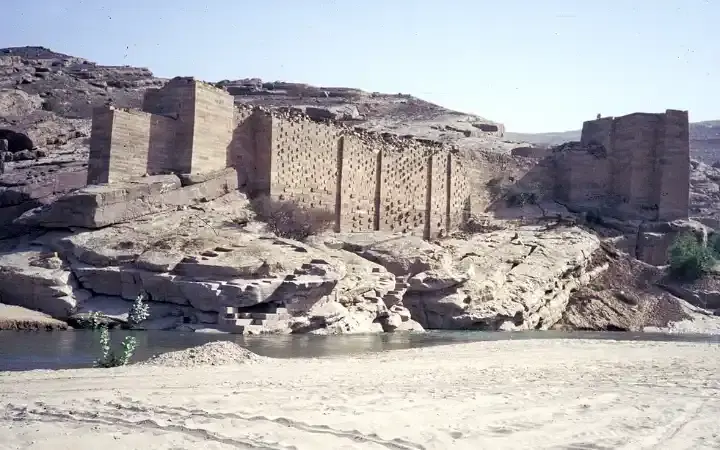
Construction of the Marib Dam began between the second and first millennium BC. Historical inscriptions indicate that the Sabaean king Simhu Ali Yanaf and his son Yadh'amar Bin played a major role in the dam's construction during the eighth or seventh century BC. However, recent archaeological excavations have revealed that the dam underwent multiple construction phases over many centuries, indicating that its construction was not a single event, but rather a continuous and evolving project. This long period of construction and maintenance underscores the dam's importance as a vital engineering landmark and a necessity for agricultural life in the region.
Recommend
The Reason for Building the Marib Dam
The primary objective of building the Marib Dam was to control the flow of seasonal rainwater, which falls heavily on the eastern highlands, and to prevent floods that were devastating the agricultural lands of Wadi Dana. Furthermore, the dam provided a sustainable water reserve for irrigation throughout the year, allowing for large-scale agricultural production in an arid region known for its water scarcity. The dam was vital to sustaining the population and stabilizing the economy of the Sabaean Kingdom, which relied heavily on agriculture and trade. It enabled it to support its prosperous society and increase its agricultural production.
The Impact of the Marib Dam on Ancient Arab Civilizations
The Marib Dam left a profound impact on ancient Arab civilizations. It was not just an engineering structure, but a cultural symbol reflecting the ingenuity of the ancients in managing water resources. The dam enabled the Sabaean Kingdom to achieve tremendous agricultural prosperity, supporting its strong economy and its position in international trade, particularly along the famous Frankincense Route. This agricultural prosperity contributed to promoting cultural and political development in southern Arabia, and the Sabaean Kingdom was a major cultural center that enriched the ancient Arab heritage. The dam also set an engineering model that inspired subsequent water projects in the region, making it a landmark in the history of Arab and human civilizations.
A Dam That Shaped an Entire Civilization
The Marib Dam, also known as the Great Dam of Marib, was built primarily for water storage and irrigation, enabling agriculture in an arid climate. For centuries, the dam regulated seasonal rainwater and fed a complex network of irrigation canals that brought life to the heart of the Sabaean kingdom.
The dam was essential for transforming Yemen's dry lands into fertile fields. It captured seasonal rainwater and prevented devastating floods, while ensuring a constant water supply throughout the year. The dam-fed irrigation system irrigated thousands of hectares of farmland, enabling the Sabaeans to grow staple crops such as wheat, barley, and fruits. This agricultural production was the cornerstone of the kingdom's prosperity and development.
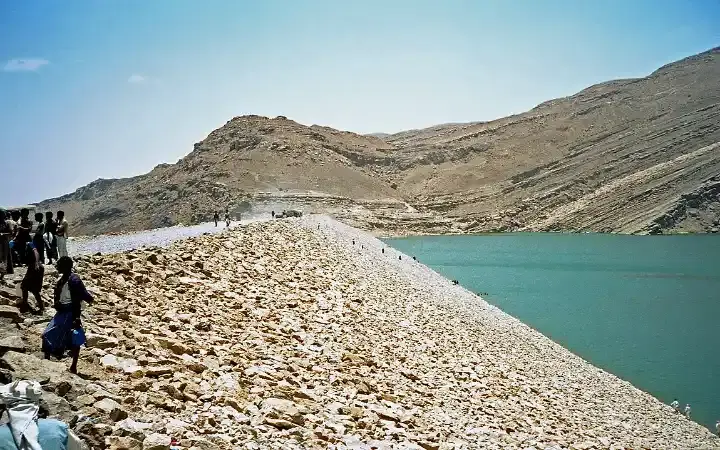
Although the dam survived for a long time, it collapsed in the 6th century AD, and some of its parts, particularly the spillways, still stand today. In modern times, a new dam was built near the site in the 20th century, reflecting the legacy of the ancient dam.
The Sabaeans and the Dam Builders
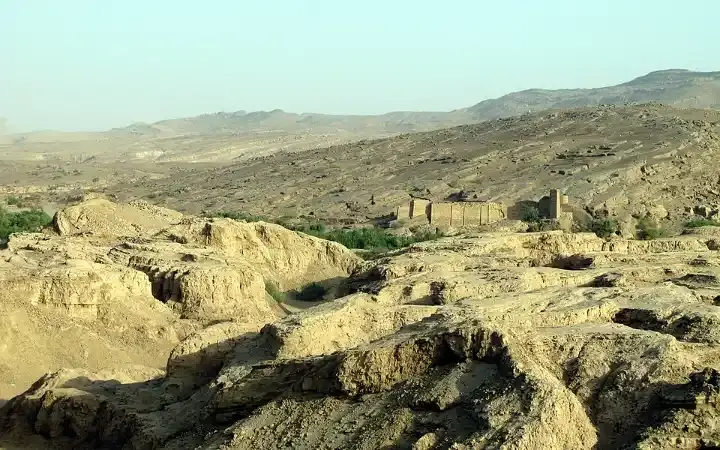
In the first millennium BC, Marib was the capital of the Sabaean kingdom, also known in religious tradition as the Kingdom of Sheba. The Sabaeans were a Semitic people who migrated from northern Arabia and settled in the south, establishing a prosperous kingdom located at the crossroads of vital trade routes. Their kingdom flourished thanks to the frankincense and spice trade, which connected the East to the Mediterranean.
The frankincense and spice trade was an important source of wealth and politics. Agarwood, frankincense, and myrrh were in high demand by the civilizations of Egypt, Rome, and elsewhere for religious, perfume, and medicinal uses. This wealth enabled the Sabaeans to finance massive projects such as the Marib Dam and support their complex society.
However, in the sixth century BC, new trade routes diverted trade routes, leading to the collapse of the Sabaean economy. Despite this, the kingdom survived until the third century AD, when it was conquered by the Himyarite Kingdom.
A Testimony to the Ingenuity of the Ancients
Traditional sources date the construction of the Marib Dam to the eighth or seventh century BC, attributed to King Simhu Ali Yanaf and his son Yadh'amar Bin. However, recent archaeological evidence, particularly from German expeditions, reveals that construction went through several phases dating back to the second millennium BC.
Excavations have shown that the dam was not built in a single project, but rather was a dynamic structure that underwent maintenance and development over the ages. These updates reflect the development of engineering techniques and changing environmental conditions, demonstrating the skill and craftsmanship of the Sabaeans.
The dam was more than just a physical structure; it was a symbol of the kingdom's power and the favor of the gods. Ancient inscriptions reveal that the Sabaean kings considered the construction and maintenance of the dam to be a sacred duty, and it was associated with prosperity and the blessing of the gods.
Architectural Design and Functions of the Dam
The dam featured foundations of massive stones, topped by an earthen wall reinforced with layers of gravel and stones. Its walls rose to a height of approximately 15 meters, with a base thickness of 60 meters. The dam extended 720 meters across the Dana Valley, from Jabal Balq in the north to Jabal al-Jabir in the south.
The dam's length was enormous, covering the width of the valley, while its thickness was necessary to withstand the enormous water pressure and forces of flooding. During the rainy seasons, between April and August, rainwater would collect in the valley, and the dam would prevent its sudden overflow, protecting the land from flooding and storing the water for later use.
Spill gates at either end of the dam allowed water to be directed to a complex irrigation system. This system helped transform dry lands into productive agricultural fields through a network of canals and small dams that wisely distributed water to prevent erosion and increase agricultural yields.
Dam Maintenance and Collapse
The dam held great importance even after the fall of the Sabaean Kingdom, as the Himyarite Kingdom continued to maintain it. However, the dam collapsed twice, in 450 AD and 542 AD, and was repaired each time.
However, in 570 AD, the dam finally collapsed, and the cause of the collapse remains controversial. Some researchers believe a powerful earthquake destroyed the dam, while others believe heavy rains were to blame. Local legend holds that a group of giant rats gnawed at the base of the dam, causing water to leak and collapse.
The dam's collapse had profound effects, causing catastrophic flooding, degrading agricultural land, and disintegrating the local community. Some historians link the dam's collapse to the decline of the Himyarite Kingdom and the political changes that followed.
Echoes of the Past in the Present
Today, what remains of the Marib Dam, particularly the spillways, stands as a living testament to the ingenuity of ancient Yemeni engineers. These monuments are a reminder of the ancient history and advanced technologies enjoyed by the region's inhabitants for thousands of years.
Unfortunately, in 2015, the dam's remains were damaged by airstrikes during the ongoing conflict in Yemen, posing a serious threat to this great cultural heritage.
Nevertheless, the Marib Dam continues to attract researchers and those interested in history and engineering, as its remains offer a treasure trove of knowledge about ancient water management systems and urban planning in the Arabian Peninsula.
Archaeological Discoveries and Ongoing Research
Recent decades have witnessed research efforts by German and other missions to study the dam and its surrounding areas. These excavations have uncovered inscriptions, artifacts, and construction remains that shed light on the history of the dam and the lives of its inhabitants.
These studies have helped clarify the stages of the dam's construction and the engineering techniques used. Research continues to analyze sediments and interpret ancient texts to gain a deeper understanding of the dam's role in the region's development. This research also contributes to global studies of ancient water management systems, linking the Marib Dam to other famous engineering projects in Mesopotamia, Egypt, and Rome.
Cultural and Religious Significance
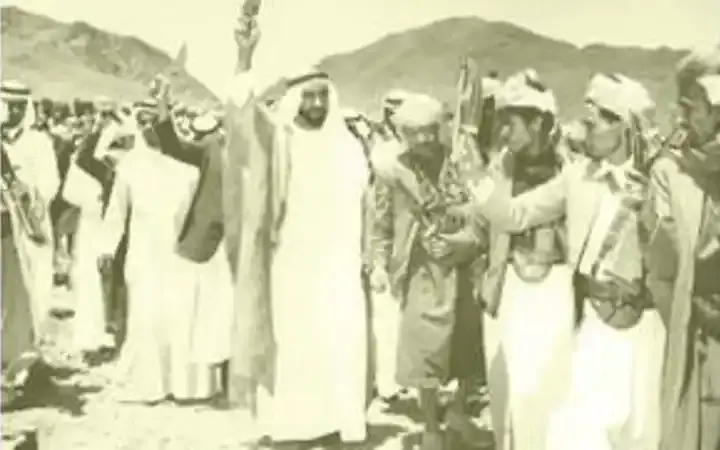
Besides its practical importance, the Marib Dam held significant cultural and religious significance for the Sabaeans. Inscriptions reveal that the dam was dedicated to deities associated with water and fertility, reflecting the sacred relationship between water and life.
The kings who built or maintained the dam were considered guardians of the kingdom's prosperity and the favor of the gods, and the dam was a symbol of the kingdom's strength and harmony with nature.
Festivals and rituals were likely held around the dam to express gratitude for bountiful harvests and promote social cohesion.