All You Need To Know About The Mysterious Red Pyramid in Egypt

Dahshur, located about 40 kilometers south of Cairo, is one of Egypt's most important archaeological sites, attracting tourists from all over the world. Dahshur is famous for its ancient pyramids, which bear witness to the greatness of Egyptian civilization and offer a glimpse into the architectural development that paved the way for the famous Pyramids of Giza. This area is a unique tourist destination, combining ancient history with stunning natural beauty.
عرض النقاط الرئيسية
- Dahshur, located south of Cairo, is a significant archaeological site known for its ancient pyramids and scenic desert landscape.
- The Red Pyramid, built by Pharaoh Sneferu, stands as Egypt's third-largest pyramid and the first successful smooth-sided structure.
- Sneferu's reign marked a pivotal era in pyramid construction, with innovations that laid the foundation for later monuments like the Great Pyramid.
- ADVERTISEMENT
- The reddish color of the Red Pyramid results from erosion of its white limestone casing, which revealed the iron-rich core.
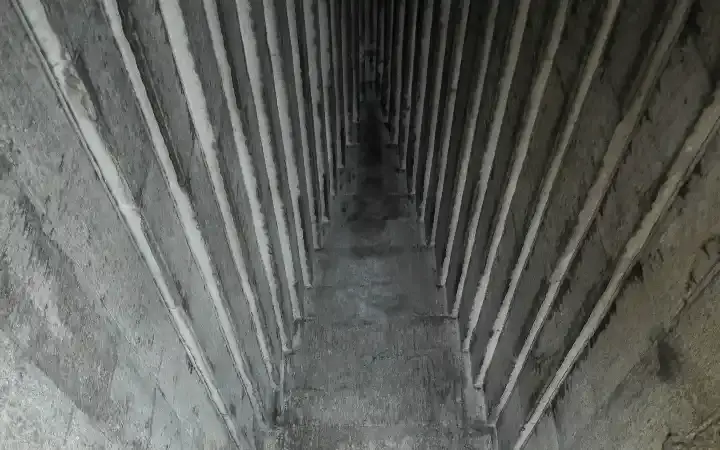
- Visitors to Dahshur can explore the Red Pyramid's internal chambers, offering a less crowded and immersive experience compared to Giza.
- The Red Pyramid, estimated to be over 4,600 years old, reflects ancient Egypt's advanced engineering skills through its design and dimensions.
- Ongoing excavations at Dahshur continue to uncover the historical secrets of the site, making it a dynamic place for archaeologists and tourists alike.
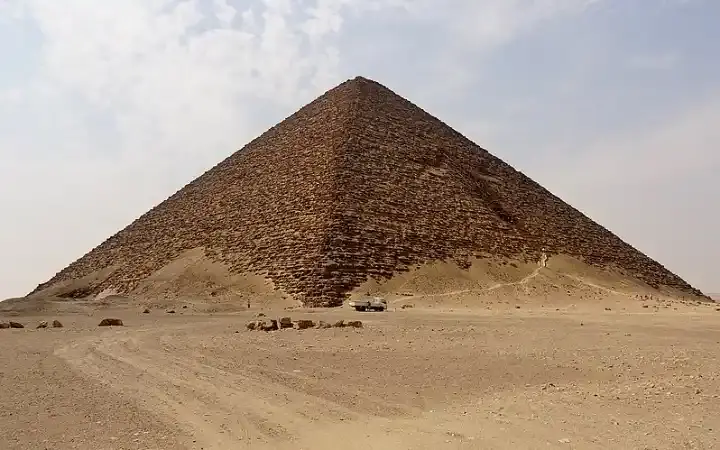
The Red Pyramid is Dahshur's most famous landmark.
The Red Pyramid is the star attraction of Dahshur and is considered the third largest pyramid in Egypt after the Pyramids of Giza. Its construction dates back to the reign of Pharaoh Sneferu and is the first smooth-sided pyramid to be successfully constructed. The pyramid is distinguished by its reddish hue, resulting from the limestone used in its construction, and it is a wonderful example of the engineering development of ancient Egypt. In addition, the Bent Pyramid is located nearby, a unique structure that reflects the early experiments of engineers of that era.
قراءة مقترحة
When Nature Meets History
Dahshur is not just an archaeological site; it is also a place that blends history with enchanting nature. The area is characterized by its picturesque desert landscape, making it an ideal destination for exploration and adventure. Visitors can hike among the sand dunes and enjoy panoramic views of the pyramids nestled in the desert.
Dahshur is a popular destination for tourists interested in history and archaeology, especially those seeking to escape the tourist crowds of more famous sites like Giza. The area offers tourists the opportunity to explore the pyramids in a more relaxed and focused manner, with the possibility of entering some of the pyramids and exploring their inner chambers.
Despite its historical significance, Dahshur still holds some of its undiscovered secrets. Archaeologists continue to excavate the area to uncover more about life in ancient Egypt. This mysterious aspect makes Dahshur an exciting destination for history buffs and adventure lovers.
Exploring the Red Pyramid in Dahshur is an amazing and mysterious experience. This structure is considered one of the greatest human-built structures in ancient Egyptian civilization, offering an opportunity to understand Egypt's rich history and architectural significance. Here, we will explore a range of facts and details that make this landmark a must-see for visitors and history buffs.
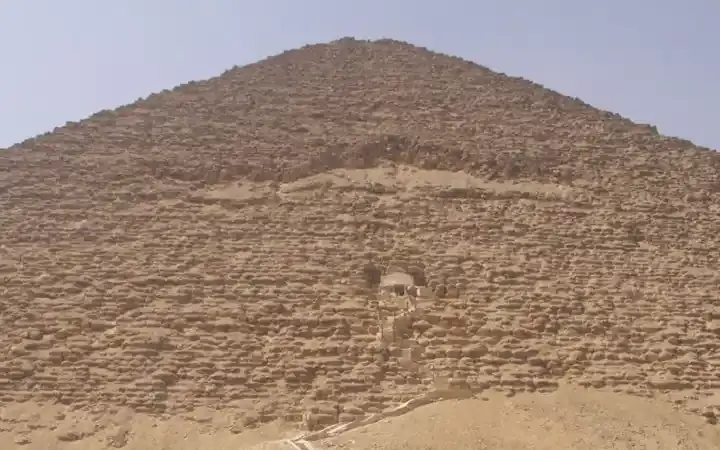
Who built the Red Pyramid?
The construction of the Red Pyramid is credited to Pharaoh Sneferu, the first ruler of the Fourth Dynasty and the father of Khufu, the builder of the Great Pyramid at Giza. This pyramid served as an eternal tomb for Sneferu, making it an important symbol of ancient Egyptian civilization. The pyramid demonstrates how the idea of monumental construction began with modest steps before evolving into grander structures like the Pyramid of Khufu.
What do we know about Pharaoh Sneferu, the founder of the Fourth Dynasty of ancient Egypt?
Pharaoh Sneferu, founder of the Fourth Dynasty of ancient Egypt, is considered one of the greatest rulers who contributed to shaping the history of Egyptian civilization. He is credited with achieving great stability during his reign and is considered the true pioneer of the pyramid-building era, laying the engineering and architectural foundation upon which his sons and grandsons relied, including his famous son, Khufu, builder of the Great Pyramid of Giza.
Sneferu ruled Egypt between 2613 and 2589 BC and was known for his great ambition and vision. He focused his efforts on strengthening the Egyptian economy by developing internal and external trade, especially with neighboring regions such as Nubia and the Levant. He also sent mining expeditions to the copper mines of Sinai, strengthening Egypt's position as a regional economic power.
But Sneferu's most famous achievement is his role in developing the art of pyramid building. He began by building the Meidum Pyramid, which was the first attempt to create a true four-sided pyramid, but it partially collapsed due to engineering errors. Sneferu did not give up, but continued his experiment by building the Bent Pyramid at Dahshur, a unique construction that reflects the shift from sharp angles to steeper angles for stability. Finally, he succeeded in building the Red Pyramid, the first smooth-sided pyramid in the ancient world, becoming a model for subsequent pyramids, including the Great Pyramid at Giza.
On a personal level, Sneferu was the father of Khufu and Khafre, two of the most famous pharaohs in Egyptian history. It is believed that his stable rule and ability to leave a lasting architectural mark inspired his sons to achieve great accomplishments.
The Reason for the Red Color of the Pyramid of Dahshur
The pyramid gets its name from its reddish hue, which resulted from the use of local limestone blocks containing a high percentage of iron oxide. When it was first built, it was covered with a layer of white limestone extracted from the Tura area, but this outer layer eroded over time, revealing the red core that became the pyramid's signature.
Measurements of the Red Pyramid
The pyramid is approximately 104 meters (341 feet) tall, making it the third tallest pyramid in Egypt after the Great Pyramid and the Pyramid of Khafre. Its base extends 220 meters (722 feet), reflecting the great engineering skill of the ancient Egyptians. Despite the passage of thousands of years, the pyramid still stands as a testament to the architectural development of that period.
Age of the Red Pyramid
The pyramid is estimated to be approximately 4,600 years old, having been built during the reign of Sneferu between 2613 and 2589 BC. The Red Pyramid is a significant step in the development of pyramid-building techniques, paving the way for larger and more complex architectural achievements in the future.
Discovery of the Pyramid Throughout History
The Red Pyramid was first recorded by European travelers in the 17th and 18th centuries, but its first scientific study was conducted by John Perring in the 19th century. In 1950, the main entrance to the pyramid was discovered by Abdel Salam Hussein, followed by excavations by Ahmed Fakhry, which revealed stunning interior details. The pyramid continues to inspire historians and archaeologists to this day.
The Significance of the Red Pyramid
The Red Pyramid represents a turning point in the history of Egyptian architecture. It is considered the first smooth-sided pyramid to be successfully constructed, following previous attempts such as the Bent Pyramid. Its innovative techniques formed the basis upon which the famous pyramids of Giza were built, making it a testament to the technological and engineering advancements of the time.
The design of the Red Pyramid was the result of multiple engineering attempts, becoming a key model that inspired the construction of the famous pyramids of Giza. This gives us an idea of the extent of the scientific advancements achieved by the ancient Egyptians in that distant era, making the Red Pyramid a living testament to their genius and innovation.
The Red Pyramid was originally covered with a layer of white limestone extracted from the Tura area. However, this outer layer eroded over time, revealing the red color that has become a distinctive feature of this great edifice due to the presence of iron oxide in the limestone used in its construction.
The construction of the Red Pyramid took approximately 17 years, reflecting the great effort expended by engineers and workers to achieve this feat. The pyramid is distinguished by its unique design, which includes three main internal chambers, including the main burial chamber, believed to have contained the sarcophagus of Pharaoh Sneferu, founder of the Fourth Dynasty. These chambers demonstrate the meticulous planning and engineering skill of the ancient Egyptians. The Red Pyramid's significance is not limited to its status as an architectural masterpiece; it also represents a symbol of the cultural and spiritual development of ancient Egypt. It was not merely a monumental structure; it served as the final resting place for the pharaoh, reflecting their belief in the afterlife and the importance of immortality. To this day, the Red Pyramid remains a source of inspiration and admiration, offering us an opportunity to learn about Egypt's rich history and the genius of its people in achieving immortal accomplishments.
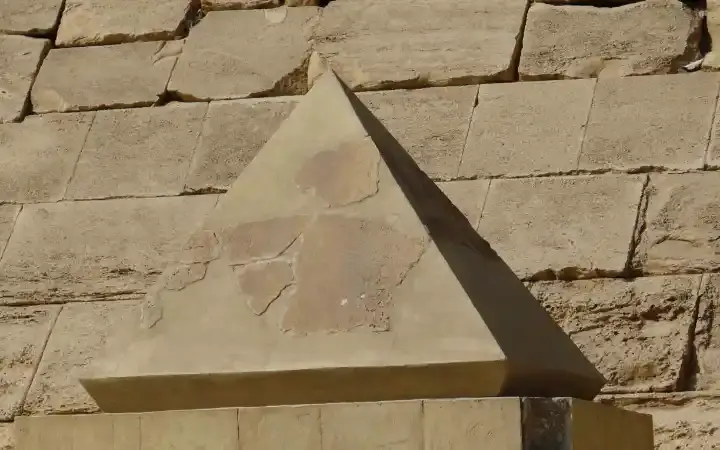
Location of the Pyramid on the Map
The Red Pyramid can be found in the ancient Dahshur necropolis at coordinates 29.8047 N and 31.2161 E. It is located near the Bent Pyramid, another building that bears witness to the construction advancements of Sneferu's reign. If you are visiting Cairo, a visit to Dahshur will give you the opportunity to explore this magnificent edifice.
A Testimony to Ancient Creativity
The Red Pyramid highlights the ingenuity of the ancient Egyptians in design and construction. It was not just an architectural landmark, but also a symbol of power and spirituality. Ancient engineers were able to achieve remarkable feats using simple tools and technology, making us realize the extent of their genius and ingenuity.
Conclusion
Ultimately, the Red Pyramid remains a testament to the ancient Egyptians' excellence in engineering and design. This edifice reflects not only their technical abilities but also the spirit of collaboration that led them to such great achievements. Thousands of years later, the Red Pyramid remains a source of inspiration and a symbol of eternity, reminding us that working together can lead to great goals.