The Secrets of the Stolen Dendera Zodiac

Egypt is the repository of human history and contains secrets that have puzzled scientists throughout history, today we tell you the story of the painting of the temple of Dendera or what is known as the "planetarium panel".
Show key points
- The Temple of Dendera features a unique circular astronomical painting, known as the planetarium panel, which has intrigued scientists and historians for centuries.
- This painting, originally recorded by French artist Dominique Vivant Denon during Napoleon’s Egyptian campaign, later sparked intense scientific interest in astronomical symbolism.
- French scientists like Fourier, Piot, and Burckhardt struggled to interpret whether the depicted constellations were symbolic or actual astronomical data, initiating the field of archaeological astronomy in France.
- ADVERTISEMENT
- In 1821, the planetarium panel was stolen from the temple and transported to France, eventually ending up in the Louvre Museum, where debates over its rightful ownership still continue.
- The Dendera panel is the only known circular Egyptian astronomical depiction and contains a precise 360-day calendar featuring thirty-six star clusters arranged with remarkable astronomical sophistication.
- Scholars such as Champollion and Gerald Massey linked the Egyptian zodiac with Western astrological signs, revealing deep symbolic parallels between ancient Egyptian deities and zodiac constellations.
- Ancient Egyptians believed that zodiac signs governed seasonal changes and celestial patterns, using them for essential events like predicting the Nile floods with the rising of the star Sirius.
The French campaign against Egypt and the arrival of French scientists to the temple of Dendera
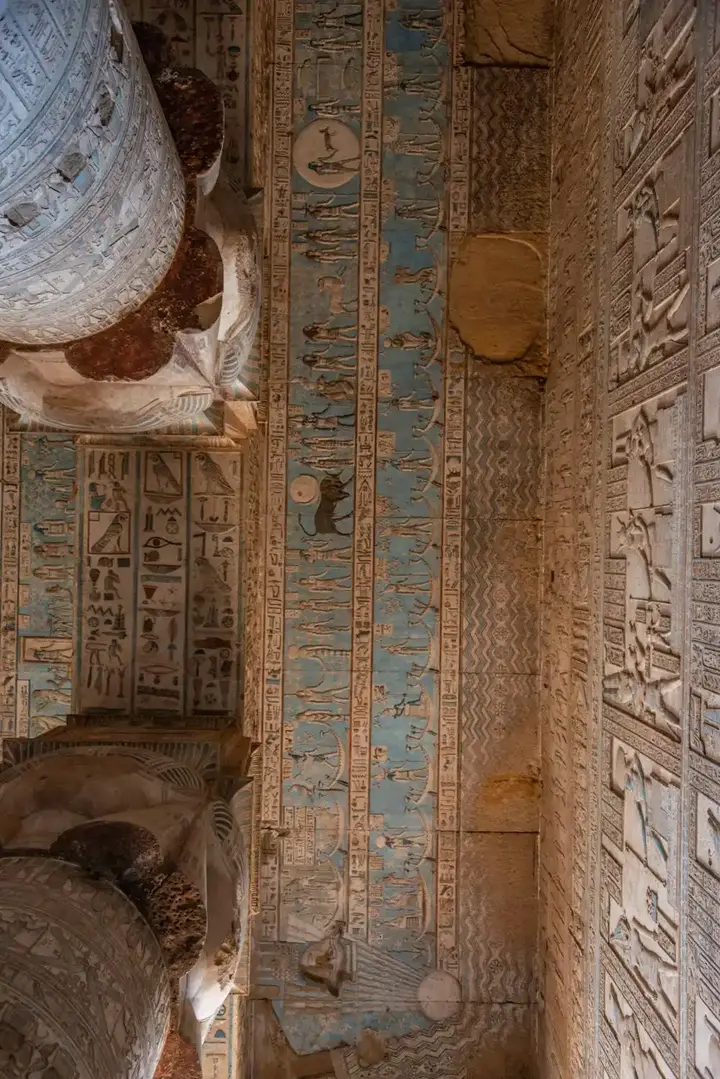
In 1799, Napoleon and his armies began to expand their presence throughout Egypt. Napoleon brought not only armies, but artists to record drawings of his conclusions for a country that was considered alien and off the norm of traditional European culture. One of the designated artists, Dominique Vivan Dennon, was fascinated by a circular painting carved into the roof of the Temple of Hathor known as the Temple of Dendera located in the village of Dendera, located 55 kilometers north of Luxor on the shore of the eastern and western Nile, opposite the city of Qena. After meticulously drawing the circular towers, Denon returned to Paris and made his findings public. His report was published in a work that became hugely popular in England and France, where everyone seemed thirsty for more knowledge about this strange circular design in the temple of Dendera.
Recommend
The amazing discovery of the content of the planetarium panel in the roof of the temple of Dendera
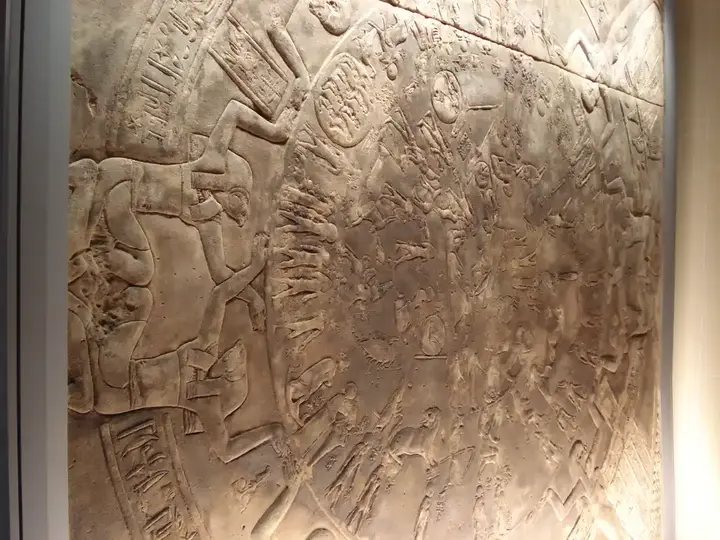
When French archaeologists saw the painting of the roof of the temple of Dendera, which they painted "Denon", they went crazy because they realized that the contents of that painting are a recording of astronomical events, and soon began to investigate what those astronomical events were and began to investigate finding the exact dates and times of the celestial events depicted inside. Scientists differed sharply in determining the age of recorded events, and the proposed ages ranged from 2,200 to more than 36,000 years.
Physicists Joseph Fourier and Jean-Baptiste Piot, along with astronomer Johann Karl Burckhardt, led the investigation into Dendera's painting, but were puzzled by the constellations depicted in the painting. Were they actual astronomical calculations depicting the movements of the stars, or were they just symbolic representations? This was the moment when France began its study of archaeological astronomy, and the French decided to plan to steal the original painting at any cost.
Theft of the original painting from the roof of the temple of Dendera
Sébastien-Louis Saulnier, who worked as an antique merchant, commissioned Claude Lelorin to remove the circular planetarium panel with saws, cranes and gunpowder. In 1821 the painting was transferred to the Musée de Paris, and by 1822, its parts had been reinstalled by the Louis XVIII Library (later called the Bibliothèque nationale of the Bibliothèque Royal. In 1922 the painting of the Temple of Dendera was transferred from there to the Louvre. In 2022, Egyptologist Zahi Hawass began applying for the painting to be returned to Egypt, along with the Rosetta Stone and other artifacts.
The calendar recorded in the Dendera painting baffles French scientists
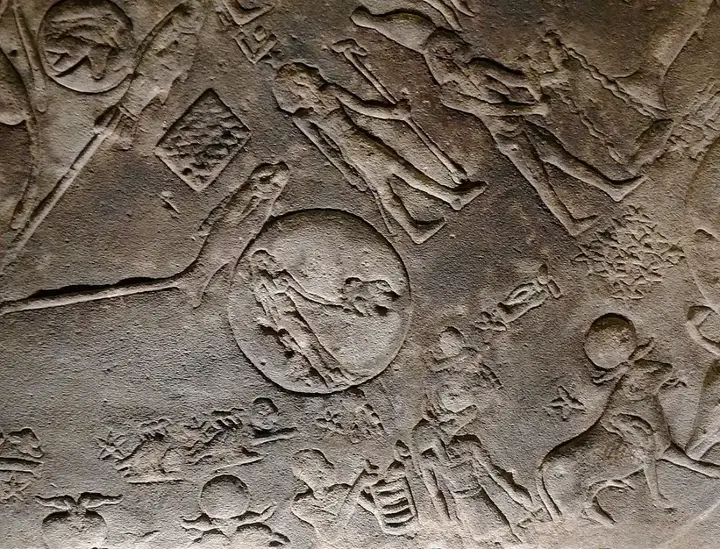
The planetarium panel of the Temple of Dendera is the only circular painting of astronomy discovered in ancient Egyptian times, as all other Egyptian astronomical monuments are either square or pyramidal in shape and design. The Dendera plate contains a calendar of 360 days of the Egyptian year, with thirty-six star clusters arranged in a circular manner. Each star cluster accounts for one-third of the duration of the zodiac constellation. And each three star clusters has twelve signs, each of which means thirty-six star clusters in total. In order to understand, dear reader, the importance of this discovery, it is enough for you to know that man did not know in the sky more than 20 star clusters at that time, which means that this painting contains advanced astronomical information that scientists did not know.
Champollion, Gerald and the painting of the temple of Dendera
One of the scientists who showed keen interest in that painting was the famous scientist "Champollion", who deciphered the mysteries of the Rosetta Stone, where he wrote an article that caused a stir when he said that this painting will make us rewrite history in its entirety, as it is a religious painting that tells important events for the ancient Egyptians, but the famous English Egyptologist "Gerald Massey" was able to reconcile each of the traditional Western zodiac signs with his Egyptian counterpart. Looking at the Zodiac Dendera, the Aries ram corresponds to the ram-headed god Amun, Taurus corresponds to Osiris, who is sometimes referred to as the "bull of immortality", while the two Pisces are referred to as two crocodiles swimming in opposite directions. For each constellation in the traditional Western zodiac signs, there is an Egyptian equivalent with the same symbolism; ranging from a goat khnum with the same characteristics as a Capricorn, to Atom, a lion-headed god who resembles a lion. The image of "Isis" holding Horus in her arms is synonymous with the constellation of the Virgin, and resembles the image of the Virgin Mary holding Christ (peace be upon him).
The importance of the planetarium panel in the temple of Dendera
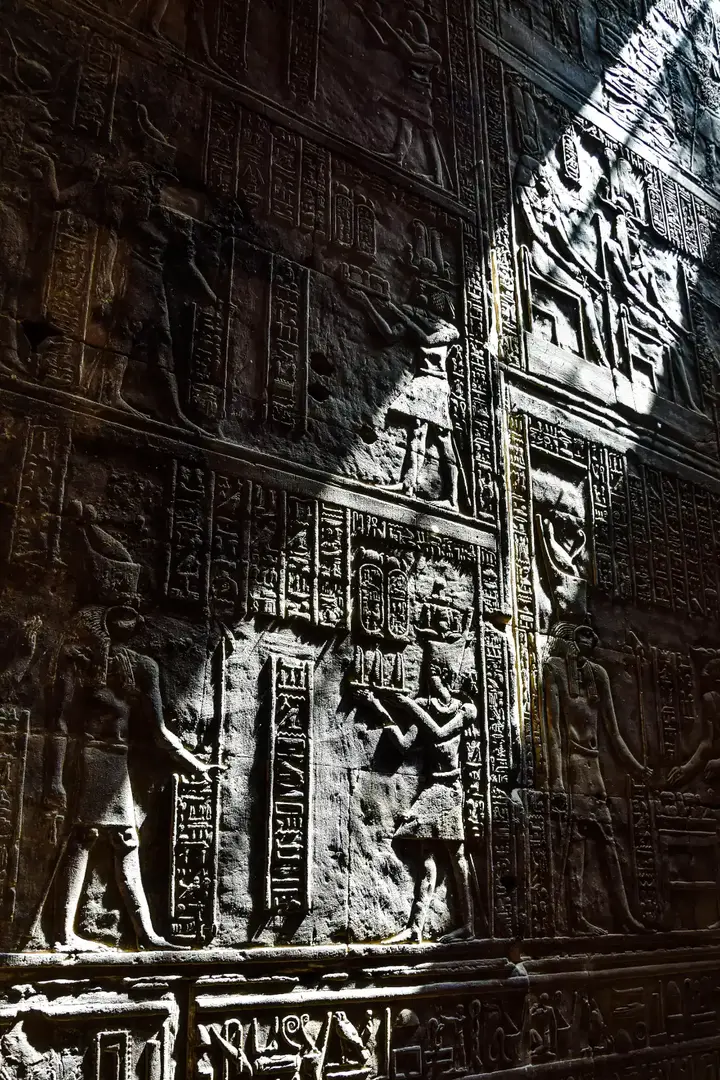
The important question remains; what were these symbols supposed to convey? And what is its importance to the ancient Egyptians? For Egyptians, each zodiac sign corresponds to a season of the year that a particular god is believed to rule. The scarab beetle referring to cancer was a symbol of summer, while scales of scales indicate the autumnal equinox. You may notice that although all twelve constellations appear in the "Zodiac Dendera", the positions of some of them are somewhat distorted and skewed. The crab crab appears to have been deliberately placed towards the center of the painting, resulting in a spiral-like formation of the tower. It is uncertain why this choice was included in the design; Cancer Month may have had a special significance (this is still a mystery until now).
For Egyptians, each season had a unique effect on the passage of days within the 360-day calendar. The hours of the day were not measured in a fixed way, but were subject to change from season to season. As the zodiac depicted the movement of the star of poetry, that star was of paramount importance to the ancient Egyptians was the star of poetry rising from the horizon at the beginning of the new year, but this date will change by eight and a half days every thousand years. The sign of Aquarius was given great importance, as it represents the sign of immersion, indicating the time of the flood. Egyptians will use Najm al-Shaari as a sign to indicate when the annual Nile flood will occur, in what we now call June.
There are still many secrets lurking in ancient Egyptian antiquities and Egyptians are still trying to recover what was stolen from their unparalleled and priceless antiquities.