






Your child's drawings have multiple meanings: let's get to know them

ADVERTISEMENT
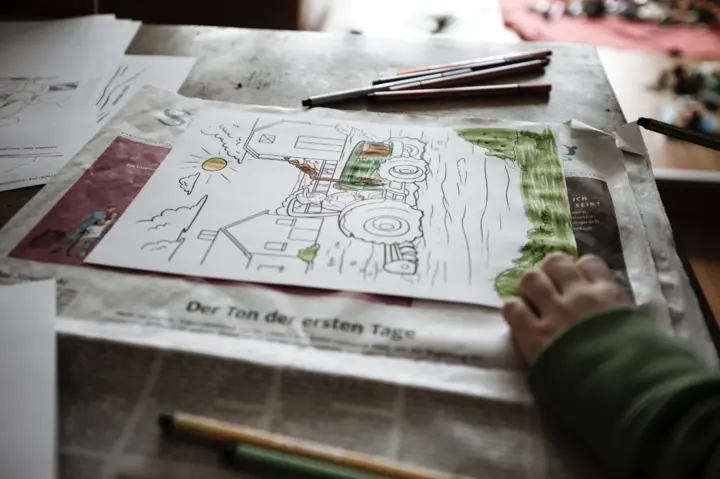
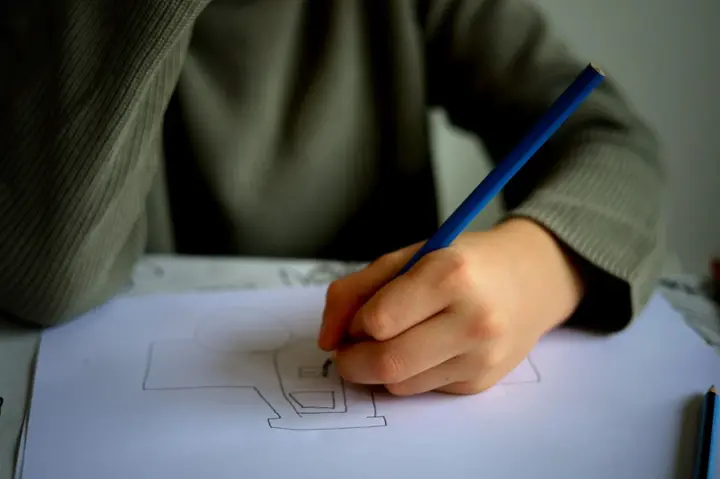
Some people may think children’s drawings have no meaning and see them as mere scribbles that keep a child occupied. But children’s drawings rarely lack meaning. They change with age; even a one-year-old can make random marks.
Psychiatrists worldwide have studied children’s drawings across developmental stages and divided them by
ADVERTISEMENT
age. This article introduces those stages, describes drawing characteristics at each stage, and explains symbols that can reveal a child’s feelings. Children project emotions onto their drawings and gain balance by expressing them.
Recognizing these stages and their drawing characteristics helps not only in interpreting drawings but also in identifying cases that may need specialized intervention, such as developmental delay, learning difficulties, and various psychological problems.
ADVERTISEMENT
Stages of children's drawings
Photo via Markus Spiske on Unsplash
Between roughly one-and-a-half and four years, children go through the scribble stage — their way of expressing themselves through random marks. At first (about 1½–2 years) lines are random; from 2–4 years scribbles become more organized. You will notice they often ignore the paper’s edges, sometimes drawing off the page. They begin to separate colors, draw circular shapes that suggest a head, and make overlapping lines. At this stage children start to regulate their feelings, distinguish themselves from the surrounding world, and exert more control over their behavior. They also begin to name their drawings and use simple symbols; this is sometimes called the "naming-scribbles" stage.
ADVERTISEMENT
Between 4 and 7 years, children enter the descriptive stage. They begin drawing simple shapes and head-like figures to represent people. You will notice clear outlines and that color tends to stay within those boundaries. Drawings are often placed in the middle of the page and focus on people and relationships — for example, family members or friends drawn together. At this stage the child aims to be understood by others.
Between 7 and 9 years, children enter the schematic or "diagram-building" stage: they become aware of number, clarity, variety, and the importance of symbols. You will notice drawings arranged across the page into top, middle, and bottom zones — for example, sky at the top, people in the middle, and ground or a garden at the bottom. At this stage mental abilities develop further: the child begins to grasp relationships, rules, and order, and can link events and objects to one another.
ADVERTISEMENT
Children with developmental delays or difficulties often stop progressing at this stage; some can improve with guidance, but others continue to show pronounced delays.
A child may express their inner world in one of three ways: by heavy shading over the same area, by omitting details (for example, drawing a person without ears, hands, or eyes), or by placing drawings high on the page.
Between 7 and 11 years the child reaches the early stage of realistic drawing: drawings show greater depth and a more accurate depiction of the surrounding world, with more natural colors. You will notice increased observation and scrutiny; work is characterized by shading, ellipses, depth, and attention to corners.
ADVERTISEMENT
From about 11 to 14 years, children go through the realistic-drawing stage, depicting their environment as it is. Their awareness of people and events becomes clear, and they notice fine details. In adolescence they think more about themselves and others — their desires, identities, and needs — and their drawings reflect how they see themselves and others.
Analysis of some common drawings and techniques:
Photo via Tho-Ge on Pixabay
You should ask the child what a drawing means, since symbols can vary from child to child.
Drawing from left to right expresses the child’s need for tenderness and care from their parents.
If the mother is drawn very large and the father small, the child may be expressing the mother’s control at home and the father’s weakness.
ADVERTISEMENT
If the child draws faces as ugly, it can express hatred toward that person; if the characters are parents, it may indicate family conflicts.
Drawing faces in profile (from the side) can indicate difficulty forming relationships with those people.
Drawing a sad face indicates the child’s sadness and difficulty in relating to others.
Drawing faceless characters suggests the child feels others do not notice their presence.
Drawing a face without eyes may indicate the child prefers not to mix with others. If the eyes are drawn behind glasses, it can indicate withdrawal — unless the person portrayed actually wears glasses.
Drawing a person with large hands may suggest stealing, while a large head may indicate the child is preoccupied or worried; a shy child may draw a small head.
ADVERTISEMENT
Drawing a person without hands or legs may mean the child feels confused and unsure how to act.
Children who draw only at the bottom of the page tend to have a low self-image and feel insecure. Conversely, concentrating drawings at the top of the page may indicate excessive self-esteem.
Noha Mousa
ADVERTISEMENT
The seven most important dishes in French cuisine
ADVERTISEMENT
France — that charming country known for its culture and fine arts. Among the many cultural elements that set it apart, French cuisine is one of the most prominent. It embodies refined, sophisticated gastronomy and is renowned for a variety of delicious, elegant dishes.
ADVERTISEMENT
Joining the journey to discover the highlights of French cooking will be an unforgettable experience.
1. The two most important appetizers
Photo via Carissa Gan on Unsplash
Appetizers are central to French dining and make an elegant start to any sumptuous meal. To match this refined character, French cuisine offers a range of signature starters that captivate the senses and delight the palate.
ADVERTISEMENT
One signature appetizer not to be missed is grilled seafood with French butter sauce. Seafood such as shrimp and prawns are grilled and finished with a rich butter sauce that is pleasing to the senses. The result is a striking dish that balances the sea’s textures with the smooth, comforting flavors of butter.
Another appetizer worth attention is the French trifle. Trifle is a refined and delicious starter made of layers of toasted cake, vanilla cream and assorted fruits such as strawberries and berries. These layers are arranged attractively in a clear bowl, giving the dish a distinctive and appealing presentation.
Experiencing these signature starters is a special moment of tasteful luxury. French cuisine is defined by careful preparation and sophisticated presentation that reflect its gastronomic traditions. Beginning a meal with these dishes will be an unforgettable start to your journey through flavors and fine dining.
ADVERTISEMENT
2. Three main dishes
Photo via takedahrs from Pixabay
Three main dishes
If youre seeking an authentic and memorable French culinary experience, this section is for you. It presents three mouthwatering main courses that are pillars of French cuisine and showcase its elegance and sophistication.
The first dish not to be overlooked is Boeuf Bourguignon. It is a beef specialty gently cooked in red wine and flavored with garlic, onions and mushrooms. The meat is tender and full of flavor, and it tastes especially good when served with pasta or roasted potatoes.
The second dish deserving attention is Coq au Vin, a chicken dish described here as stuffed with cheese, peas and mushrooms. It is cooked in a rich sauce of cream, garlic and butter, which gives it an irresistible flavor.
ADVERTISEMENT
The last dish is the Croque Monsieur, presented here as a white fish fillet topped with a crispy crust and perfectly fried. It is served with a rich hollandaise sauce and a fresh, flavorful salad. A contrast of crispness and tenderness, this dish is an excellent choice for a romantic dinner or an indulgent meal.
Trying these mouthwatering main courses is unforgettable, as the luxury and lively aromas of French cooking meet rich flavors and refined tastes. Take an unparalleled journey to the heart of French cuisine and discover the fragrance and variety in every bite.
3. Haute French desserts
Photo via Diana Polekhina on Unsplash
France is known for offering a remarkable array of unique and delicious desserts. French sweets are world-renowned for their variety and striking visual beauty. Desserts play an integral role in French meals and are not to be overlooked.
ADVERTISEMENT
One of the most famous fine French desserts is the macaron, a delicate confection made from two thin meringue-based shells of egg whites and sugar. Filled with a light cream or rich chocolate, it offers a distinctive taste experience. Macarons come in bright colors and have a smooth, creamy texture, making them perfect for satisfying a sweet craving.
Another classic pastry is the croissant, a tender, flaky pastry made with flour and butter. The croissant is shaped into a crescent and baked until it achieves a seductive golden color. Croissants can be enjoyed in the morning or with coffee in the afternoon, as their flaky, buttery texture contrasts nicely with the bitterness of coffee.
And we cant forget the Tarte Tatin, a traditional French dessert made from caramelized apples and brown sugar. The fruit is browned in butter and sugar until golden and flavorful. Served hot or cold, Tarte Tatin is often accompanied by ice cream or fresh cream.
ADVERTISEMENT
The experience of fine French desserts is an unmissable opportunity to appreciate the great art of French pastry. They reflect a rich confectionery heritage and distinctive baking skills. Enjoy a memorable taste experience with these elegant, luxurious sweets.
Photo via micheile henderson on Unsplash
At the end of this delicious journey through French cuisine, we discover that dining in France is a true experience of refinement and luxury. French cooking is characterized by its elegant, varied dishes that make every bite take you on an unparalleled journey of flavors and aromas. If you are a lover of fine dining, French cuisine is the perfect choice. Dont miss the chance to try these exquisite dishes and enjoy an unforgettable gastronomic experience.
Dalia
ADVERTISEMENT
Global Solar Radiation: Regional Variations and the Middle East's Potential
ADVERTISEMENT
The sun, an inexhaustible source of energy, radiates its rays across the globe in varying degrees. It is a vast, sustainable cosmic furnace. Yet the earth’s geographic diversity strongly affects how this gift of energy is received and harnessed. Understanding those regional differences is essential to unlocking the full potential
ADVERTISEMENT
of solar power. This article explores daily solar flow data, cumulative incoming energy, and the daily, monthly, and annual variations in solar energy reception across different parts of the world, highlighting how the Middle East compares with other regions.
1. Solar Energy Dynamics:
Photo from Wikipedia
Daily fluctuations in solar radiation vary through the day and are influenced by factors such as latitude, season, and local weather. Tropical regions, like the Amazon rainforest, receive more consistent sunshine and steadier solar flow throughout the day, with peak intensity around noon. Polar regions, by contrast, have brief daylight in winter and large seasonal swings. From New York City to the African savanna, daily solar flow follows the earth’s rotation and affects energy production and consumption patterns. Analyzing daily solar flow data yields useful insights into temporal changes in solar availability and helps in designing and refining solar energy systems. On average, the incoming solar energy at the earth's surface is about 340 watts per square meter. The Middle East, blessed with abundant sunshine and long daylight hours, is well suited to solar power exploitation. A global horizontal irradiance map shows the Middle East receiving over 2,000 kilowatt-hours per square meter, among the highest values worldwide.
ADVERTISEMENT
2. Monthly Variations:
Photo from Wikimedia
Monthly changes in solar energy reception form a pattern of light and shade. Tropical areas experience minimal seasonal change in solar intensity, while temperate regions see a gradual decline in sunlight through autumn and into winter. From Australia’s Gold Coast to the Swiss Alps, monthly solar flow shapes daily life and energy use. For example, Scandinavian countries face long winters with low solar input and must rely on alternative energy strategies. By contrast, Middle Eastern countries benefit from consistent sunlight year-round, providing a stable basis for solar energy initiatives. Measuring cumulative incoming energy helps assess the feasibility of solar projects and identify regions ripe for investment and development.
ADVERTISEMENT
3. Annual Sun Exposure:
Photo from Wikimedia
Comparing regions by solar flow and cumulative incoming energy highlights clear disparities. Long-term records of annual sunshine duration indicate a region’s total solar potential. Areas with extensive annual sun exposure are well suited for large-scale solar projects. Sub-Saharan Africa, the Middle East, and parts of South Asia enjoy substantial annual sun exposure, offering attractive opportunities for solar investment. The Middle East stands out for its high annual sunshine hours and strong solar potential. Polar regions, on the other hand, receive lower solar flow and limited cumulative energy, so they must rely on other energy sources. Understanding these regional differences is important for designing solar solutions tailored to each geographic context.
ADVERTISEMENT
4. The Middle East (Solar Powerhouse):
Photo from Wikipedia
Positioned at the crossroads of continents, the Middle East has tremendous solar potential. With vast deserts and minimal cloud cover, countries such as Saudi Arabia, the United Arab Emirates, and Qatar enjoy more than 3,000 hours of sunshine annually. This abundant solar radiation places the region at the forefront of solar deployment, and ambitious projects are already underway to tap this resource. From large solar farms to rooftop installations, the Middle East is driving a shift toward a sustainable energy future, offering opportunities for deployment and economic growth. By harnessing its solar radiation, the region can lead on renewable energy and help light the way to a greener tomorrow.
ADVERTISEMENT
5. Harnessing Potential and Leveraging Solar Data:
Photo from Wikimedia
Access to solar flow data and cumulative energy figures enables policymakers, investors, and energy professionals to make informed decisions about solar projects. Using advanced models and satellite imagery, stakeholders can assess potential, optimize system design, and maximize output. Significant challenges remain: water scarcity, land-use conflicts, and technical limitations can hinder deployment. Still, these challenges also present opportunities for innovation and leadership. With collaboration and targeted investment in solar infrastructure, the Middle East can overcome these obstacles and accelerate a shift to renewable energy. The region’s move to solar not only reduces dependence on fossil fuels but also supports economic growth and environmental sustainability.
ADVERTISEMENT
Photo from Wikimedia
In the global balance of light and shade, the Middle East stands as a bright beacon of solar potential, positioned to help lead the transition to cleaner energy. By using solar flow data and cumulative energy insights, the region can build on its abundant sunshine to power homes, energize communities, and drive sustainable economic development. Embracing the sun’s power can help ensure a cleaner, more sustainable future for coming generations.