The Euphrates River and the receding mountain of gold

The Euphrates River, a cradle of ancient civilizations, has long been a source of mystery and legend. Among its many tales is the prophecy of a receding river that will reveal a mountain of gold, igniting curiosity, fear, and fascination across cultures.
Show key points
- The Euphrates River holds deep historical and religious significance, often linked with ancient Mesopotamian civilizations and Islamic eschatology.
- A well-known prophecy foretells the river drying up to reveal a mountain of gold, a sign associated with the approaching Hour in Islamic tradition.
- The river originates in Turkey's Taurus Mountains and travels through Syria and Iraq before joining the Tigris to form the Shatt al-Arab, emptying into the Arabian Gulf.
- ADVERTISEMENT
- The receding of the Euphrates in recent years is largely due to dam constructions in Turkey and Syria, along with seasonal droughts.
- Despite the water level dropping, the predicted "mountain of gold" has not yet materialized, which adds to the anticipation and speculation among believers.
- The marshes formed by the Euphrates and Tigris rivers are fertile lands with cultural heritage dating back to the Sumerians, preserved over millennia.
- Islamic hadiths emphasize the river’s heavenly origins and warn of violent conflict over the prophesied treasure, reflecting a blend of awe and caution.
This article unravels the allure of that myth, exploring its historical roots, its significance in religious texts, and the environmental realities shaping the river today. Join us as we explore the captivating intersection of legend, history, and nature surrounding the Euphrates and its enigmatic treasure.
The receding mountain of gold in the Euphrates River is one of the minor signs of the Hour
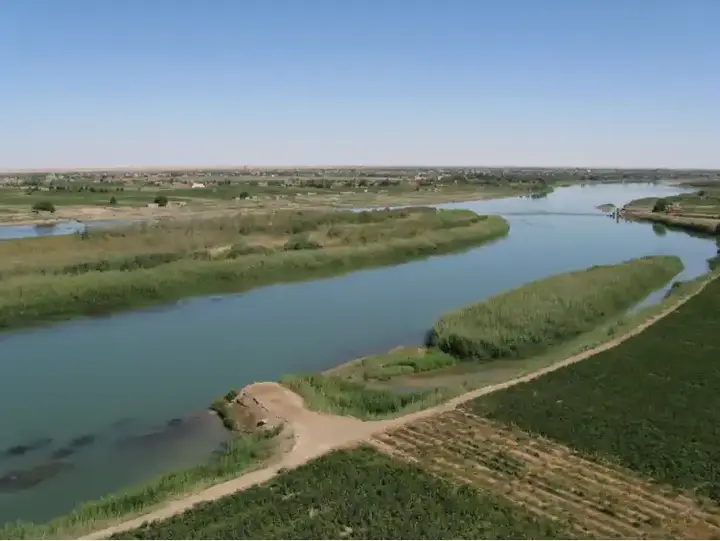
The Euphrates is closely associated with Iraq, and this is understandable: Mesopotamia is defined by the Tigris and the Euphrates. Recently, however, rumours have multiplied about the appearance of a mountain of gold in the Euphrates, which is one of the signs of the Hour that the Messenger of Allah (peace and blessings of Allah be upon him) mentioned.
Recommend
Before discussing the Euphrates and the Prophet's prophecy about the receding waters and the emergence of a mountain or treasure of gold, it is important to know where the river is, its source, its course, where it empties, and what distinguishes it. We will address these points in the lines that follow.
Location and course of the Euphrates River
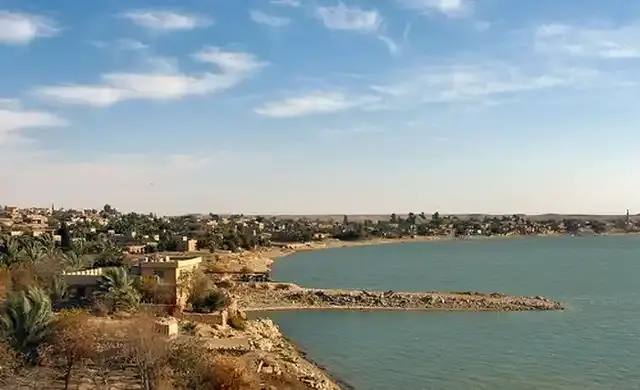
The Euphrates is one of the longest rivers in the Near East, with an approximate length of 2,781 km. It rises in the Taurus Mountains in Turkey, specifically from two small rivers in northeastern Anatolia, and flows westward, receiving small tributaries as it enters Syria near the city of Jarabulus. On its way it is joined by rivers such as the Balikh and the Khabur, and it completes its journey in Syrian territory near the city of Al-Bukamal. It enters Iraq at Al-Qa'im and then passes through other provinces and cities along Mesopotamia — such as Babylon, Karbala, Najaf, Diwaniyah, Muthanna and Dhi Qar — where the marshes form. There the Euphrates joins the Tigris to form the Shatt al-Arab, which finally flows into the Arabian Gulf.
What are marshes?
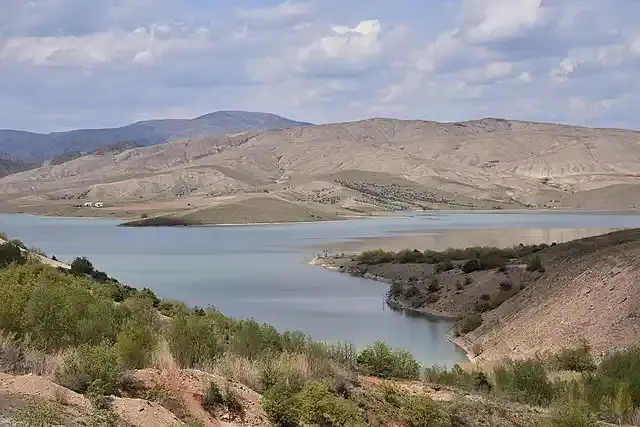
The marshes are a fertile area formed by the waters of the Tigris and Euphrates, their freshness and extreme fertility, and the bounties they carry along their course. Residents of the marshes say that the landscape, the culture of building homes, their tools, and their fishing practices have remained the same for thousands of years, passed down from father to son since the time of the Sumerians in the region until today.
The Euphrates River and the mountain of gold are among the signs of the approaching Hour
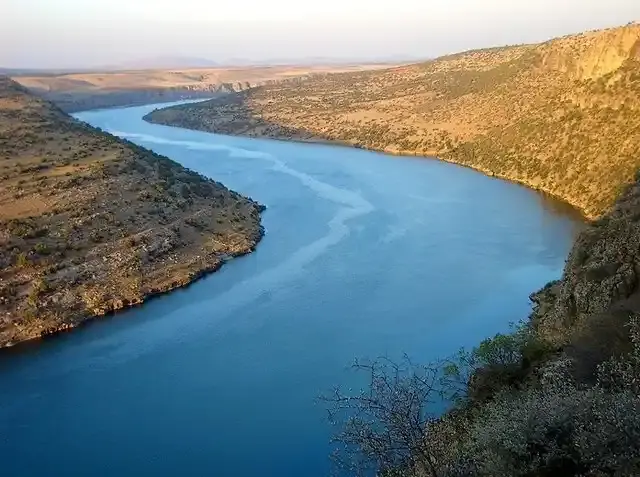
The Euphrates is mentioned more than once in the Prophet's hadiths; it is said to be one of the rivers of Paradise. In Sahih Muslim the Prophet Muhammad (peace and blessings of Allah be upon him) said: "Sihon, Jayhan, the Euphrates and the Nile are all rivers of Paradise."
It was narrated that Abu Hurayrah (may Allah be pleased with him) said the Messenger of Allah (peace and blessings of Allah be upon him) said: "The Hour will not arise until the Euphrates uncovers a mountain of gold on which people will be killed, and one in every one hundred and ninety‑nine will be killed."
In another hadith the Messenger of Allah (peace and blessings of Allah be upon him) said: "The Euphrates is about to disclose a treasure of gold. Whoever is present there will not take anything from it."
Did the mountain of gold appear and did the Euphrates recede?
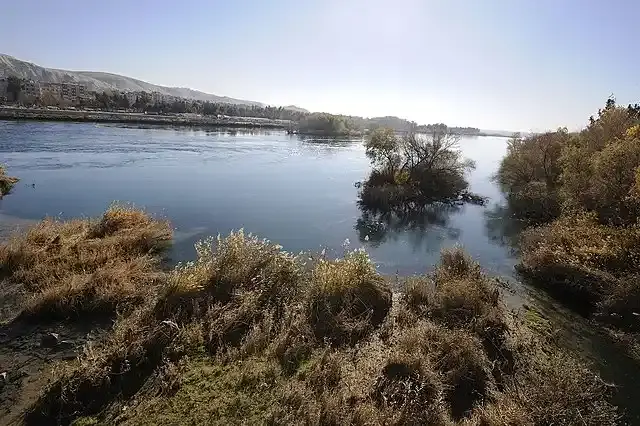
Although many people in recent times have spoken about the appearance of one of the signs of the Resurrection — the water receding from the Euphrates to reveal a treasure or mountain of gold — the river's occasional receding is a real and observable phenomenon. However, the gold treasures the Prophet mentioned have not yet appeared. The emergence of such an amount of gold, the hadith implies, would lead people to fight and annihilate one another until only one out of every one hundred remained.
But what made people think this sign had appeared, and why has the Euphrates begun to recede?
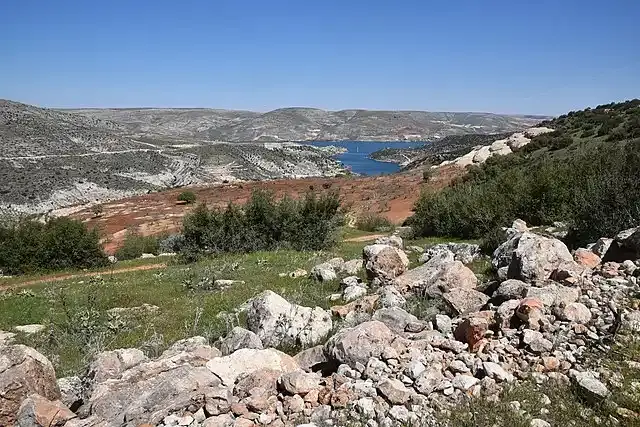
The construction of dams along the river's course has contributed to falling water levels. In Syria there are three dams on the Euphrates: the Euphrates Dam, the Freedom Dam and the Tishreen Dam. Turkey has also built several large dams upstream, including the giant Atatürk Dam. As a result, water levels often fall behind these dams, especially during periods of reduced rainfall, such as in summer.
The Euphrates River: history and perpetual present
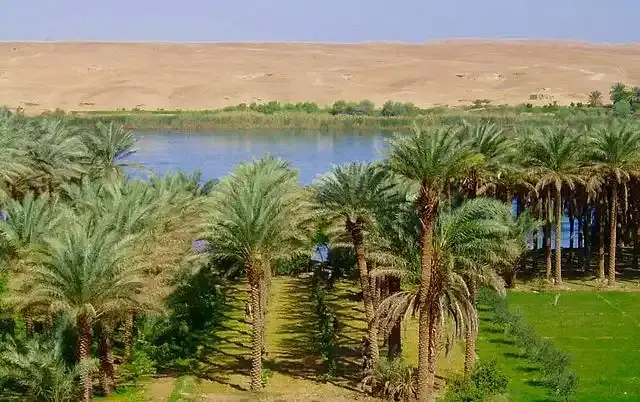
The Euphrates is one of God's gifts to people on earth. It is described as one of the rivers of Paradise; even if we do not know the exact interpretation of that hadith, the description gives the river a special sanctity and status among bodies of water.
Beyond witnessing the many civilizations that settled on its banks — including the Assyrian and Babylonian civilizations — the Euphrates also captivates those who see and visit it with its distinctive character and fresh water.