The Arabian Peninsula contains a lot of high mountains, for example, the Hijaz mountain range, which is part of the largest range, the Red Sea mountain range in the west of the Arabian Peninsula, but this is the only mountain range in the peninsula, the Republic of Yemen also contains
ADVERTISEMENT
one of the highest mountains in the peninsula, which is Mount Nabi Shuaib, and in this article we will talk in some detail about the five highest peaks in the Arabian Peninsula.
Mount of the Prophet Shuaib (Mount of Presence)
صورة جبل النبي شعيب في اليمن (المصدر)
Mount Nabi Shuaib is the highest mountain peak in the Arabian Peninsula and the Levant as well, as its height exceeds three thousand meters and is part of a volcanic chain called the triangular chain in the Republic of Yemen, and the mountain was named by this name in relation to the effects in it, which in turn are also attributed to the Prophet Shuaib, who was sent to Mikhlaf presence - the region or province of attendance according to the Yemeni name Qiddiya - but they lied and killed him and immediately after their authority was eliminated by the most famous Babylonian king "Nebuchadnezzéd" Nasr II."
ADVERTISEMENT
It is believed that the Prophet Shu'ayb is not a debtor who was a contemporary of Moses (peace be upon him) and married one of his daughters.
The mountain includes monuments belonging to the Prophet Shuaib, including his mausoleum and a mosque, and despite the difficult terrain in the region, it is not without a population, as it has more than four thousand people, according to the 2004 census.
Souda Mountain
صورة تلفريك جبل السودة بعسير (المصدر)
The mountain is located in the Asir region in the south of the Kingdom of Saudi Arabia and is part of the Asir mountain range and its height also exceeds the barrier of three thousand meters and is the highest mountain in the Kingdom of Saudi Arabia ever.
The importance of Mount Souda comes not only from being the highest among the mountains of the Kingdom, but also from being an excellent tourist attraction, and many tourists come from inside and outside the Kingdom to live the experience of riding the mountain's teleferk, which connects it to the city of Abha.
ADVERTISEMENT
There are also a group of tourist villages in the area, which collectively form Souda Park. In addition to the service development projects carried out by the authorities in the Kingdom to link the Jabal Al-Soudah area with the Tihama plains, which is also one of the most important areas in the Kingdom of Saudi Arabia, which includes very important cities in the Kingdom such as Mecca, Jeddah, Al-Qunfudhah, Yanbu and others.
Mount Branches
Mount Farou is one of the highest mountain peaks in the Kingdom and in the peninsula, which is also part of the Asir mountain range and in turn also exceeded the barrier of three thousand meters and is located south of Abha and there is a conflict of numbers about who among the peaks of the branches and Souda is the highest on divorce in the Kingdom, but it is thought that the differences between them do not exceed a few centimeters, so trying to search for which is the highest will not change the fact that they are close in length in something.
ADVERTISEMENT
Jebel Farou also has activities that attract tourism, but they are different from those in Jabal Souda, as they are represented in climbing the mountain and having the adventure of living nature by itself instead of just watching it from the cable car windows.
Jebel Shams
صورة للمنظر من أعلى جبل الشمس في سلطنة عمان (المصدر)
Jebel Shams is located in the Sultanate of Oman and is located in the Wilayat of Al-Hamra in the Governorate of Al-Dakhiliya and has taken its name from being the first thing on which the sun rises in the Sultanate because it is the highest mountain peak in it at all, and this is what makes it also the last thing that the sun sets from, so it was his name by which he is known to this day. The mountain covers many trees, some of which are wild and found due to nature, such as bots, alalan and olive trees, and some of them were also planted by the residents of the area, such as peach and apple trees.
ADVERTISEMENT
Mount gypsum
Located in the north of the Emirate of Ras Al Khaimah, Gypsum Mountain is approximately 25 km from the city, and it is the highest mountain peak in the United Arab Emirates, with a height of more than 1900 meters, and it is one of the Hajar mountain range.
The site of Mount Gypsum has a group of farms and trees that are watered by the rain that falls periodically on the mountain, and sometimes snow falls on the mountain. This makes it a tourist attraction, especially after the UAE has developed the area and established service and recreational facilities such as cable cars.
Islam Minshawi
ADVERTISEMENT
Those Stone Arches Aren't Just Beautiful — They Spread a Train's Weight into the Valley
ADVERTISEMENT
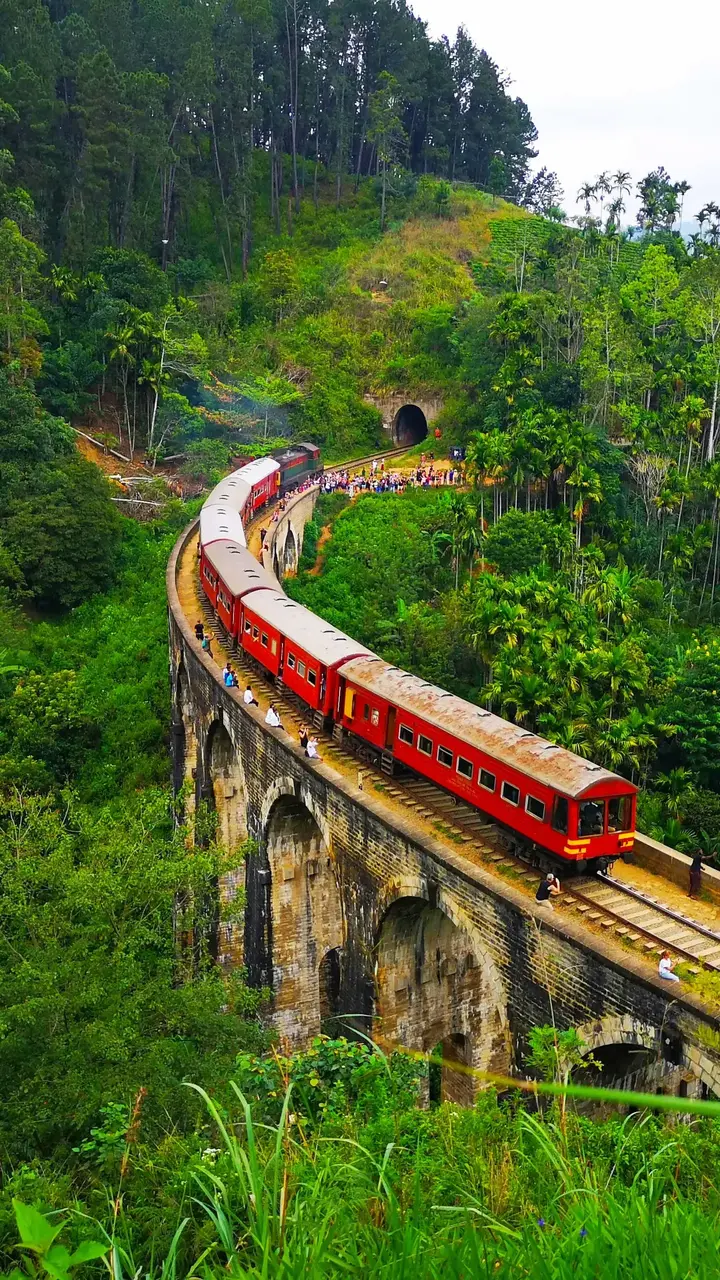
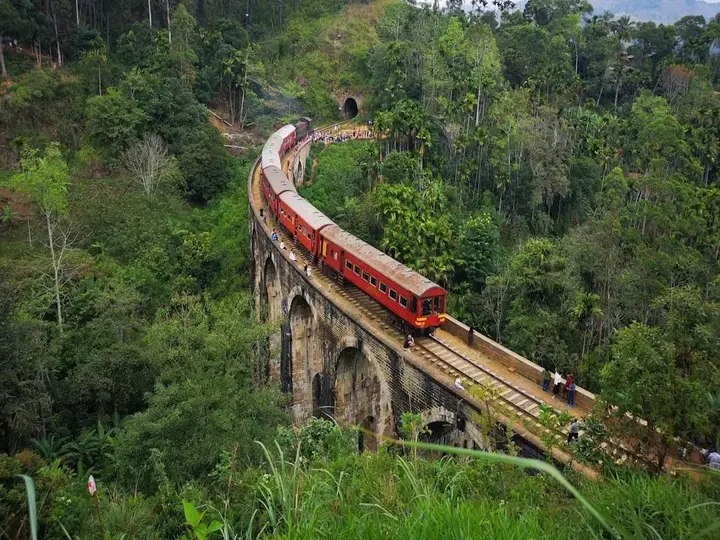
What makes Sri Lanka’s Nine Arch Bridge beautiful is not just the hill-country setting, but the way the structure solves weight in plain sight through nine stone arches carrying a railway in a clear curve toward a tunnel.
That is the satisfying part of this place: the beauty is the
ADVERTISEMENT
engineering. What looks almost too graceful to be practical is practical first. Its grace comes from that.
The bridge stands near Ella on the Badulla line, a section of Sri Lanka’s up-country railway built in the early 20th century under British rule. The Nine Arch Bridge itself is generally dated to 1919, and the useful fact for a traveler is simple: this was not made as a monument. It was made to carry trains through steep ground, over a valley, and into the hillside beyond.
ADVERTISEMENT
Photo by Mariana Proenca on Unsplash
Why the curve feels right before you know why
Most people first think the charm comes from height, forest, or the little drama of a train bending through the hills. Those things do help. But the curve is doing more than pleasing the eye.
A railway rarely chooses a shape by whim. Here the line has to meet the tunnel, cross uneven ground, and keep a workable route through the slope. So when your eye follows the train across the bridge, you are also following a path chosen by terrain, speed, and support.
Now for the useful part. According to standard structural engineering explanations of masonry arches, the kind taught in introductory texts and used by bridge engineers for centuries, an arch takes vertical load and turns much of it into compression that moves outward and downward into its supports. In plain words: the train presses down, and the arch sends that push sideways and down into the piers and then the ground.
ADVERTISEMENT
That is the bridge’s secret, though it is not hidden at all. The repeated arches are not decoration added after the hard work was solved. They are the hard work being solved.
If you want to test this on yourself, picture the same gap crossed by one long flat stone beam instead of a row of arches. Where would the weight go then? Mostly into bending across the open space, which is a much less happy job for masonry than being squeezed in compression.
The moment the pretty arches turn into a force diagram
This is the midpoint where the bridge changes in your mind. What seemed beautiful because it repeats now becomes beautiful because each repeated opening helps avoid asking a long flat span to do the wrong kind of work.
ADVERTISEMENT
Watch the load path in order. Train presses. Rails deliver. Deck transfers. Arches spread. Piers receive. Slopes hold.
That sequence is why the bridge feels so legible, even to someone with no engineering background. You can point to every step with your eyes: the track on top, the arch below, the pier under that, the valley sides taking the force away.
The curve helps teach this lesson. Because the train does not cross in a dead straight line, you notice the procession of arches one after another, almost as if the bridge were slowing the idea down so you can see gravity being redirected section by section.
The sound under the stone, and the long patience behind it
When a train goes over, there is that low, rolling drum of wheels crossing the rails, the sound echoing through the arches before it fades into the tunnel. For a second, the bridge feels all motion and timing, wheel after wheel, load after load.
ADVERTISEMENT
Hard cut: stone works on another clock.
The wheel meets the rail in an instant. The masonry carries compression over years, monsoons, repairs, and generations. That jump in time is what makes the bridge memorable. It is alive in the thud of passing trains, but its real strength belongs to the slow patience of stone kept mostly in compression.
This is, of course, a simplified explanation. Real rail loading also depends on material condition, maintenance, joints, track quality, drainage, and how forces change as trains move. But the simplification is honest enough to improve what you see: the visible shape is still telling the truth about the main structural idea.
Isn’t the fame really about the setting and the red train?
ADVERTISEMENT
Yes, partly. A lot of the bridge’s fame comes from the setting, the tunnel approach, the height above the greenery, and the image of a train curving across old stone. Tourism did not invent that appeal, but it certainly amplified it.
Still, scenery alone does not hold attention this well. Plenty of beautiful places are lovely for a glance and then done. Nine Arch Bridge keeps people looking because the structure makes sense to the body once someone points it out. You can feel that the arches belong there. The shape looks inevitable.
That is the synthesis worth keeping: the setting attracts the eye first, but the bridge stays in the mind because geometry, weight, and hillside cooperate so cleanly. The old railway line and the valley are not competing with each other. They are finishing each other’s sentence.
ADVERTISEMENT
What to carry away when you leave the hillside
Nine Arch Bridge is majestic not because stone happens to sit in a beautiful place, but because train, masonry, and slope are working together in a way you can actually read. The curve teaches your eye where the load goes. The arches teach your eye why the bridge can bear it.
So the next time you stand before an old bridge, do one small thing: trace the weight. Ask where the load leaves the deck, where the supports take it, and where the ground finally accepts it.
Once you see that, bridges like this stop being mere sights and start feeling like calm, durable explanations of gravity, written in stone.
Aylin Deniz
ADVERTISEMENT
Lake Geneva: Exploring the Wonders of the Swiss-Italian Border
ADVERTISEMENT
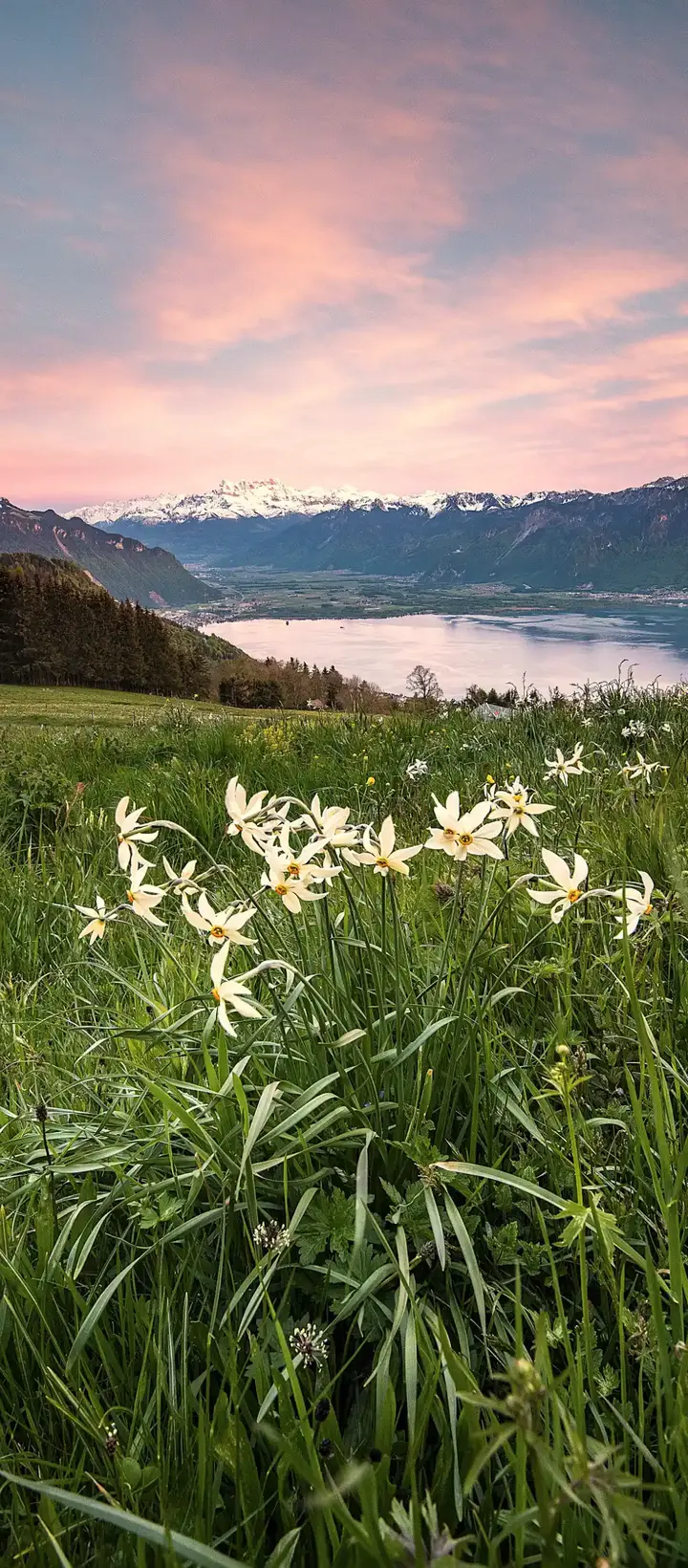
Lake Geneva (Lago di Ginevra in Italian, or Lac Léman in French) is one of the most striking natural landmarks on the Swiss-Italian border. The lake is encircled by the magnificent Alps, merging scenic natural beauty with a rich history of diverse cultures. It extends between Switzerland
ADVERTISEMENT
and Italy, making it a magnet for tourists eager to explore the natural beauty, unique cultural experiences, and adventures that bridge both countries.
Geography and History of Lake Geneva
Image via unsplash
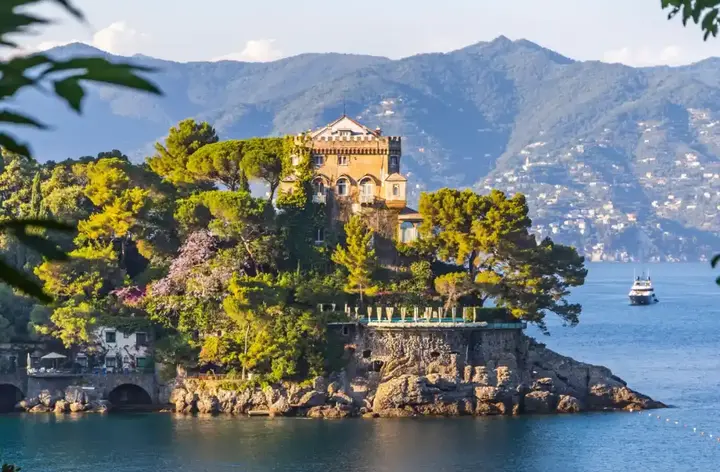
Lake Geneva is one of the largest lakes in Central Europe, covering an area of about 580 square kilometers. While most of the lake lies in Switzerland, its southern part extends into the Italian border. It features crystal blue waters surrounded by towering Alps, offering breathtaking panoramic views.
ADVERTISEMENT
Historically, the lake has been a center for civilizations that thrived along its shores. From Roman times, the area around Lake Geneva was used as an important trading point. Over centuries, it has become a sanctuary for artists and thinkers drawn to its serene beauty and the captivating nature surrounding it.
Water Activities in Lake Geneva
Image via aroundtheworldwithme
One of the main attractions drawing visitors to Lake Geneva is the variety of water sports available. Swimming enthusiasts can relish the lake's pristine waters, while those fond of sailing and windsurfing can indulge in their favorite sports thanks to the ideal winds sweeping the lake. Private boats and sightseeing cruises are a fantastic way to explore the small islands and beaches accessible only by water.
ADVERTISEMENT
Diving, too, presents a unique experience in Lake Geneva, where adventurers can explore the lakebed and observe unique marine life and ancient artifacts that may have been submerged for centuries.
Surrounding Cities
Image via unsplash
Geneva
Geneva, the Swiss city located on the lake's shores, is one of the most popular destinations for visitors. It is not only a global city with numerous international organizations, such as the United Nations, but also a historic and cultural hub. Visitors can stroll through the cobblestone streets of the old town, discovering landmarks like the famous Jet d'Eau fountain and St. Pierre Cathedral.
Montreux
Located on the lake's eastern shore, the charming city of Montreux is a perfect destination for music enthusiasts and cultural lovers. Montreux hosts the world-renowned jazz festival, attracting artists and audiences from around the globe. Visitors can enjoy walking along the flower-adorned promenade, taking in stunning views of the lake and the Alps.
ADVERTISEMENT
Lugano
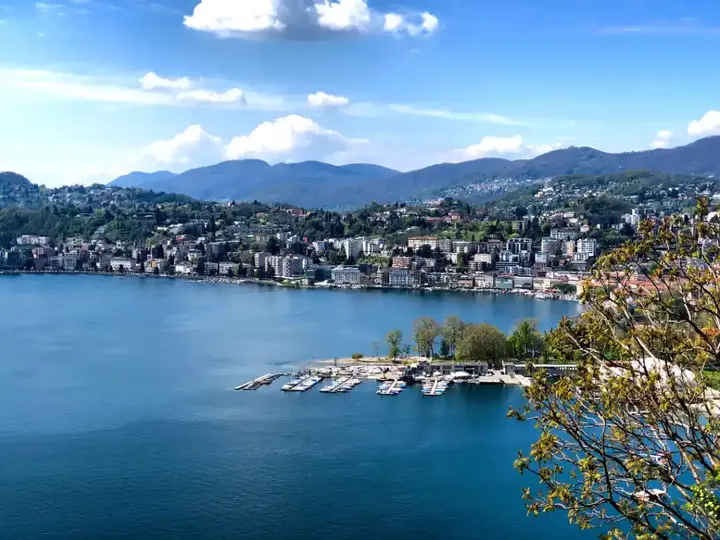
On the Italian side, the city of Lugano stands out as one of the most beautiful destinations along the lake. Influences of Italian culture are evident in the language, cuisine, and architecture. Lugano hosts several art museums and galleries, in addition to enchanting gardens like the "Parco Ciani," a perfect spot for a leisurely stroll and relaxation.
Hiking and Exploration
Image via content
For nature lovers and adventurers, Lake Geneva serves as a perfect launch point for numerous hiking and mountain walking trails. Visitors can hike through the surrounding hills and valleys blanketed with dense forests, enjoying the captivating scenery. There are trails to suit all fitness levels, from easy paths suitable for families to more challenging hikes reaching higher altitudes.
ADVERTISEMENT
One of the most renowned trails leads to the summit of "Rochers-de-Naye," located near Montreux. From this summit, adventurers can enjoy unparalleled panoramic views of the lake and the Alps.
Local Culinary Delights
Image via Wikimedia Commons
A trip to Lake Geneva presents a wonderful chance to taste distinctive local cuisines. The restaurants around the lake offer a blend of Swiss and Italian food that merges traditional and modern flavors. Visitors can enjoy dishes centered around fresh fish caught from the lake, like the famous perch fish. They can also savor traditional Italian dishes like pizza and pasta, served in small eateries along the lake's Italian shores.
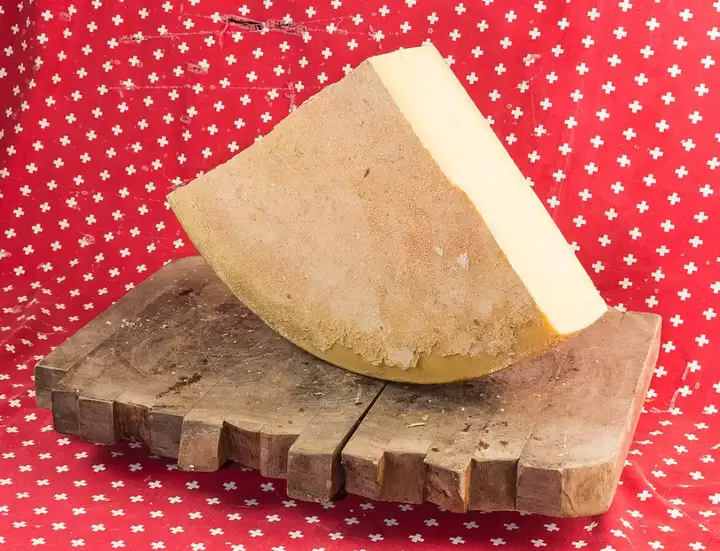
Additionally, it is recommended to try famous Swiss cheeses such as "Gruyère" and "Raclette," which are served in many restaurants along the lake. Don't miss the chance to taste authentic Swiss chocolate, available in high-end chocolate shops scattered in the Swiss cities surrounding the lake.
ADVERTISEMENT
Culture and History
Image via unsplash
The cities surrounding Lake Geneva are not only beautiful tourist destinations but also rich cultural centers. Visitors can explore numerous museums showcasing the region's history, from ancient Roman civilizations to modern art movements. The Museum of Modern Art in Lugano is one of the cultural highlights on the Italian side, displaying works by famous Italian and Swiss artists.
Castles scattered around the lake are major attractions as well. "Château de Chillon," located near Montreux, is one of the most famous castles in Switzerland, offering guided tours for visitors to explore its long and mysterious history. This historic building situated on a small island in the lake has been an inspiration for many poets and writers over the ages.
ADVERTISEMENT
Travel Tips
Image via Wikimedia Commons
If you're planning to visit Lake Geneva, here are some tips that might make your trip smoother:
● Best Time to Visit: Spring and summer (from May to September) are the best times to visit the lake and enjoy outdoor activities. The weather during these months is mild, and flowers bloom, adding beauty to city tours and walks.
● Language: In Switzerland, French and German are primarily used, while most residents on the Italian side of the lake speak Italian. However, don't worry, as English is widely understood in all tourist areas.
● Getting Around: Renting a car is recommended for the freedom to move between different cities along the lake, but there is also an excellent public transportation network connecting the main cities around the lake.
ADVERTISEMENT
Lake Geneva is an unmatched destination for travel and nature lovers. Whether you wish to relax on the lake's shores, explore historic cities, or dive into water activities, you will find everything you dream of in Lake Geneva, a journey you won't forget. This unique destination combines breathtaking natural beauty with the allure of Swiss-Italian culture and history, making it one of the top destinations in Europe.