The legend of the phoenix bird - Arab fiction or Western myth?

The phoenix is listed among the three impossibilities in ancient Arabic proverbs. In fact, this mythical creature appears in stories across many ancient civilizations. The legend of the phoenix is one of the oldest and best-known in the world; its image and symbolism have recurred in different civilizations and cultures throughout history.
Show key points
- The legend of the phoenix is one of the oldest and most enduring myths, appearing in numerous ancient civilizations including Greek, Egyptian, Arabic, and Chinese cultures.
- In ancient Arabic proverbs, the phoenix is considered one of the three impossibilities, highlighting its mythical and unattainable nature.
- The origin of the phoenix myth is mysterious and unknown, with no civilization holding exclusive claim to its beginnings.
- ADVERTISEMENT
- Despite the lack of scientific evidence for its existence, the phoenix symbolizes hope, rebirth, and triumph over adversity across cultures.
- In Greek mythology, the phoenix is described as a magnificent, sun-related bird that burns itself and regenerates from its ashes, symbolizing immortality.
- Ancient Egyptians associated the phoenix with the sacred bird "Banu", linking it to the sun and eternal life, with depictions found in temple murals.
- The myth of the phoenix continues to inspire modern art, literature, and society, due to its powerful themes of renewal and human resilience.
It appears in Greek mythology, in ancient Egypt, and even as far east as China.
Today we explore whether the phoenix originated in Arab folklore or whether it is a multicultural myth.
What is the origin of the legend of the Phoenix?
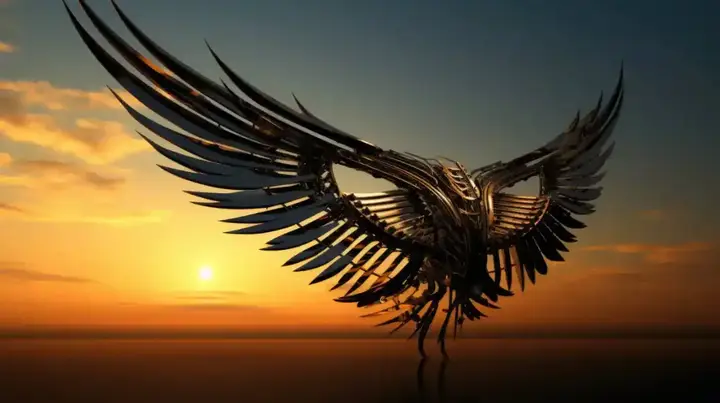
The origin of the legend is so ancient and mysterious that no one knows its true history!
Many civilizations claim this bird was part of their creation myths or played an important role in their mythology and symbolism.
Recommend
The phoenix is a mythical creature; there is no scientific evidence of its existence. Its story, however, has endured through the ages, symbolizing hope, renewal, and triumph over death. Ultimately, the origin of the myth appears to be a blend of different cultures and civilizations, and the phoenix embodies noble human values that continue to inspire us today.
Over time, its symbolism evolved to include deeper meanings, a development especially prominent in Western civilization.
Eternity and Renewal: The ability to regenerate from the ashes is a symbol of immortality and rebirth.
Beauty and Strength: Described as a magnificent bird with colorful plumage and powerful wings, it symbolizes both beauty and strength.
Triumph Over Adversity: Its ability to rise again after death symbolizes hope and the capacity to overcome hardship.
The legend of the phoenix survives today as a symbol in art, literature, and society. The myth inspires with its themes of renewal and hope, reminding us of humanity's ability to overcome difficulties and rise again.
Phoenix in ancient civilizations
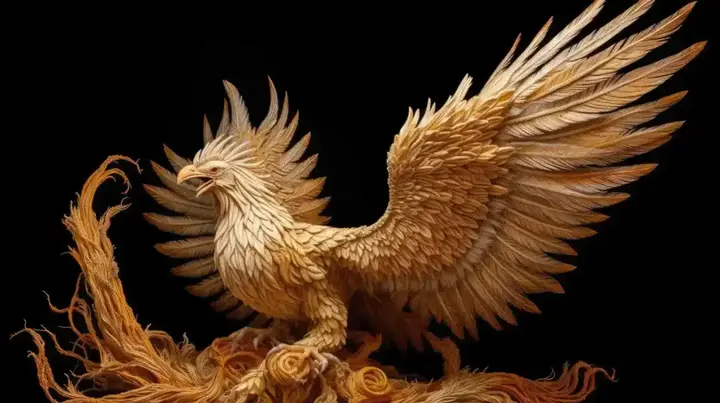
The phoenix in Greek tradition
The phoenix is mentioned in the writings of Herodotus and Pliny. In Greek mythology, the phoenix is described as a huge bird with colorful feathers and a golden beak that lives for thousands of years. They said it builds its nest from branches and then sets it on fire with a sacred fire from the sun, burning in it to be reborn from its ashes.
The legend of the phoenix inspired many Greek artists and writers. Images of the phoenix appeared in Greek art, such as frescoes, statues, and coins.
The Greeks used the symbol of the phoenix in many fields, such as religion, philosophy, and politics.
The myth of the phoenix spread to other civilizations, such as ancient Egypt and the Arab world, where its symbolism evolved to include deeper meanings.
Phoenix in the ancient Egyptian civilization
The phoenix is associated with the sacred Bennu bird in ancient Egyptian civilization, a symbol of immortality and the sun. The Bennu appears on temple murals, and some scholars have linked its name to the Egyptian word "Ben," which means "height."