Priceless treasures revealed: 8 archaeological finds worth millions (and billions)

Archaeologists' findings have been fundamental throughout history in teaching us about our ancestors, our culture, and the changes in human societies over time. Our history dates back to 2.5 million years ago when we found the first stone tools, and understanding our history is essential to paving the way for our future as a species.
Show key points
- Archaeological discoveries have played a crucial role in deepening our understanding of human history, culture, and social evolution.
- Some archaeological findings, while historically invaluable, have also turned out to be worth millions or even billions of dollars.
- The Crosby Garrett Helmet, found in England, was likely ceremonial and sold for $
- ADVERTISEMENT
- 6 million after meticulous restoration.
- The Belitung shipwreck off Indonesia revealed over 60,000 Tang Dynasty treasures and was bought for $32 million.
- Telia Tepe in Afghanistan yielded over 20,000 ancient gold and ivory objects, which were lost during conflict but rediscovered in 200
- The Padmanabhaswamy Temple in India houses a hidden vault rumored to contain up to $1 trillion in gold and jewels.
- Lucy, the
- 2-million-year-old hominid fossil found in Ethiopia, revolutionized our understanding of human evolution.
While the historical value of these finds is invaluable, some of the discoveries were incredibly lucrative and expensive. Golden treasure chests and vaults containing riches of jewels have been excavated and discovered by man in very unexpected places. Here is a list of some of the most valuable archaeological finds in history.
8.Battle of Garrett's Crosby Helmet
Recommend
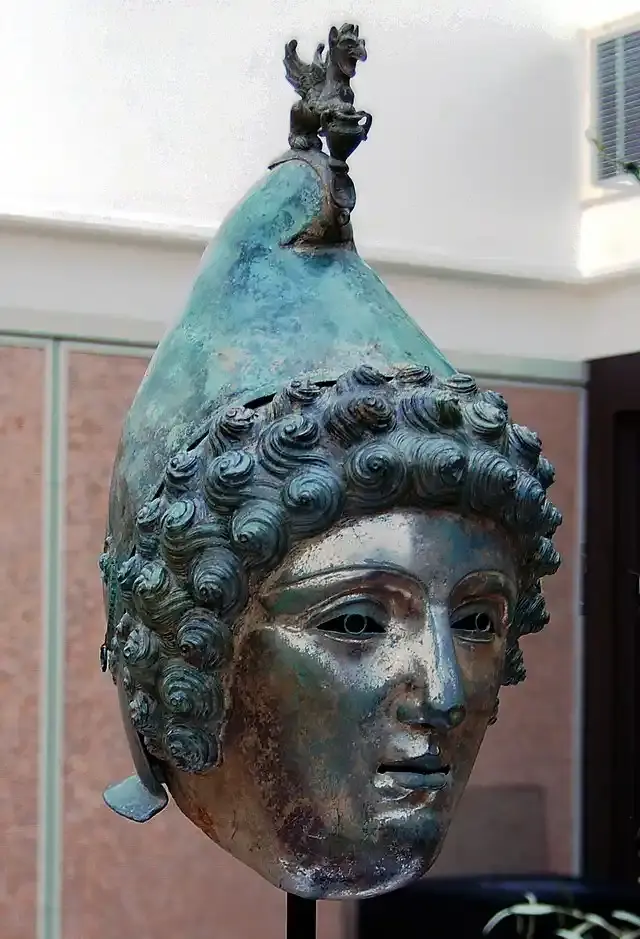
Where to find: Crosby Garrett in Cumbria, England.
Value: $3.6 million.
An unnamed metal detector found this early second or third century AD cavalry helmet near a former Roman agricultural settlement in Cumbria, England. When discovered, the helmet consisted of 67 wrapped pieces placed on two large stones at the bottom of a buried pit covered with earth and stone.
The helmet was sold to an undisclosed private buyer, after 240 hours of restoration and repairing each incision and hole using resin and glue. It is believed that the helmet was used in ceremonies and ceremonies, not for fighting, and may have already been an artifact at the time it was carefully wrapped and buried.
7.Secrets of the Sea: Discovery of the Shipwreck of Belitung
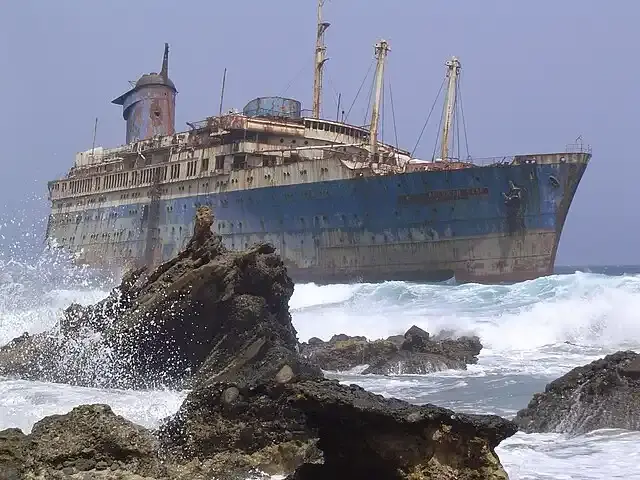
Where to find it: off the coast of Belitung Island, Indonesia.
Value: $32 million.
This Arab sailing ship sank while returning from China in 830 AD. It was far from its planned course, and no one knows exactly why the ship was off the coast of Indonesia in the first place. There was much to be learned from this discovery by archaeologists who found one of the largest collections of artifacts from the Tang Dynasty.
The collection was purchased for about $32 million by Sentosa Development Company and the Singapore government in 2005, and included 60,000 pieces, ranging from bowls to storage jars, gilded silver boxes, and funerary jars. It also contains the largest Tang Dynasty gold cup ever found. The collection can now be found at the Museum of Asian Civilizations in Singapore.
6.Tellia Tippi's Gold and Bacterial Treasure
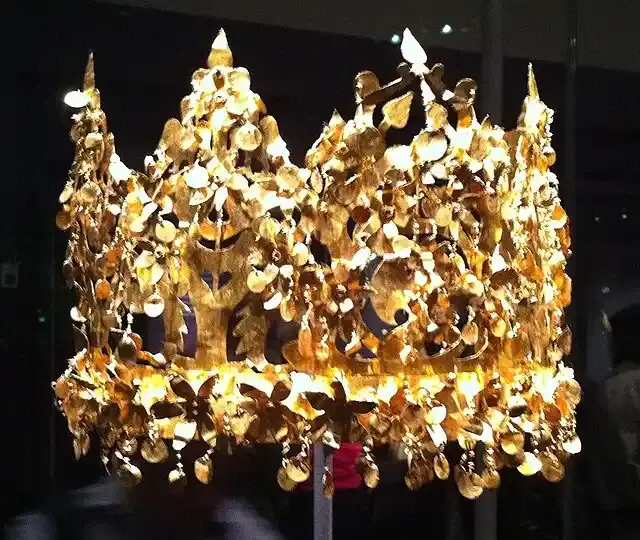
Where it was found: Jowzjan, Afghanistan.
Value: Cannot be calculated.
Telia Tepe, or Golden Hill in Persian, also known as bacterial gold, was discovered in Jawzjan, Afghanistan, and excavated in 1978. Approximately 20,600 pieces of gold, silver, ivory and other ornaments have been found in tombs dating back to approximately the first century BC.
After its discovery, the entire treasure disappeared from the Afghan National Museum during the war and was only discovered again in 2003, where it was found in secret vaults in Kabul. Finally, an agreement was reached between France and the Afghan government, and the collection was displayed in museums throughout the United States and in Paris. The collection will be kept in a museum in Kabul.
5.A trillion-dollar hidden treasure room beneath Padmanabhaswamy Temple
Where to find: Sri Padmanabhaswamy Temple, India.
Value: $1 trillion.
A large amount of treasures have been discovered in the gold-plated Sri Padmanabhaswamy temple, which is known as the richest temple in the world. However, the temple is shrouded in mystery, and legend has it that the room is protected by two giant cobra snakes, and anyone who dares to open the room will be doomed.
It's hard to believe that the sixth vault of the temple (Temple B) is guarded by such secrecy and mystery, but only five of the six vaults were opened by order of the Supreme Court of India, and are considered the largest collection of gold and precious stones in world history. The real Indiana Jones story if there is one.
4.More than 220 terracotta veterans discovered in China
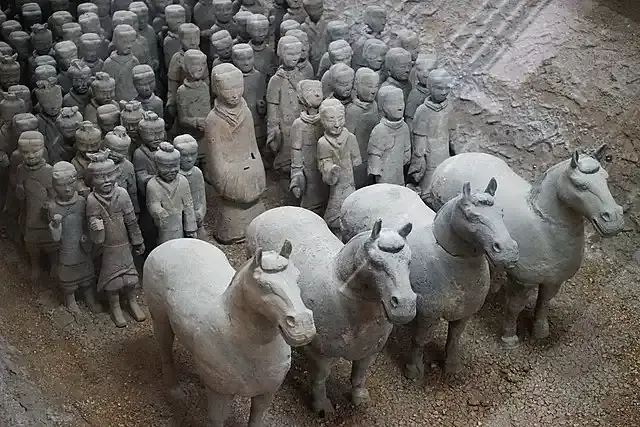
Where to find: Lintong District, Xi'an, Shaanxi, China.
Value: One soldier is valued at $4.5 million.
Created with the aim of protecting the first emperor of China Qin Shi Huang after his death, this collection of clay sculptures was buried with the emperor in 210–209 BC in Shanxi, China. Classified as a UNESCO World Heritage Site, these sculptures were discovered in 1974 by local farmers.
It is estimated that there are more than 8,000 soldiers and 130 chariots with 520 horsepower, and 150 horsepower of cavalry. Each soldier has unique facial expressions, and takes place according to his rank. Over the past 35 years, more than 600 craters have been discovered, yet the site has largely been unexcavated as some areas are difficult to access.
3.Secrets of the Dead Sea Scrolls
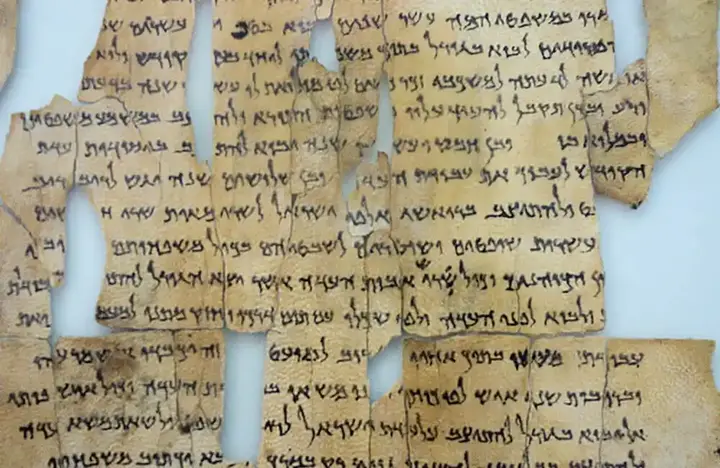
Where it was found: Qumran Caves, West Bank desert, Palestine.
Value: 1 billion.
It was discovered by teenagers in 1947 northwest of the Dead Sea in a cave, where a collection of large clay jars containing leather manuscripts and papyrus scrolls was found. It is estimated to be over 2,000 years old. After this discovery was revealed, approximately 850 manuscripts were excavated.
Written in Hebrew and Aramaic, the Dead Sea Scrolls contain parts of every book of the Old Testament except for the Book of Esther. It is not known if the missing parts have been corroded or not yet found. Among the scrolls, there is a treasure map containing 64 caves containing gold and silver worth one billion dollars.
2.Lucy: The Fossil That Changed Human History
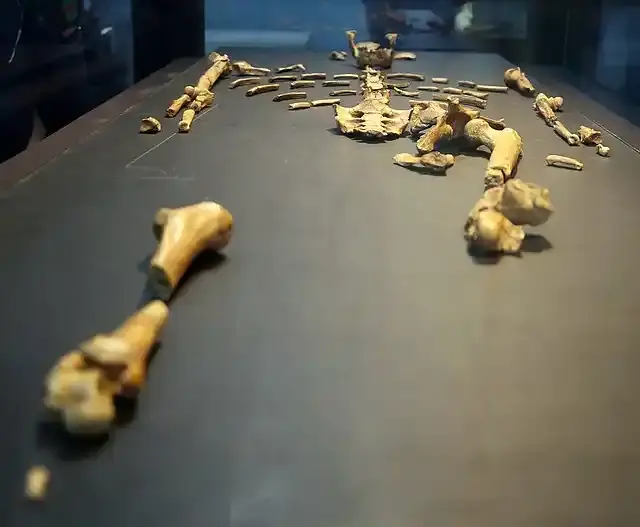
Where to find: Hatra, Ethiopia.
Value: Priceless.
AL 288-1 (more commonly known as Lucy) has an astonishing age of 3.2 million years. She is close to humans and has a "rooh knee," which indicates that she was walking upright. She is believed to have been fully mature at the time of her death, and this was determined by her molars that were slightly worn out, and her age was estimated at around 12 years.
Lucy is believed to be the oldest ancestor of hominin species, and it is accepted that she was not just a monkey but an early human. It can be found at the National Museum of Ethiopia in Addis Ababa, Ethiopia, but specimens of its excavation are in museums around the world.
1.The most famous tomb in the world: Tutankhamun
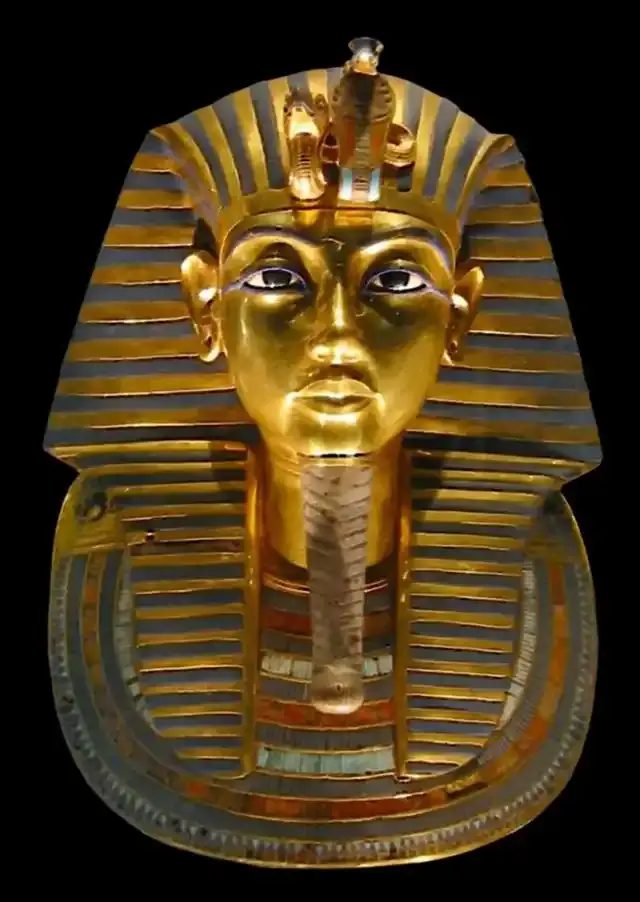
Where it was found: Tutankhamun's tomb, Egypt.
Value: The grave is insured for one billion dollars.
The pharaoh of ancient Egypt was the last ruler of his family at the end of the Eighteenth Dynasty. His tomb was discovered in 1922 and was almost complete, in addition to the intrinsic symbol of ancient Egypt, the mask of Tutankhamun. Known as one of the world's most iconic works of art, the Golden Mask is housed in the Egyptian Museum in Cairo.
The tomb was smaller than expected for someone of his stature and was said to have been robbed twice, but there is evidence that it was restored after the invasions. More than 5,300 objects were recovered, including a pure gold sarcophagus, thrones, trumpets, and many other valuable artifacts.