Fact or myth? The famous Hanging Gardens of Babylon

"The Hanging Gardens of Babylon" is one of the most wonderful and beautiful things that remains for us to know about the great Babylonian civilization and it is one of the seven wonders of the ancient world, we talk today about it and what surrounds its history with mystery and questions and did it really exist? Or is it just a myth made up by the Babylonians? Was it actually in Babylon or in another city?
Show key points
- The Hanging Gardens of Babylon, one of the Seven Wonders of the Ancient World, remain surrounded by mystery and debate about their actual existence and precise location.
- Named "Babylon" from the Akkadian term meaning "gate of the god," the city was a center of cultural and architectural sophistication in ancient Mesopotamia.
- Renowned for their engineering skills, the Babylonians constructed canals, dams, and complex legal systems, showing advanced organization and planning.
- ADVERTISEMENT
- Legend holds that King Nebuchadnezzar II built the gardens as a gift for his homesick wife Amitis to replicate the green landscapes of her homeland.
- Some researchers believe the gardens might have actually been in Nineveh and possibly linked to Queen Semiramis of the Assyrian Empire.
- Descriptions portray the gardens as multi-leveled structures with exotic plants, advanced irrigation systems, and stunning architectural beauty.
- Despite the lack of definitive archaeological evidence, the story of the Hanging Gardens continues to captivate historians and remains a symbol of ancient architectural wonder.
But before that, let's first know why "Babylon" was called by that name?
The Hanging Gardens of Babylon ... A legend on the ground
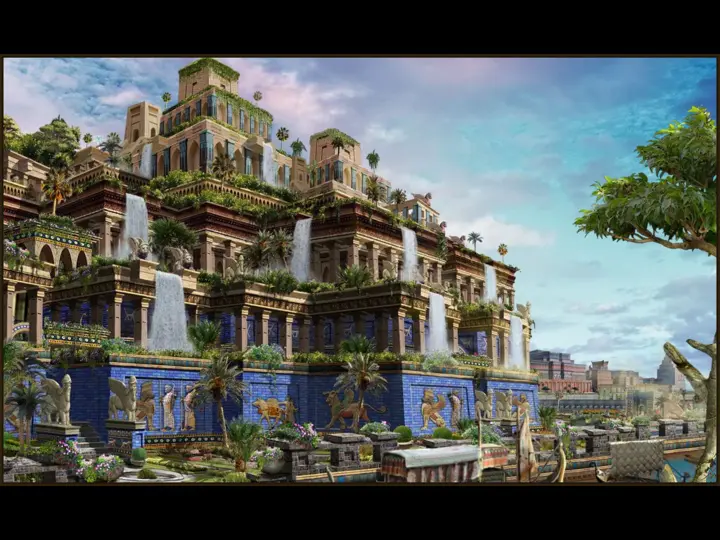
The Hanging Gardens of Babylon" is one of the most wonderful and beautiful things that remains for us to know about the great Babylonian civilization and it is one of the seven wonders of the ancient world, we talk today about it and what surrounds its history with mystery and questions and did it really exist? Or is it just a myth made up by the Babylonians? Was it actually in Babylon or in another city?
Recommend
But before that, let's first know why "Babylon" was called by that name?
The meaning of the name of the city "Babylon"
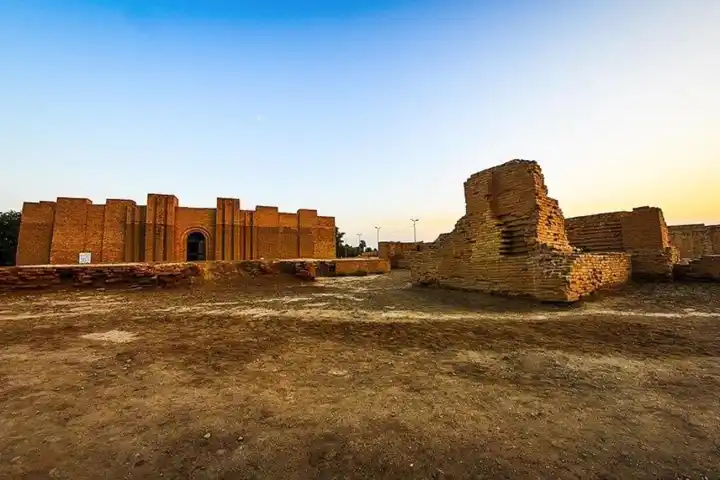
The city of "Babylon" is named after the Akkadian language meaning "gate of the god" or "gate of the gods" as it was mentioned in Latin with the word "babylon" and pronounced "Babel", which is at the same time the Hebrew name for it.
The ingenuity of the Babylonians in building and construction
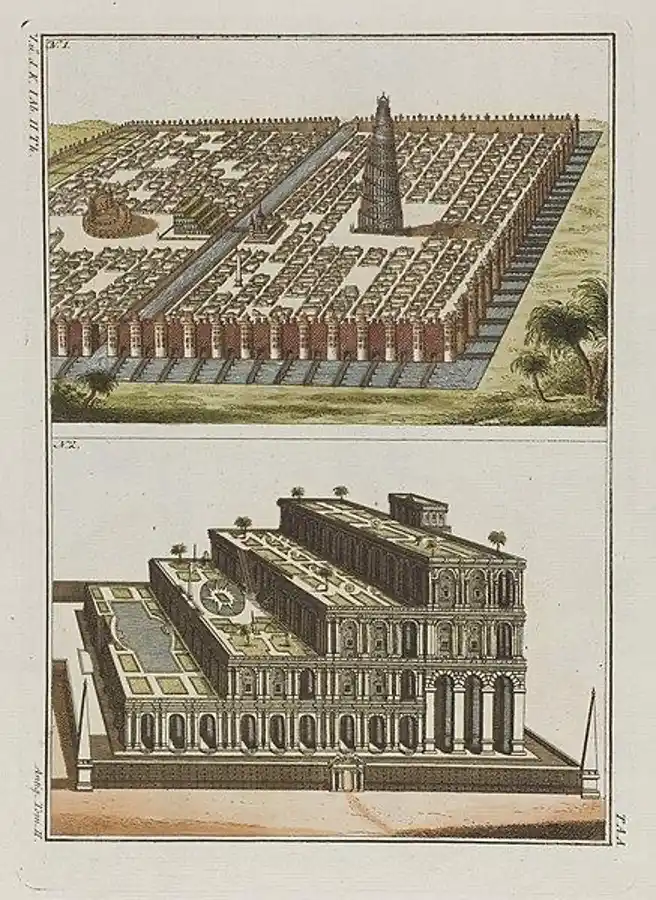
The Babylonians had the ability to calculate accurately and for this they were able to build canals, build dams, organize various works such as becoming pioneers in the leather and pottery industries, and they had a legal system and courts that adopted the system of witnesses and punished according to the "laws of Hammurabi".
The Hanging Gardens of Babylon between truth and myth
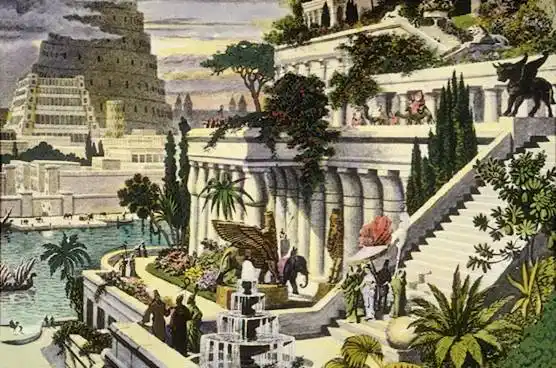
It is noteworthy that the gardens of Babylon were built in the ancient city of Babylon and its current location is close to the city of Hilla in Babylon Governorate, Iraq, and it is the first experience of vertical farming, as it dates back to approximately 600 years BC, and this is what arouses our curiosity to know the date of its construction and the reason behind the initiation of the construction of the hanging gardens of Babylon, which was impressive since the first day it developed its idea.
In whose era was the "Hanging Gardens of Babylon" built? And what is the reason for its construction?
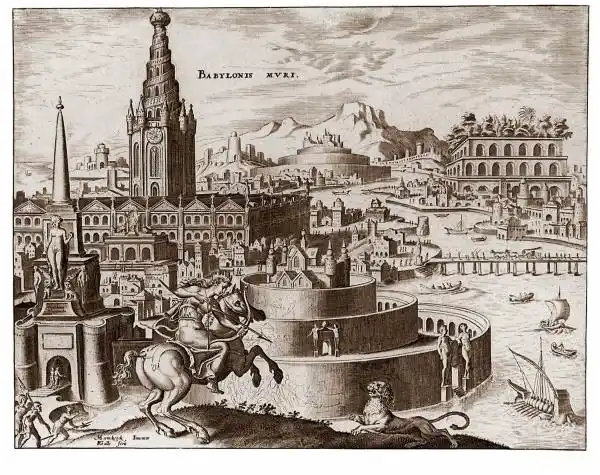
The Hanging Gardens of Babylon have been a mystery for historians, as there is no similar trace of them to this day that indicates their existence and is thought to be just a myth that has nothing to do with reality, as some assumptions based on excavations confirm that the gardens of Babylon were part of the royal palace in the city of "Babylon" and were built by King "Nebuchadnezzar" as a gift to his grieving wife "Amitis" on the parting of her homeland with a green nature, unlike "Babylon" with a dry and harsh nature.
Some believe that it is in "Nineveh" and was built during the reign of Queen "Semiramis" of the Assyrian Empire, where it is mentioned that the gardens of Babylon were built during the reign of the most famous Babylonian king "Nebuchadnezzar II" and that they remained standing until the "Hellenistic" era.
What did the "Gardens of Babylon" look like?
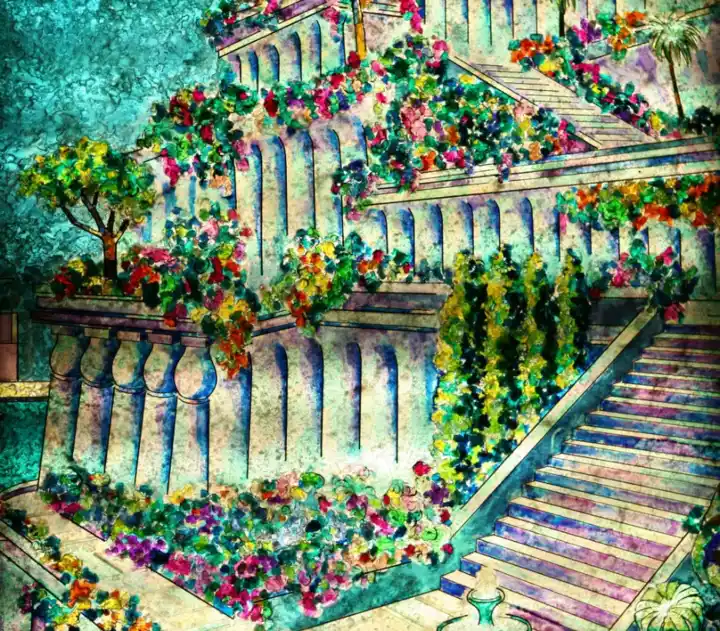
The gardens of Babylon are described as having been formed of hollow stone columns with a cubic shape containing soil in which many plants grow, some of which were imported from other places and watered using water lifted by serial pumps, and there are columns and stone tiles covered with lead and fountains scattered throughout the place to give it coolness and are also used to help irrigate crops.
The "Gardens of Babylon" are mysterious to this day
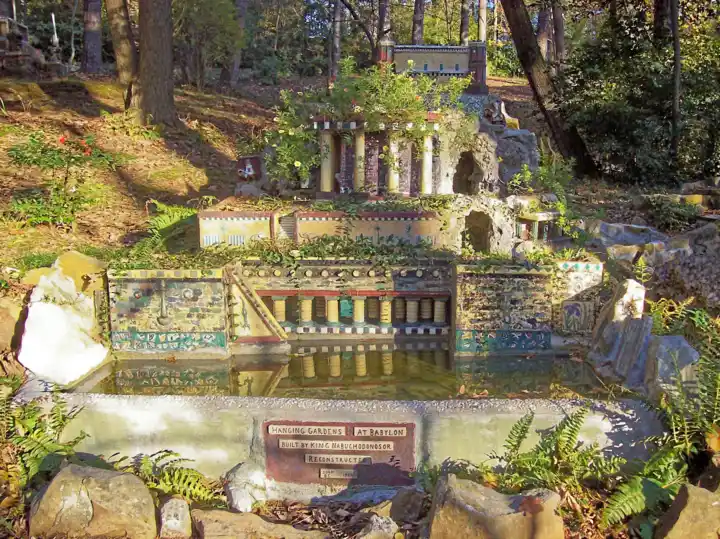
To this day, the "Hanging Gardens of Babylon" are still controversial and fraught with mystery, and it is said that they were not in Babylon as mentioned above, but despite their ambiguity, they remained mentioned by historians as mentioned in the Greek and Roman texts, and described as having plants and flowers hanging like a waterfall from a height of 22.86 meters amid columns and statues, the gardens of Babylon were built on the roofs of the royal palace located in Babylon and it was also said that they are located within the walls of the royal palace to the highest roofs as Mentioned in the book of the British archaeologist "Leonardo Woolley
The fall of Babylon after the death of King Nebuchadnezzar II
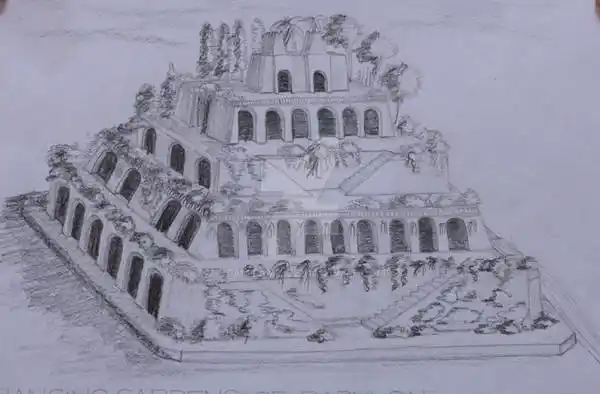
Babylon was subjected to many wars and invasions because of its geographical and commercial status and prosperity, led by the invasions of the Persians with their king "Cyrus the Great" and then followed in the campaigns by "Alexander the Great of Macedon" who died of Babylon fever to return to the hands of the Persians and then in 650 AD the Islamic conquest took place, and it had been erased from existence and only some traces remained.
"Hanging Gardens of Babylon" was and still is one of the most beautiful and wonderful features of Mesopotamia throughout history of creativity in construction and building, and they are also pioneers in many of the works by which they achieve the difficult equation between the functions performed by the facility and its aesthetic form, which has become a miracle of the seven wonders of the ancient world, so its magic does not stop at the borders of the country of Iraq between the past and the present, but went out to the whole world to enchant them with its dazzling rich gardens.