Some treasures to buy? Where is the wreck of the Titanic now?

The RMS Titanic made her maiden voyage from Southampton, England, to New York City on April 10, 1912. The luxury liner carried 2,240 passengers and crew. Four days into the voyage, the Titanic struck an iceberg. Despite the crew's efforts, the ship was badly damaged and began to sink. In the early hours of April 15, 1912, the Titanic went down to the bottom of the North Atlantic. More than 1,500 passengers and crew lost their lives in the disaster, making it one of the deadliest peacetime maritime tragedies in history. The Titanic has captivated the world ever since, inspiring numerous works of art.
Show key points
- The RMS Titanic sank on April 15, 1912, after hitting an iceberg during its maiden voyage from Southampton to New York, resulting in the deaths of over 1,500 people.
- The shipwreck was discovered in 1985 by a U.S.-French expedition led by Dr
- Detailed underwater surveys revealed that the Titanic split into two main sections, with the bow relatively intact and the stern severely damaged, laying about 2,000 feet apart.
- ADVERTISEMENT
- The deterioration of the wreck has worsened over time due to iron-eating bacteria, leading to the loss of recognizable features like the captain's bathtub.
- Thousands of artifacts, including rare books, jewelry, artwork, and personal effects, have been recovered from the wreck, offering insight into the ship's opulence and the lives on board.
- Wallace Hartley’s violin, famously played as the ship sank, became a powerful symbol of the tragedy and fetched $1.7 million at auction in 2013.
- The Titanic disaster sparked significant reforms in maritime safety, including the founding of the International Ice Patrol to monitor iceberg threats in the North Atlantic.
Discovery of the Titanic
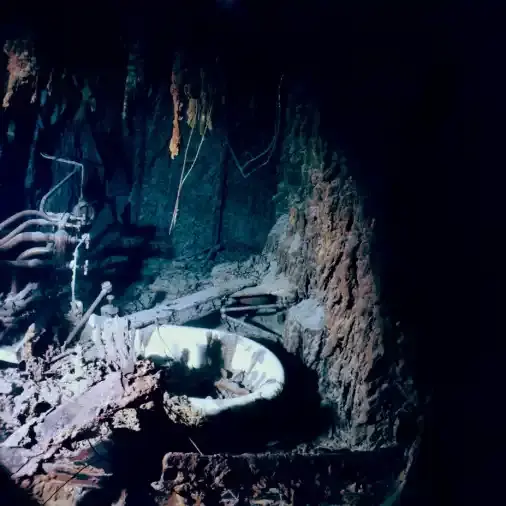
The Titanic was discovered on September 1, 1985, by a joint U.S.–French mission led by Dr. Robert Ballard of the Woods Hole Oceanographic Institution and Jean-Louis Michel of the French Research Institute for the Exploration of the Sea.
Recommend
The discovery was made using an unmanned submersible called Argo. Argo was sent to fly at an altitude of roughly 13,000 feet (4,000 meters) above the ocean floor, and its video feed was relayed back to the research ship. On September 1, 1985, the first underwater images of the Titanic were recorded, revealing its massive boilers. Later footage showed the ship broken into two main sections.
While the bow of the ship could be clearly identified, the stern was badly damaged. The wreck and surrounding debris were covered with rust-colored, stalactite-like formations. Scientists later identified these formations as "rusticles," created by iron-eating microorganisms that consume the wreck’s metal.
By 2019, researchers reported a dramatic level of deterioration; a number of notable features, such as the captain's bathtub, had disappeared. The Titanic lies at about 41°43′57″ North, 49°56′49″ West (arc section), roughly 13 nautical miles (24 km) from the position given in her distress signals. It has since been explored several times by manned and unmanned submersibles.
Subsequent investigations found no sign of a single long gash that had been thought to have torn the hull apart. Instead, scientists concluded that the iceberg impact produced multiple thin breaches, along with brittle fracturing and separation between adjacent hull plates, allowing water to flood into the ship and causing it to sink.
In the years after the discovery, expeditions recovered thousands of small artifacts from the wreck site as well as larger sections of the ship's structure, including a sizable portion of the hull. Examination of these parts, together with manufacturers' records, has led to speculation that inferior steel quality or weak rivets may have contributed to the ship's rapid flooding.
The final resting place of the Titanic
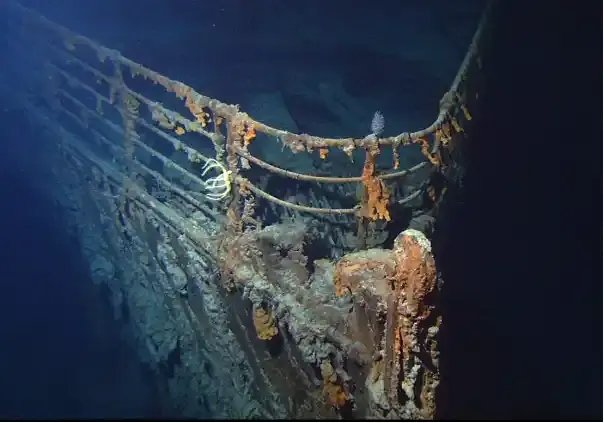
The Titanic's final resting place lies about 370 miles off the coast of Newfoundland, Canada, in the North Atlantic. The wreck sits at a depth of roughly 12,500 feet. The ship broke into two main pieces, the bow and the stern, which lie about 2,000 feet apart. The bow still preserves numerous interior features despite ongoing deterioration and damage to the seabed, while the stern was catastrophically damaged.
The debris field surrounding the wreck contains hundreds of thousands of items that spilled from the ship as it sank. The remains of passengers and crew were also scattered across the seabed and have since been consumed by marine organisms. The Titanic sank in 1912 after colliding with an iceberg during her maiden voyage.
The wreck has attracted intense attention and has been visited by many tourist and scientific expeditions. Controversial recovery operations have retrieved thousands of items from the site for preservation and public display. Various fanciful proposals have been suggested to raise the wreck—filling it with ping-pong balls, injecting it with 180,000 tons of petroleum jelly, or using half a million tons of liquid nitrogen to encase it in a floating ice block—but the wreck is too fragile to lift and is protected under UNESCO conventions.
Since its discovery in 1985 by Robert Ballard, the Titanic has been photographed and surveyed by multiple missions. In 2022, the first full-scale digital survey of the wreck was released, presenting the entire site using three-dimensional imaging technology.
Treasures of the Titanic
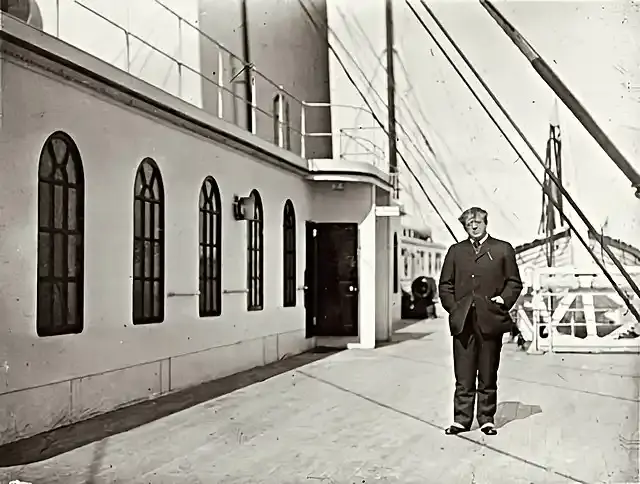
The Titanic was carrying a fortune of valuables when she sank: paintings, handwritten manuscripts, luxury jewelry, and automobiles among them. More than 5,000 pieces have been recovered from the wreck site. These artifacts range from personal belongings to parts of the ship itself.
Bejeweled Rubaiyat
The Rubaiyat is a collection of poems attributed to the Persian polymath Omar Khayyam (1048–1131). The poems were famously translated into English by Edward Fitzgerald in 1860. In 1911, the London publishing house Sangorsky and Sutcliffe produced an especially luxurious edition of the Rubaiyat, and a jeweled copy was reportedly among the Titanic's cargo.
1598 edition of Francis Bacon's Essays
A 1598 copy of Francis Bacon's Essays was reportedly aboard the Titanic. Bacon was an English philosopher and statesman whose works influenced the development of the scientific method and the course of the Scientific Revolution.
Renault Type CB Coupé De Ville (1912)
A 1912 Renault Type CB Coupé De Ville was among the Titanic's cargo. The car belonged to William Carter of Bryn Mawr, Pennsylvania, who was returning to the United States with his family after a trip to Europe.
Circassian in the Bath
"Circassian in the Bath" is a painting attributed to the French artist Marie-Joseph Blondel. The work was purchased by Swedish businessman Moritz Hakan Björnström-Steffansson while in Paris and was being transported aboard the Titanic.
Handwritten short story by Joseph Conrad
A short handwritten story by Joseph Conrad was reportedly aboard the Titanic. Conrad was a Polish-British novelist widely regarded as one of the greatest writers in the English language.
Tiffany Pink Diamond
A pink diamond from Tiffany & Co. was reported to have been on board, set in a pendant and packed in the ship's cargo hold.
Wallace Hartley
One of the most famous Titanic artifacts is the violin of Wallace Hartley, the leader of the ship's band. As the Titanic sank, Hartley and his fellow musicians continued to play. Hartley's violin, a gift from his fiancée Maria Robinson, was recovered with his body ten days later. In 2013, the instrument sold at auction for about $1.7 million.
Other items recovered from the wreck include clothing, menus, jewelry, furniture, and bottles of wine. These artifacts offer a vivid glimpse into the luxury of the ship and the lives of its passengers.
When the Titanic sank on her maiden voyage, she carried thousands of pounds of food, hundreds of mailbags (including some 7 million pieces of correspondence), and cargo ranging from Tiffany & Co. silver to rubber bales. Among the items owned by passengers were priceless manuscripts, rare works of art, jewelry, and film reels. The treasures of the Titanic remain a stark reminder of the tragedy that unfolded on that night in April 1912.
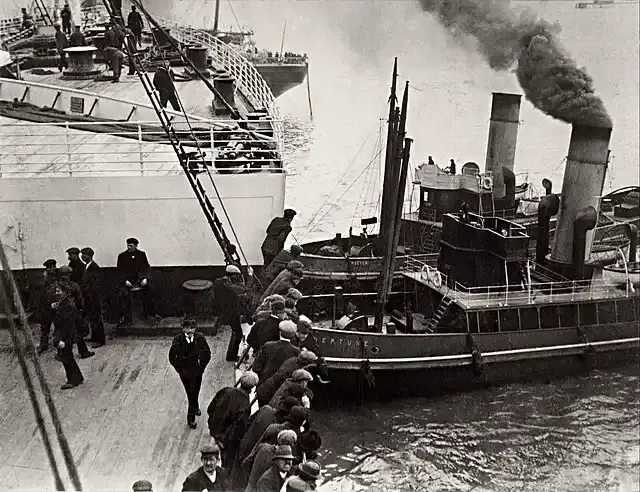
The story of the Titanic is one of human ambition, tragedy, and enduring fascination. The ship, once a symbol of human achievement and luxury, now rests on the Atlantic seabed as a poignant reminder of both human hubris and the power of nature. The treasures it carried reflect the wealth and lives of those on board.
The wreck and the artifacts recovered from it have provided invaluable information about the ship's construction, the circumstances of its sinking, and the lives of those aboard. Despite the tragic loss of life, the Titanic's story continues to captivate the world and inspire countless books, films, and exhibitions.
The disaster also led to major changes in maritime safety. It spurred reforms in international maritime law and the establishment of the International Ice Patrol, which monitors iceberg danger in the North Atlantic and provides safety information to ships.
Ultimately, the legacy of the Titanic is not only the ship itself but the people who built it, those who sailed on it, and those who perished. Their stories endure, reminding us of the triumphs and tragedies of human endeavor. As exploration and study of the wreck continue, we honor their memory and the lasting mark they left on history.