Title: Arab Contributions to Science during the Middle Ages
ADVERTISEMENT
Preservation and translation of knowledge:
Preservation and translation of knowledge:
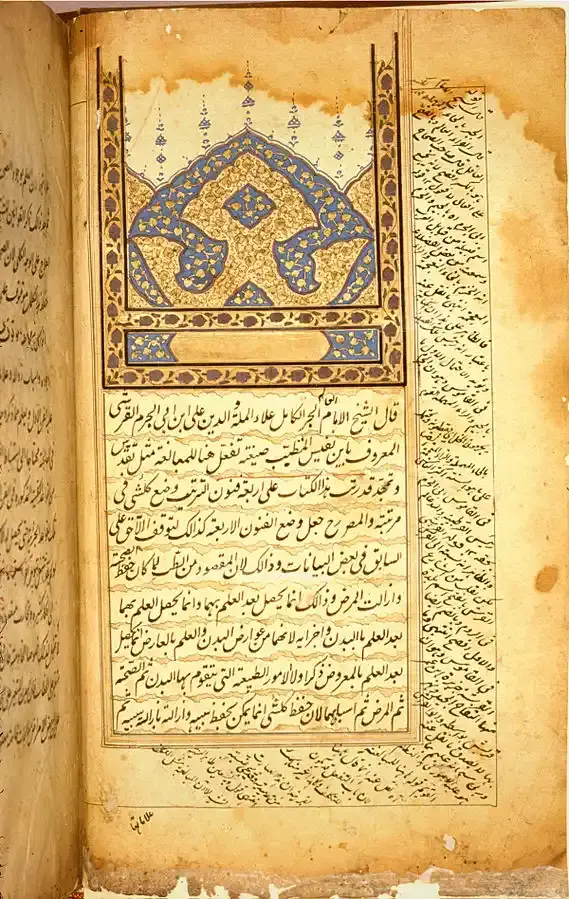
At the center of the medieval intellectual renaissance stood the House of Wisdom in Baghdad. There scholars translated manuscripts from ancient civilizations—including Greek, Roman, Persian and Indian—into Arabic with great care. This translation movement, often called the
ADVERTISEMENT
Arab Renaissance, played a pivotal role in preserving the wisdom of antiquity and making it available to later generations. Prominent translators such as Hunayn ibn Ishaq and Thabit ibn Qurra helped bridge cultural gaps and preserve the rich heritage of human knowledge.
Chemistry:
Photo from Wikipedia
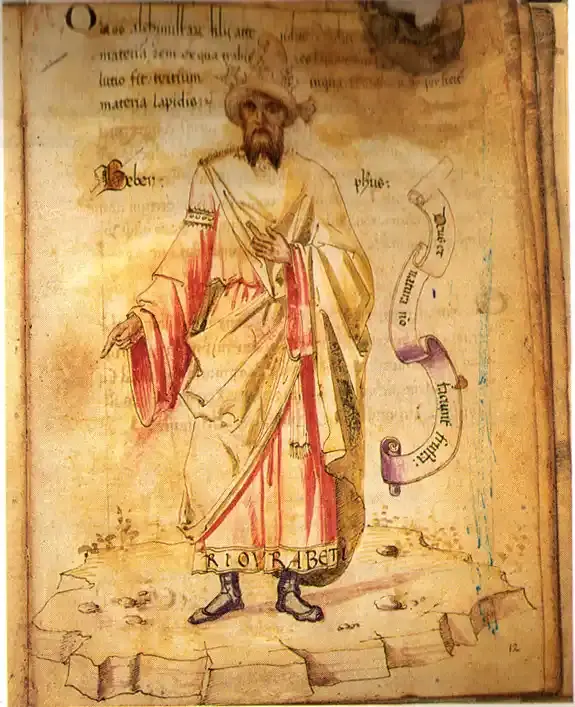
The early period saw the development of systematic frameworks for chemistry by figures such as Jabir ibn Hayyan, al-Razi and Maslama al-Majriti. Jabir ibn Hayyan, known in the West as Jabir and often called the father of modern chemistry, is credited with works that served as standard references in the field for centuries. His Great Book of Chemical Properties was considered essential reading until the eighteenth century. Jabir is also said to have developed fire-resistant paper and ink readable at night, and to have identified many new substances, including various alkalis, acids, salts, pigments and greases. He is credited with preparing caustic soda and several sulfates. Among his other works were titles often translated as "The Great Book of Chemical Properties," "Scales and Measures," "On Moods," "Chemical Composition," and "Pigments and Dyes." His influence can be traced throughout the history of chemistry in both the Islamic world and Europe.
ADVERTISEMENT
Abu Bakr Muhammad ibn Zakariya al-Razi (al-Razi) was one of the most prolific Muslim physicians and authors, producing around 200 books, including Kitab al-Mansuri and Al-Hawi, an encyclopedic work on medicine in twenty volumes. In The Secret of Secrets he classified natural substances into plant and animal categories, while other chemists used categories such as bodies and spirits. Al-Razi is often regarded as a pioneer of experimental methods in chemistry, emphasizing observation and evidence and exploring medical applications of chemical compounds.
Maslama al-Majriti (c. 950–1007), a Spanish Muslim chemist from Madrid, is noted for his work commonly translated as The Status of the Wise. That work, assembled around 1009, included recipes and procedures for purifying precious metals. In it he anticipated the principle of conservation of mass centuries before Lavoisier. Terms such as "alcohol" and "alkali" derive from Arabic. Arab scientists also made important contributions to practical chemistry—advancing glass and metalworking, and improving dyeing techniques—developing technologies that benefited industry and paved the way for further scientific research and innovation.
ADVERTISEMENT
Medicine:
Photo from Wikimedia
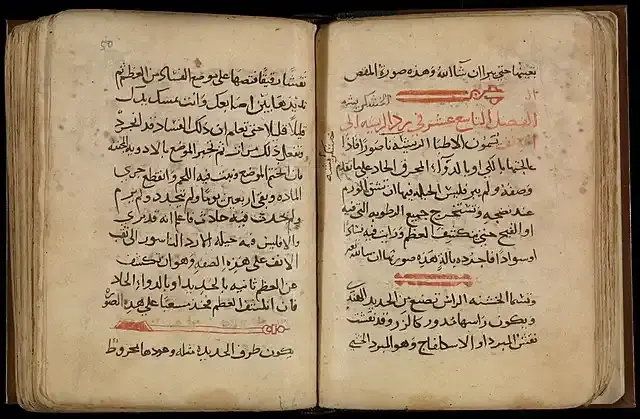
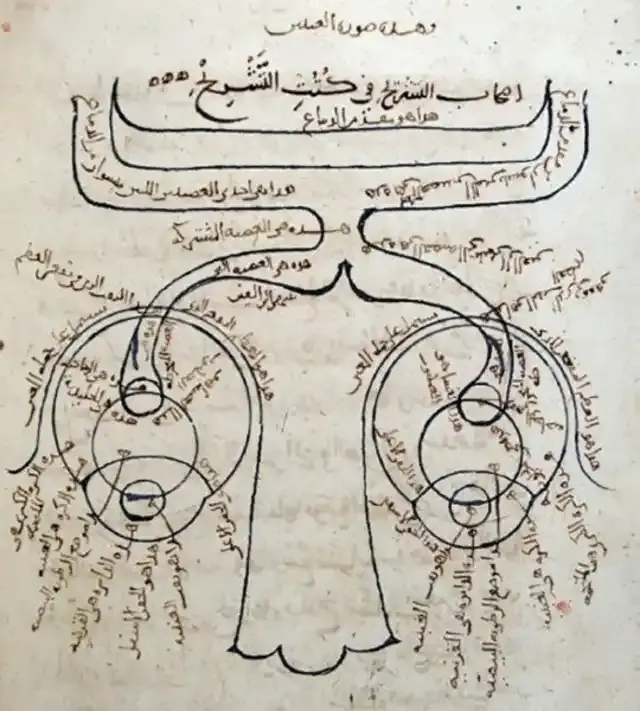
Medicine was a central part of medieval Islamic culture. Islamic medicine built on the legacy of Greek and Roman physicians and scientists, drawing on Galen, Hippocrates and the scholars of Alexandria. Islamic scholars translated extensive Greek works into Arabic, then expanded and organized them into encyclopedias and summaries. Through these Arabic texts, Western physicians later learned Greek medicine and adopted many Islamic medical traditions.
Ibn Sina's Canon of Medicine, an encyclopedic summary of medical knowledge spanning some seven centuries, was translated into Latin and circulated widely in both manuscript and print. Other major physicians included al-Razi, al-Zahrawi, Ibn al-Nafis and al-Ghazali. Al-Razi wrote about two hundred books, among them Al-Mansuri (in ten volumes) and Al-Hawi (in twenty volumes), and he served for a long time as director of the Baghdad hospital. Al-Zahrawi followed al-Razi and wrote Al-Tasrif, a surgical reference that described many operations and the instruments used in them.
ADVERTISEMENT
Pharmacy:
Photo from Wikimedia
Work in pharmacy was closely tied to advances in chemistry, especially in drug research and manufacture. Substances such as camphor, alum and amber were used therapeutically, and the first pharmacies appeared in Baghdad in the ninth century, where the profession was organized and supervised. Notable pharmacists and scholars included al-Biruni, Abu Mansur al-Muwafaq, Ali ibn Rabban al-Tabari (author of Firdaws al-Hikma), and members of the Bukhtishu family, whose chief Jibril served Caliph al-Mansur; his son Jibril later served Caliph Harun al-Rashid and managed a medical school.
Arab scholars conducted extensive research on medicinal plants and substances and compiled large pharmacopoeias. Ibn al-Baytar, a distinguished botanist and pharmacist, authored The Collector of Simple Drugs, listing more than 1,400 medicinal plants and their properties. His work expanded pharmaceutical knowledge and aided the development of new treatments and medicines.
ADVERTISEMENT
It is evident from the above that knowledge in chemistry, medicine and pharmacy was deeply integrated, and many scholars worked across multiple disciplines.
Physics:
Photo from Wikimedia
In physics, Arab scientists emphasized practical and experimental approaches to sound, light and mechanics. Ibn al-Haytham was especially influential for his work on optics; his Book of Optics remained a standard reference on light and vision for about six centuries. Al-Kindi also studied Greek theories of vision and contributed his own ideas.
In the study of solids, Abu al-Rayhan al-Biruni measured the specific weights of various precious stones and explained that specific weight is proportional to the volume of water displaced. He also discussed the behavior of wells and springs. In kinematics and the study of fluids, Abu al-Fath al-Khazini laid foundations for theories of inclination, impulse and gravity, determining specific weights of solids and liquids, and writing The Balance of Wisdom. Arab scholars also examined the basic laws of motion and movement.
ADVERTISEMENT
Math:
Photo from Wikimedia
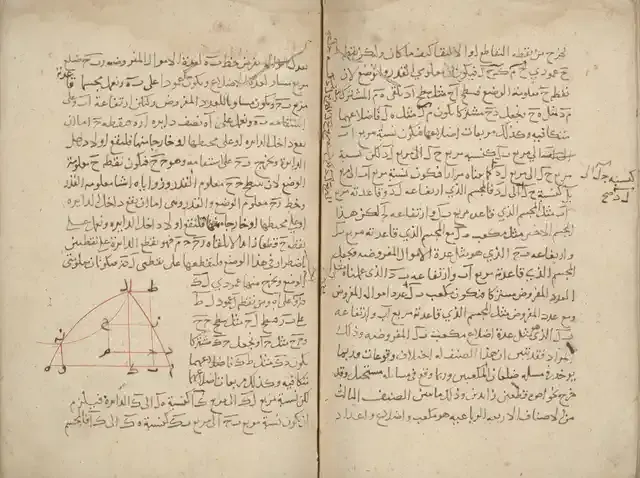
Arab scientists contributed significantly to mathematics, including the development of numeral systems and arithmetic. The introduction of Arabic numerals and zero into the decimal system facilitated Europe's adoption of these numbers. Muhammad ibn Musa al-Khwarizmi is credited with founding algebra and writing seminal works in the early ninth century; his name gave rise to the terms algebra and algorithm in Latin languages. Others associated with his school include Muhammad al-Karaji, Al-Samawal al-Maghribi and Omar Khayyam.
In trigonometry, scholars such as Muhammad ibn Jabir ibn Sinan al-Battani, Abu al-Wafa al-Buzjani, Ibn Yunus, Ibn al-Haytham and al-Biruni introduced and refined terms and concepts like sine, cosine and tangent. Mathematicians such as Abu Sahl al-Quhi studied and developed geometric constructions, building on translations of Greek works by Ptolemy, Euclid and Apollonius.
ADVERTISEMENT
Astronomy:
Photo from Wikimedia
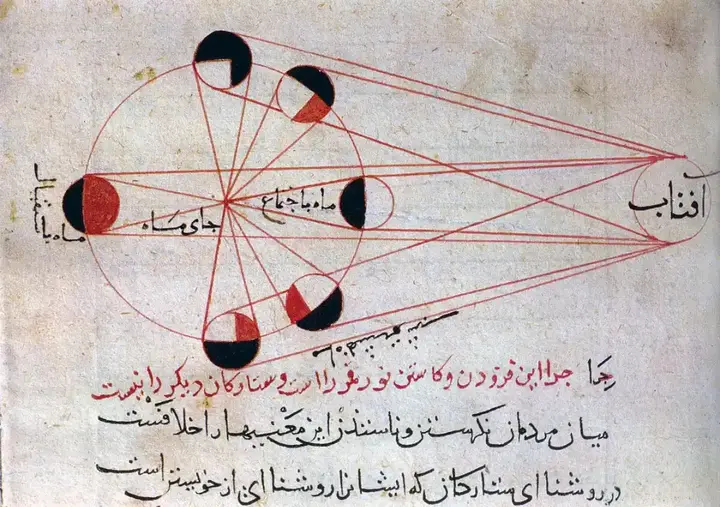
Arab scientists pursued astronomy for religious purposes—such as determining prayer times and lunar months—and for practical needs in travel and navigation. They developed observational instruments like astrolabes, quadrants and equatorial devices, and they compiled tables and charts of the movements of the Sun, Moon and planets. One early important work was al-Khwarizmi's Zij al-Sindhind (c. 830). Later observers, such as Ahmed bin Abdullah al-Marwazi, made precise measurements at Baghdad observatories and collected their results in works like Dimensions and Bodies. Al-Battani recorded unusually accurate observations and measurements of the solar year; his treatise De Motu Stellarum (On the Motion of the Stars) influenced later European astronomers.
ADVERTISEMENT
Geography and maps:
Photo from Wikimedia
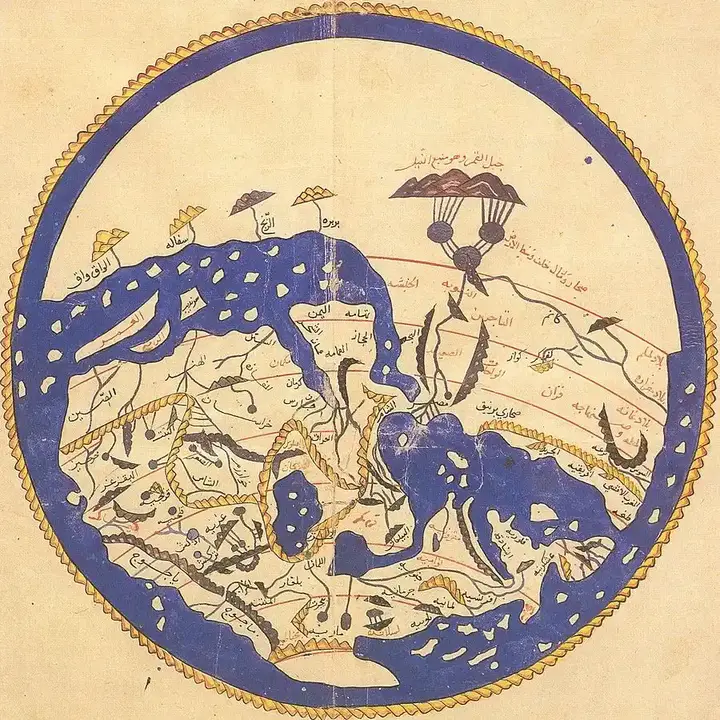
Arabs long relied on visible landmarks by day and stars by night to navigate the vast Arabian deserts. Yaqut al-Hamawi's Dictionary of Countries serves as a geographical encyclopedia. As the Islamic state expanded and trade increased, Arab scholars worked on mapping and studying the globe. Al-Khwarizmi's The Image of the Earth is among the most important early geographical works.
Cultural exchange and influence
Photo from Wikimedia
The Arab world served as a vital center for cultural exchange, where ideas from diverse civilizations met and developed. Arab scholars engaged in sustained intellectual dialogue with Byzantine, Persian, Indian and Chinese thinkers, enabling knowledge to cross geographical and cultural boundaries. This exchange enriched the medieval intellectual scene and fostered a spirit of openness, tolerance and curiosity that often crossed sectarian and ethnic lines.
ADVERTISEMENT
Legacy and Impact:
Photo from Wikimedia
The contributions of Arab scientists during the Middle Ages left a lasting legacy. Their pursuit of knowledge, scientific research and cultural exchange helped lay the groundwork for the Renaissance and the later scientific revolution in Europe. Works by Arab scholars, preserved and transmitted through translations, inspired generations of thinkers, scientists and philosophers and helped shape the modern intellectual world. Their heritage shows that medieval Arab scientists were not only guardians of earlier knowledge but also pioneers who advanced human understanding.
Photo from Wikimedia
The role of Arab scientists in the Middle Ages was central to the development of human civilization. Their contributions across mathematics, astronomy, medicine, chemistry and philosophy helped spark an intellectual renewal and foster cultural exchange. As we celebrate their achievements, we should recognize the lasting impact of their work and seek to emulate the spirit of inquiry, openness and innovation that guided them in our own pursuit of knowledge and progress. Looking back at their legacy can offer insights to guide humanity toward a brighter future.
Jamal Al Masri
ADVERTISEMENT
Can't find your car? Grab the car remote control and place it on your head. (Really.)
ADVERTISEMENT
This may sound like a Jedi mind trick, but what would you do if you couldn’t remember where you parked among hundreds of cars? How do you find and unlock it? There’s no magic here — it’s pure science. You can really boost your key fob’s range by holding it
ADVERTISEMENT
close to your head. The human skull acts like an amplifier. The mouth cavity and the fluids in your skull do a kind of strange work on the radio signal when you hold the key under your chin. It’s a bit like why old rabbit‑ear TV antennas give better reception when you touch them.
The science behind it
Photo from Pixabay
It’s an unusual trick and sounds a bit partisan, but it can be useful in real situations that happen thousands of times a day. Pauli, who works in the University of Nottingham’s School of Physics and Astronomy, says you can use your brain as a radio transmitter and increase a remote’s range because of interactions between electromagnetic waves and water. The remote sends electromagnetic waves to your car; as you move away, the signal grows weaker. But water can extend the reach of electromagnetic waves, and your brain is full of water.
ADVERTISEMENT
When those waves pass through water, they move the positively charged hydrogen ions and the negatively charged oxygen ions in opposite directions, pushing them up and down. That motion behaves like a radio transmitter: as the ions oscillate, they radiate energy. So the water in your head generates an electromagnetic wave at the same frequency as the remote’s signal. The waves then overlap and interfere constructively, extending your key’s range. A jug of water can increase a remote’s range too — you’re unlikely to have one in an emergency, but it’s worth knowing.
However, if this trick doesn’t work, motorists may want to consider replacing the battery in their key fob.
Another trick you may not know your car key is capable of doing
ADVERTISEMENT
Photo from Pixabay
Used car company Dick Lovett highlighted some useful tips. For example, with temperatures rising this summer, many owners can open all their windows before getting into the car by holding down the unlock button.
In addition, if a driver forgets to raise the windows after leaving their car, this trick can also be used to do so.
With the temperature inside a car rising rapidly after just a short time parked in the sun, the company explained why this trick is not just a gimmick.
The company says: "This is ideal during the warmer months to avoid getting into a hot car. This trick works on many different models and is not limited to one manufacturer."
Is it safe to release an electrical signal from your brain?
ADVERTISEMENT
Photo from Pixabay
Scientists say yes. A car remote produces only a small amount of electrical energy for a short time, and they say your brain can handle it.
The WHO concluded that "current evidence does not confirm the existence of any health consequences as a result of exposure to low‑level electromagnetic fields." Of course, the internet is full of opinions, but mainstream scientific research seems confident that your remote won’t harm you.
We tried this ourselves. Although you may feel a little foolish pointing your key at your chin, the trick works. We tested it from about 300 feet away and saw our car’s lights flash.
Go and try this trick!
Yasmine
ADVERTISEMENT
Alpine Serenity: The Quiet Beauty of Lake Exploration
ADVERTISEMENT
The lakes of the Alps whisper in soft cadences, beginning with the gentle "plop" of a stone meeting water. It’s a sound that unfurls across the surface, drawing you into its still, reflective world. Here at the elevation where mountains touch the sky, the air is crisp, biting just enough
ADVERTISEMENT
to sharpen your senses. Each breath feels like the first after a long day, the kind that empties and fills your lungs, clean and demanding.
With packs weighing us down, our boots tisk against the gravel, the rhythm steady and grounding. We press through pine-scented paths, the scent offering a fresh spice that hovers and falls away with the breeze. Every step, a soft crunch, merges with the distant murmur of a tumbling stream just hidden beyond the rockface—an undercurrent of life flowing unnoticed until it’s sought.
ADVERTISEMENT
The Approach
Emerging from the forest’s embrace, the world opens up at the lake's edge. There’s a pause, a hesitation. Before us lies a sheet of glacial blue, bordered by snowy peaks, too sharp, too perfect to be mistaken for anything but a threshold to quiet. The water holds light crisply, the sky’s gray shroud breaking it into a mosaic of shifting geometries. Without warning, a breath eases from my chest, my focus drawn to the texture of it all—the water’s glassy tension, the air’s weight, the color pressing lightly through my eyes.
With careful, deliberate steps, we lower the boat into the lake, the wood creaking a soft reply to our touch. Paddles slice through the water, the rhythm mesmerizing, drawing patterns that settle before being swept into obscurity. Movement here finds a new pace, slower and fuller, inviting the chance to notice: a fish breaking the smooth surface, a breeze carving faint lines against an unmoving shore.
ADVERTISEMENT
Photo by World of Magic on Unsplash
Midway Drift
Mid-lake, the air changes—a slight temperature shift with a touch of moisture as though signaling rain. It's not visible, but felt, like an altered silence. The clouds thicken, trailing shadows over the water's face, and the boat rocks gently, cradling. Here, the world seems both vast and small; the mountain shadows hug the lake, pulling us closer into their fold. Dreams feel tangible, suspended in every drop that dares to disturb the mirrored calm.
A sudden grasp of wind disrupts the tableau, tugging at hats, setting fingers to shiver. There’s an instinctive crouch, a short-lived connection between this tidy invasion and the planet’s broader dance. It’s a balance of chaos and calm, embraced feverishly by every element—a reminder that tranquility isn't static, it breathes with the land.
ADVERTISEMENT
Photo by Shai Pal on Unsplash
Quiet Departure
Time collapses into itself as the day weaves into evening. The journey back is less a movement than a settling. The muscles echo their own fatigue, both satisfying and grounding—a reminder of what was, and what will be missed. Yet, the lake keeps its secrets even as the fading light casts long shadows, sculpting the day's last breath.
At the shore, a solitary pebble is captured, a small token cooled by the air, its weight forgotten until fingers brush against it later, anchoring memory. As we leave, the lake shadows fold themselves around our retreating forms, claiming the echoes back into their cold, quiet home.
And so, the Alpine world steps inward, taking with it the envelope of whispers: the whisper of water against wood, of stone meeting stillness — the whispers of a place marked by its gentle assertion of eternity.