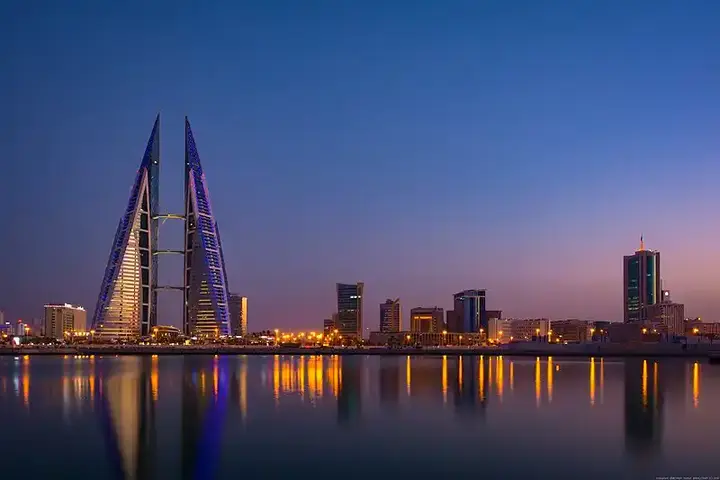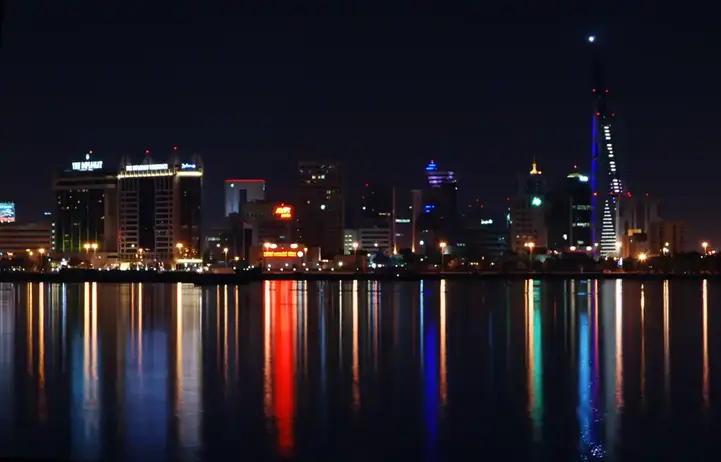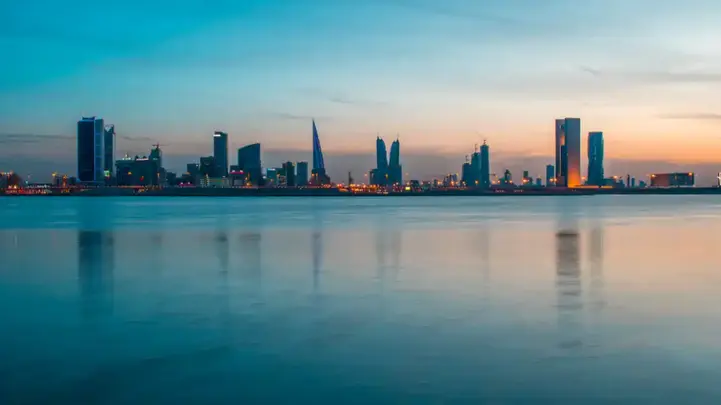









Manama: the capital of Bahrain throughout history from a fishing village to a cosmopolitan city

ADVERTISEMENT
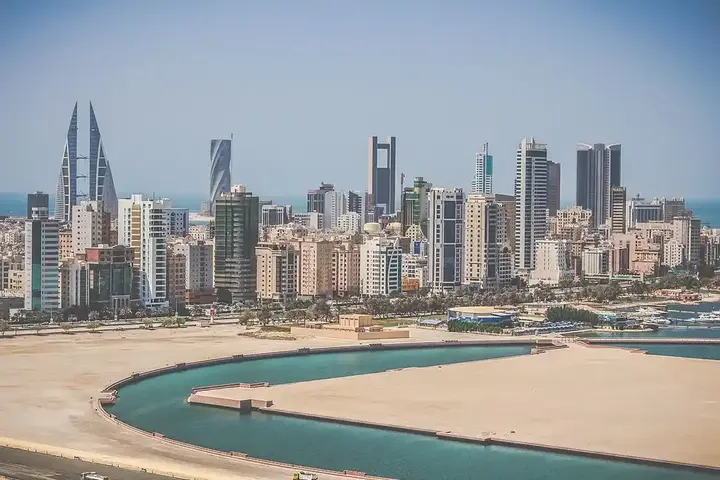
Located on the northeastern coast of Bahrain Island, Manama is the capital and largest city of the Kingdom of Bahrain. Manama is strategically located on the Arabian Gulf, making it an important commercial hub throughout history. Manama also enjoys a rich cultural and civilizational diversity, and a
ADVERTISEMENT
long political and civilizational history. In this article, we will discuss the most important stations of the political and cultural history of Manama.
1. The origin and development of Manama
الصورة عبر wikimedia
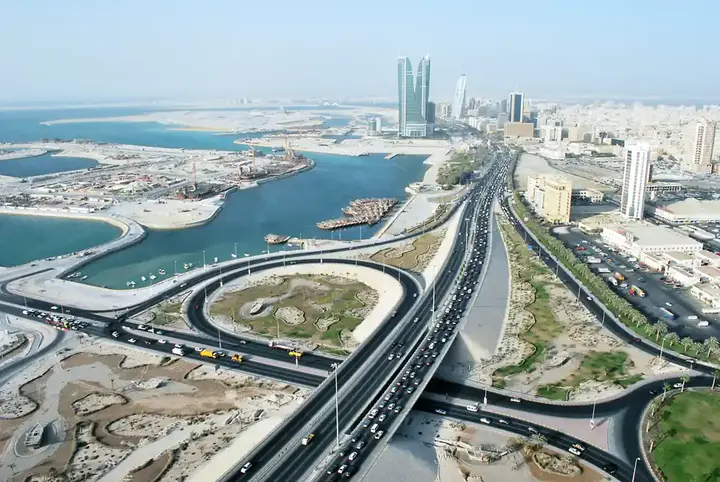
Manama dates back to the thirteenth century, when it was a small fishing and pearling village. Manama flourished during the fifteenth and sixteenth centuries and became an important trading center on the trade route between India and the Middle East. In 1783, Manama became the capital of Bahrain.
ADVERTISEMENT
The most important stages of Manama's development:
● Thirteenth century: Manama emerges as a fishing and pearling village.
● Fifteenth century: Manama flourished as a trading hub on the trade route between India and the Middle East.
● Sixteenth century: Bahrain Fort is founded by the Portuguese.
● Eighteenth century: Manama became the capital of Bahrain.
● Nineteenth century: Manama flourished as a regional trading center.
● Twentieth century: The discovery of oil in Bahrain, leading to a major economic transformation in Manama.
● Twenty-first century: Manama has become an important commercial, tourist and financial center in the region.
2. The most important historical events in Manama
الصورة عبر wikimedia
Manama has witnessed many important political events throughout history. In 1820, a treaty was signed between Britain and Bahrain, making Bahrain a British protectorate. In 1971, Bahrain gained independence from Britain, and Manama became the capital of the independent state.
ADVERTISEMENT
Manama played an important role in the establishment of the Kingdom of Bahrain. Manama was the center of the Bahraini national movement, from which many protests and demonstrations against British rule began. Manama was also a center of political and cultural activity in Bahrain.
1820: A treaty is signed between Britain and Bahrain, making Bahrain a British protectorate:
Before 1820, Bahrain was under the rule of the Al Khalifas, who took power in 1783. The Gulf Arab region was witnessing a conflict between regional powers, such as Britain, Portugal and the Ottomans. Britain was seeking to expand its influence in the region and ensure the security of maritime trade routes.
In January 1820, a treaty was signed between Britain and Bahrain. The treaty stipulated that Bahrain would become a British protectorate and be protected by Britain from any external attacks. The treaty also included clauses on trade and customs.
ADVERTISEMENT
The treaty transformed Bahrain into a British protectorate, leading to significant political, economic and social changes in Bahrain. Bahrain lost its sovereignty and was now under British rule. Bahrain's economy boomed due to trade with Britain. The introduction of British education led to cultural changes in Bahrain.
1919: Revolt against British rule in Bahrain:
After the signing of the Treaty of 1820, Britain's influence in Bahrain increased. This led to the discontent of some Bahrainis with Britain's control of their country. Resentment has intensified over Britain's policies, such as taxation of trade and customs.
In 1919, a revolt broke out against British rule in Bahrain. The revolution was led by Shaikh Isa bin Ali Al Khalifa. The rebels demanded political and economic reforms, and the abolition of the 1820 treaty.
ADVERTISEMENT
Britain suppressed the revolt using military force. Many rebels were arrested, and some were exiled abroad. The revolution did not succeed in achieving its goals.
1971: Bahrain gained independence from Britain:
After World War II, demands for independence in Bahrain increased. Protests against British rule intensified. In the sixties, Britain began to review its policy in the Gulf Arab region.
On 14 August 1971, Bahrain gained independence from Britain. Shaikh Isa bin Salman Al Khalifa became the first Emir of independent Bahrain.
The attainment of independence led to significant political, economic and social changes in Bahrain. Bahrain became a fully sovereign state. Bahrain has tended to develop its national economy. Bahrain has seen improvements in education, health and social services.
ADVERTISEMENT
1990: Iraq's invasion of Kuwait, leading to the Second Gulf War:
In August 1990, Iraq invaded Kuwait. This led to the Second Gulf War, in which Bahrain participated alongside the US-led international coalition.
Bahrain participated in the Second Gulf War by providing military bases to the international coalition. Bahrain also participated in air coalition operations against Iraq.
The Second Gulf War led to significant political, economic and social changes in Bahrain. Sectarian tensions have intensified in Bahrain. Bahrain has suffered an economic crisis due to a decline in foreign investment.
2011: Popular protests erupt in Bahrain:
In 2011, Bahrain was affected by the wave of popular protests known as the "Arab Spring". Bahrain was suffering from political, economic, and social problems, such as:
ADVERTISEMENT
• Lack of job opportunities
•Corruption
• Sectarian discrimination
On 14 February 2011, popular protests erupted in Bahrain. Protesters demanded political, economic and social reforms, such as:
• Constitutional reform
• Increased participation of the people in decision-making
• Fight against corruption
• End sectarian discrimination
Protests escalated in Bahrain, reaching a peak in March 2011. Protesters occupied the Pearl Roundabout, a central square in Manama.
3. Civilizational and cultural monuments
الصورة عبر wikimedia
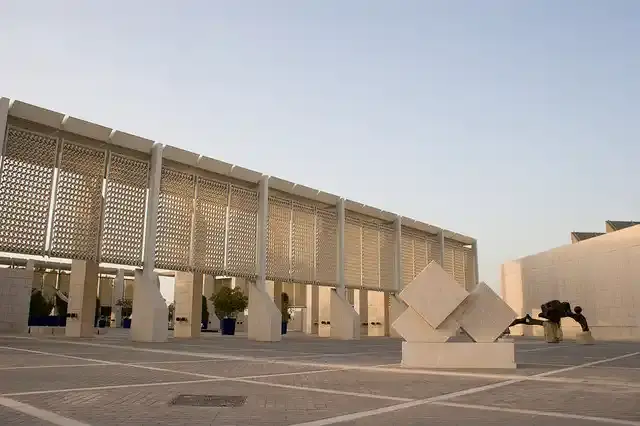
Manama is characterized by many civilizational and cultural landmarks, such as:
● Bahrain Fort: Located on the northern coast of Manama, it is a historical fortress that was founded by the Portuguese in the sixteenth century.
ADVERTISEMENT
● Al Fateh Grand Mosque: The largest mosque in Bahrain, built in 1988.
● Bahrain National Museum: Showcases Bahrain's history and culture from the Stone Age to the modern era.
● House of Quran Museum: displays a collection of rare Quranic manuscripts.
● House of the Qur'an: An Islamic cultural center that includes a library and a school for memorizing the Holy Quran.
● Shaikh Ebrahim bin Mohammed Al Khalifa Centre for Culture and Research: A cultural centre that includes a library, an art gallery and a lecture hall.
● Bahrain National Theatre: Displays various plays and cultural events.
● Manama Souk: A traditional market selling local produce and handicrafts.
● Manama Corniche: Beautiful waterfront along the coast of Manama.
ADVERTISEMENT
الصورة عبر a.alayam
Cultural events in Manama:
● Spring of Culture Festival: An annual cultural festival held in Bahrain, which includes many cultural and artistic events.
● Bahrain International Book Fair: An annual book fair held in Manama, which includes many Arab and international publishing houses.
● Bahrain International Music Festival: An annual music festival held in Manama, featuring many artists from around the world.
4. Manama is an economic hub
الصورة عبر wikimedia
Manama is an important economic center in the region. Manama has a thriving commercial and tourism sector, and there are many financial and banking institutions.
The most important economic sectors in Manama:
● Trade: Manama is an important commercial center in the region, where there are many companies and commercial establishments.
ADVERTISEMENT
● Tourism: Manama is an important tourist destination, as it has many hotels, restaurants, and tourist attractions.
● Financial Services: Manama has many financial and banking institutions, making it an important financial services hub in the region.
Manama plays an important role in the Bahraini economy. Manama is an important commercial, tourist, and financial hub, contributing significantly to Bahrain's GDP. Manama also provides job opportunities for many Bahraini nationals.
الصورة عبر unsplash
This was a journey through the history of Manama, the capital of Bahrain, which is an ancient historical city and an important political and economic center in the region. Manama is characterized by a rich cultural and civilizational diversity, and a long political and civilizational history. Manama has faced many political, economic and social challenges throughout history. Manama's future depends on its ability to solve these challenges and bring progress and prosperity to its people.
Tasnim Alia
ADVERTISEMENT
See This Colorful Reef Resident Before Climate Change Wipes It Out
ADVERTISEMENT
The rhythmic pulse of a diver's breathing resonates deep underwater, a gentle "gurgle-gurgle" marking time in a world where time seems suspended. The sea cradles its visitors, enveloping them in a blend of warmth and subtle pressure, as if each diver is wrapped in a lukewarm blanket of salt and
ADVERTISEMENT
mystery.
Photo by Rachel Hisko on Unsplash
Beneath these waters, a dance unfolds, subtle yet mesmerizing. A flash of orange—quick, elusive—streaks through fields of soft anemone tendrils. The clownfish, vivid against the fading hues of its coral home, appears in fragmented glimpses, its presence both certain and fleeting. One moment, it is a burst of color; the next, it vanishes into the shifting shadows of its marine neighborhood.
ADVERTISEMENT
These bright ambassadors of the sea weave through their anemone hosts with the grace of tiny acrobats, their bodies gliding effortlessly through a maze of tentacles. Each movement is a harmony of precision and elegance—the flutter of fins, the sway of their small bodies against the ocean's gentle push. Yet, hovering around them, an ominous stillness encroaches: the creeping whiteness of bleached coral, the pale ghost of an ecosystem under siege.
Photo by Ed Rush on Unsplash
In this realm, the clownfish’s home is a vibrant tapestry in slow decline. The coral, once a riot of color and life, displays signs of exhaustion. Interlaced structures of calcium carbonate, these coral edifices house countless small lives, each niche bustling with activity. Yet now, their brilliance dims, the once vivacious color palette beginning to mute into shades of lifelessness.
ADVERTISEMENT
The clownfish and its anemone form a bond as timeless as the waves themselves. But their relationship, rooted in the delicate balance of the ocean, now faces unprecedented challenges. Rising water temperatures and increasing acid levels disrupt this balance, threatening their symbiotic dance. Anemones suffer, their resilience faltering in the face of environmental change, their color akin to sugar dissolving into nothingness.
Diving deeper into this world, the sensation of water around you—warm, buoyant—becomes a conduit of sound. Subtle murmurs of life continue despite looming threats; the rustle of water over coral, the whisper of sand stirred by fin and current. Yet, there's an unnatural pause, a sinister punctuation in the natural rhythm. Some corals, stripped of their living colors, stand like spectral sentinels over a disappearing community.
ADVERTISEMENT
The scene demands a pause. The clownfish, persistent yet vulnerable, darts past again. Its orange vibrancy remains, but now it carries an air of urgency, its bright swirls a testament to resilience whilst foreshadowing potential absence. In the quiet moments, one might critique the lack of urgency, but here, the very act of being witness is a form of remembrance.
As the dive concludes, a last glance reveals the clownfish retreating into a coral crevice. Around it, an anemone nest is framed by a ghostly ring of white, the edges blurring like the once-bright watercolors of a painting washed by forgotten rains. Diver and fish part ways, the human's ascent marked by a deeper realization anchored in the heart, tinged with wonder and tempered by a creeping sadness. In this underwater world, vibrant yet fragile, color and life persist, even as they edge towards the brink of spectral obscurity.
Cemre Yildirim
ADVERTISEMENT
Ginkgo Trees: A Living Fossil Bridging Past and Present
ADVERTISEMENT
Ginkgo trees are one of the rare living fossils that connect the past with the present. These trees, planted in various places around the world, date back to prehistoric times and are among the oldest living trees on Earth. Thanks to their distinctive features and
ADVERTISEMENT
ability to survive for thousands of years, ginkgo trees have a profound impact on humanity and symbolize resilience and vitality.
1. History of Ginkgo Trees: A Journey Through Time
image from wal_172619 on pixabay
Considered among the oldest living trees on Earth, the fascinating story of ginkgo trees stretches across ages and history. It's a journey through time that takes us back to prehistoric eras when they flourished in the Eurasian continent. Since then, ginkgo trees have spread to various parts of the world, offering us the rare chance to explore the evolution of life on our planet and uncover the secrets of the past.
ADVERTISEMENT
Some preliminary research has found evidence that the first ginkgo plantations occurred in China around 270 million years ago, and since then, their reach has expanded to other regions of Asia, Europe, and North America. Ginkgo trees can live up to 3,000 years, making them witnesses to many historical events and environmental changes witnessed by our planet.
Ginkgo trees are of great importance in understanding the history of life on Earth. By studying the growth of annual rings in their trunks, we can extract valuable information about past climates and environments. We can also understand the impact of human activity on nature by examining the annual rings of trees that span thousands of years.
ADVERTISEMENT
The history of ginkgo trees reflects resilience and steadfastness in the face of transformations and changes. While civilizations and nations pass through various stages and changes, ginkgo trees remain standing, witnessing the world's events, and carrying stories within their trunks to tell us.
At the end of this thrilling time journey with ginkgo trees, we recognize the importance of preserving this living fossil and continuing to study its history and impact. Their resilience and ability to thrive through the ages represent symbols of hope and endurance in the face of the changes we face in the modern age.
2. Unique Traits of Ginkgo Trees: What Keeps Them Alive Today?
image from Pexels on pixabay
ADVERTISEMENT
Ginkgo trees are among the most astonishing and admired in the plant world. What enables them to remain alive today and possess the ability to survive for thousands of years? Let’s look at some unique traits that distinguish this living fossil.
Firstly, ginkgo trees have an amazing ability to adapt to different environments. They can grow in areas with cold and hot weather, under high atmospheric pressure, and even in alkaline soils. This means they can live in a variety of regions worldwide, from high mountains to rugged plains.
Secondly, ginkgo trees exhibit strength and resilience. They can grow in harsh conditions and withstand drought, frost, and strong winds. Additionally, they are resistant to diseases and pests, allowing them to remain long-lived and thriving.
ADVERTISEMENT
Thirdly, ginkgo trees possess a unique feature called "stress resistance," which means they can adapt to environmental changes by adjusting the chemical composition of their leaves and buds. Thanks to this characteristic, they can stay strong and active even in unfavorable conditions.
Fourthly, ginkgo trees have astonishing longevity. They can survive for thousands of years, making them witnesses to many of the world’s changes over time. In this way, ginkgo trees are truly ancient spirits that connect us to the history of the past.
When we consider these unique traits of ginkgo trees, we realize they are not just ordinary trees. They reflect nature's ability to endure and adapt and remind us of the importance of sustainability and resilience in our lives. This living fossil gives us hope and inspiration to face the challenges and changes in our rapidly changing world. It reminds us that endurance is the key to survival.
ADVERTISEMENT
3. Uses of Ginkgo Trees in Past and Present: From Medicine to Ornamentation
image from Gab-Rysia on pixabay
Ginkgo trees have a long history of varied uses, once considered among the essential medicinal herbs and an important source of natural remedies. Over the ages, trees and their various parts, including leaves, seeds, and bark, have been used to treat many ailments and health conditions.
The leaves of ginkgo trees were among the most used parts historically, utilized in making teas and herbal preparations designed to improve circulation and reduce body inflammation. They were also used to treat memory and enhance brain functions.
In addition to medical uses, ginkgo trees are also used for decoration and beautifying green spaces. Their unique leaf shape and vibrant green color make them a popular choice for gardens and parks. Ginkgo trees add a touch of natural beauty and elegance to landscapes.
ADVERTISEMENT
Although the use of ginkgo trees has slightly declined in modern times due to advancements in modern medicine and the availability of industrial drugs, they still hold an important place in complementary and alternative medicine. Ginkgolide, the effective extract found in ginkgo trees, is still used in many medications and supplements to enhance general health and prevent chronic diseases.
Ginkgo trees remain one of the natural treasures with multiple uses. They are beautiful to look at and bring a touch of nature to the surrounding environment while providing significant health benefits to people. Despite technological and scientific transformations, ginkgo trees continue to be a bridge between the past and present, reflecting their positive impact on humanity.
ADVERTISEMENT
4. Threats to Ginkgo Trees: What Future Awaits This Living Fossil?
image from HeungSoon on pixabay
Ginkgo trees, this rare living fossil, face numerous challenges threatening their future sustainability. Once considered one of the most widespread tree species during ancient geological eras, today they are considered endangered species. Studies indicate that various factors affect these ancient trees and pose potential risks.
One primary threat to ginkgo trees is the degradation of biodiversity and the loss of natural habitats necessary for these trees. Over the decades, the number of ginkgo trees has significantly decreased due to climate changes, land exploitation, and environmental destruction. This threat is prevalent in many countries worldwide where forests are cleared for agriculture or housing.
ADVERTISEMENT
Additionally, ginkgo trees face threats from diseases and pests. Certain diseases infect these trees, negatively affecting their health and growth. Furthermore, they suffer from insect attacks that eat the leaves and roots, weakening the trees and reducing their growth and flourishing capacity.
Moreover, ginkgo trees are threatened by human activities such as pollution and changes in wildlife systems. Environmental pollution and air and water pollution degrade soil quality, affecting tree growth and health. Moreover, the destruction of wildlife and their habitats reduces the available habitat area for ginkgo trees, threatening their sustainability.
Thus, the future prospects for ginkgo trees are concerning and uncertain. Preserving this living fossil requires global efforts to maintain their natural habitats and reduce the impacts of climate change and pollution. Nations and communities must act to protect these ancient trees and provide optimal environments for their growth and development. Sustaining ginkgo trees is crucial for conserving biological diversity and the natural legacy for future generations.
ADVERTISEMENT
5. Cultural Heritage of Ginkgo Trees: Should They Be Preserved?
image from wal_172619 on pixabay
Ginkgo trees are not only rare living fossils but also possess a rich cultural heritage that deserves preservation and respect. The story of these trees spans thousands of years, as they have been an integral part of the lives of different cultures around the world. So what is the cultural heritage of ginkgo trees, and why should we preserve them?
Ginkgo trees symbolize antiquity and history, possessing the ability to survive for thousands of years and witnessing many changes across the ages. These trees have seen the evolution of civilizations and environmental changes, which gives them significant cultural value. Ginkgo trees embody wisdom and resilience, hence the respect and admiration they receive from humans.
ADVERTISEMENT
Remarkably, ginkgo trees have held an important position in various cultures worldwide. In China, they are considered symbols of long life and spiritual strength. In Japan, the ginkgo tree has been portrayed in many artworks and temples, considered a symbol of craftsmanship and meticulous design. In ancient American culture, the ginkgo was deemed a sacred tree of wisdom and spiritual power.
However, ginkgo trees face many challenges threatening their sustainability and preservation of their valuable cultural heritage. These challenges include climate changes, illegal timber trade, and the degradation of the natural sites where they live. If we do not take actions to protect and maintain ginkgo trees, this valuable cultural heritage may gradually fade away.
ADVERTISEMENT
Thus, we must strive to preserve ginkgo trees and include them in environmental protection programs and restoration of historical sites. Nations and communities should share in the efforts to conserve this unique cultural heritage and ensure its sustainability for future generations. By doing so, we will continue to enjoy the beauty and symbolic strength of ginkgo trees, maintaining a deep connection between past and present.
image from morn_japan on pixabay
By delving into the history of ginkgo trees and discovering their ability to endure and recover, we can draw many lessons and inspirations for our daily lives. In this rapidly changing world, we need resilience and adaptability to changes and overcoming hardships. We hope that ginkgo trees continue to remind us of the importance of sustainability and flexibility in facing challenges.