Five of the strangest abandoned hospitals and sanatoriums around the world

When it comes to scary structures, few are more terrifying than abandoned hospitals and sanatoriums.
Show key points
- Abandoned hospitals and sanatoriums are widely regarded as some of the most terrifying structures due to their eerie history and decaying conditions.
- The Old Mental Hospital in Hong Kong, originally built in 1892 as medical staff quarters, later served as a psychiatric ward and now forms part of a community complex with its historic façade preserved.
- Known for its massive size and ominous past, the Trans-Allegheny Lunatic Asylum in West Virginia operated from the 19th century until 1994 and now hosts paranormal tours.
- ADVERTISEMENT
- North Wales Hospital in Denbigh, once a key facility for Welsh-speaking psychiatric patients, closed in 1995 and has suffered severe decay from abandonment.
- Poveglia Island near Venice, Italy, is infamous for its use as a quarantine zone and mental institution, and it remains closed to the public amid ghost stories and urban legends.
- Moscow’s Khovrino Hospital Complex, a giant brutalist structure nicknamed the "umbrella," was never completed and became a dangerous site before being demolished in 201
- Many of these abandoned medical facilities are inaccessible to the public, prompting ghost hunters and the curious to rely on photos and stories to explore their haunted reputations.
Most psychiatric hospitals built in the eighteenth, nineteenth, and early twentieth centuries — formerly known simply as psychiatric institutions — no longer operate. Many closed in the second half of the twentieth century as medications for mental illness improved and care shifted away from long-term institutionalization toward community-based models.
Regardless of why their corridors are dark, one worrying fact about these empty medical facilities is that most are closed to the public. So we did the next best thing and compiled photos of some of the world’s most feared abandoned hospitals and sanatoriums.
Recommend
Old Mental Hospital - Location: Hong Kong
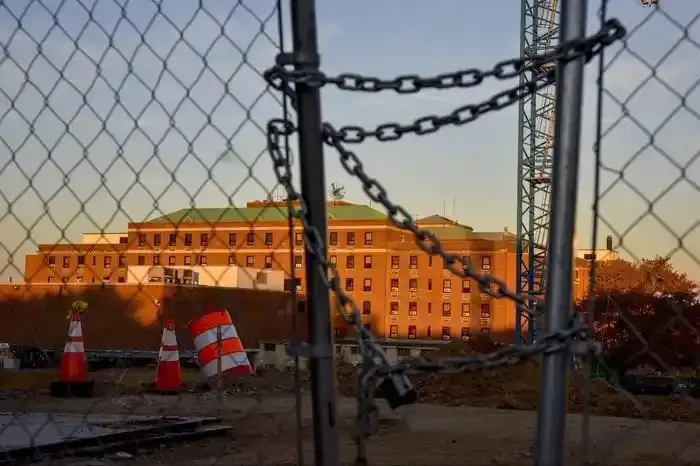
This strange, now-abandoned hospital in Hong Kong's western district, known today as the Old Mental Hospital, has gone through many phases. Completed in 1892, the L-shaped building was originally constructed as the headquarters for medical staff at the Civil Government Hospital. Its rustic granite blocks, wide porch, and ornate roofline and parapets contrast with its later use as a psychiatric ward, which it remained until 1961 when Castle Peak Hospital opened.
The Old Mental Hospital then served as an outpatient psychiatric treatment center for the next ten years. In 1998, work began to transform it into the Sai Ying Pun Community Complex. Although most of the complex is new, the original granite façade still stands, and the building was declared a monument in 2015.
Trans-Allegheny Lunatic Asylum - Location: Weston, West Virginia
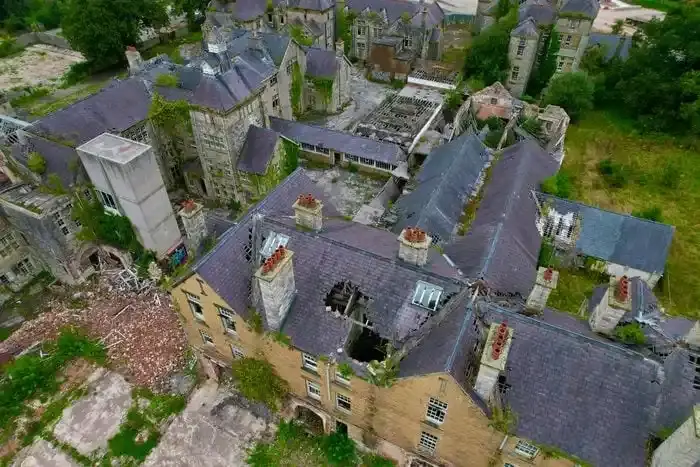
One of the most visited abandoned sanatoriums in the United States is the Trans-Allegheny Lunatic Asylum — also known as Weston State Hospital or, more ominously, the West Virginia Insane Hospital. Built between 1858 and 1881, the Trans-Allegheny is often described as the largest hand-cut stone building in North America and the second largest in the world after the Kremlin. Whatever its ranking, the hospital is enormous, covering nine acres of grounds under a three-and-a-half-acre roof.
Like most psychiatric hospitals of its era, the Trans-Allegheny was intended to provide high-quality mental health care in a state-of-the-art facility. By the 1950s, however, the building had become overcrowded — at one point housing nearly 2,400 patients in a facility designed for 250 — and conditions deteriorated until it closed in 1994. Its cavernous halls are now open for tours and paranormal investigations, so it is not surprising that many rumors and ghost stories surround the asylum.
North Wales Hospital - Location: Denbigh, Denbighshire, Wales
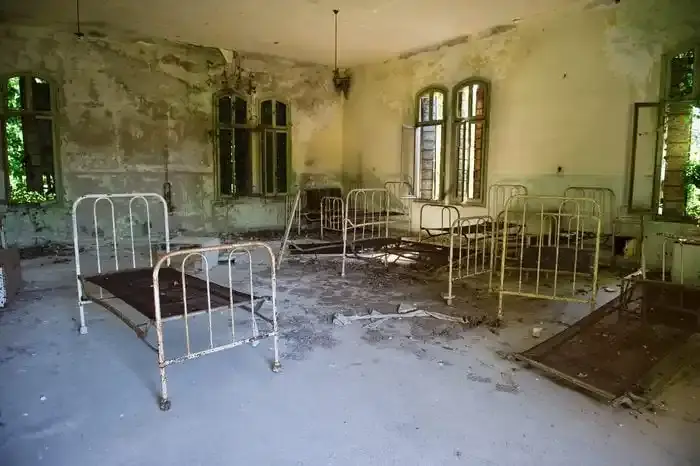
Built between 1844 and 1848, the North Wales Hospital opened as a facility for Welsh-speaking people with mental illnesses. Despite three expansions, the hospital was constantly overcrowded, peaking at more than 1,500 patients in 1948. Changes in the treatment of mental illness — especially the use of medication — led to dwindling patient numbers, and the hospital announced its closure in 1987.
Unfortunately, North Wales Hospital has been abandoned since it closed in 1995, and years of neglect, vandalism, and theft have left it in ruins. The local government hopes to restore the structures, as the hospital is an exceptionally remarkable and pioneering example of early Victorian asylum architecture. For now, the abandoned buildings and grounds are closed to the public, but you can still view images of creepy abandoned houses and derelict sites online.
Poveglia Island - Location: Venice, Italy
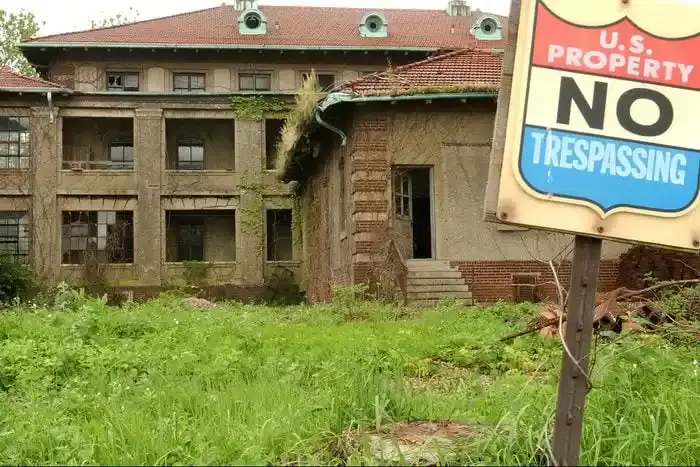
Poveglia Island sits in the Venetian Lagoon, a short boat ride from St. Mark's Square. Unlike that busy tourist area, the island is eerily empty. Thanks to its dark history, Poveglia has a reputation as one of the most haunted places in Europe and is a frequent stop for paranormal investigators. Its links to disease date back to the eighteenth and nineteenth centuries, when the island was used as a quarantine station for ships bound for Venice.
In 1922, the island's abandoned hospitals and other buildings were converted into a shelter. A nursing home was the last medical facility to open on the island, and it closed in 1968. Poveglia has been uninhabited since and is not open to the public. While many rumors and ghost stories about the island have been debunked, a number of urban legends persist.
Khovrino Hospital Complex - Location: Moscow, Russia
Fans of brutalist architecture may recognize the massive Khovrino hospital complex in northern Moscow. Construction of the facility, nicknamed the "umbrella," began in 1980 but ran into a variety of problems that stalled progress for years. The fact that the compound looks like a warning sign from above did little to help its fate, nor did reports that many people died after falling from the 11-story building.
The dismal complex was demolished in 2018, making way for a new apartment building. For more eerie abandoned sites, take a look at images of majestic, deserted churches and other urban monuments.