Meet the Ocean's Top Predator: Great Killer Whale

There is no doubt that life in the oceans includes a variety of astonishing—and sometimes terrifying—creatures. Among them is the great killer whale, which occupies the highest position in the marine food chain. It is a creature of both strength and danger, nicknamed the upper predatory whale, and we should get to know this marine giant more deeply.
Show key points
- The great killer whale, also known as the top predator of the oceans, has existed for millions of years and plays a crucial role in maintaining marine ecological balance.
- Renowned for its immense power and size, the great killer whale can grow up to 30 meters long and weigh over 180 tons, making it one of the largest living creatures on Earth.
- Despite its fearsome name, it primarily feeds on other marine animals like fish, octopuses, and even whales, thanks to its sharp teeth and powerful hunting techniques.
- ADVERTISEMENT
- By employing advanced strategies such as stealth, group collaboration, and the use of tools, the killer whale showcases incredible intelligence in hunting.
- Great killer whales inhabit cold and temperate waters across the Pacific, Atlantic, and Indian Oceans, living in complex social groups called tribes.
- Today, they face various threats including climate change, pollution, poaching, ship collisions, and the spread of diseases, all posing serious risks to their survival.
- Preserving this magnificent creature requires global cooperation, as it symbolizes not only strength but also the intricate beauty and diversity of marine life.
1. History of the Great Killer Whale: From ancient times until today.
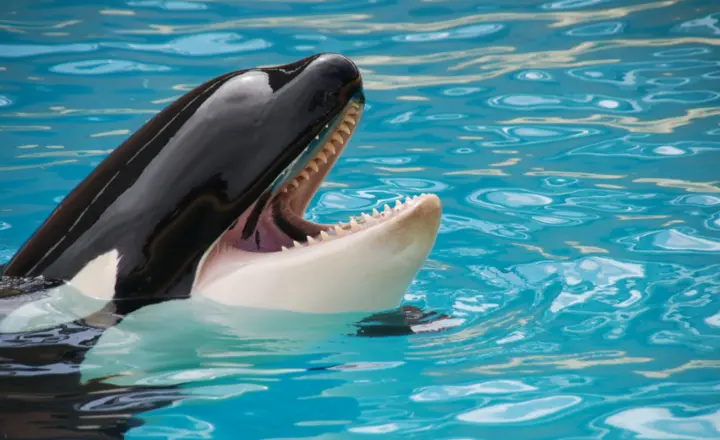
The great killer whale is one of the most impressive and fearsome creatures in the oceans. This giant marine animal sits at the top of the food chain and therefore represents one of the summits of the oceanic food web. The great killer whale is notable for its immense strength and large size, and is regarded as one of the largest living creatures on Earth.
Recommend
The history of the great killer whale stretches back to primeval times; it is believed to have first appeared millions of years ago. Over the ages the great killer whale has survived and adapted to changes in the marine environment. This species is found in all the world’s oceans, and several different forms have been identified.
One of the most striking features of the great killer whale is its enormous power. It has strength beyond ordinary imagination and can easily pursue and attack a range of sea creatures. It has powerful, striking jaws that it uses to hunt its prey in strategic, decisive ways.
In addition to its strength, the great killer whale has a varied diet. Despite its name, it is not generally dangerous to humans; its main prey are other whales and large fish. This marine animal is a key component of the ocean food chain, and its presence is essential to maintaining balance in the marine ecosystem.
Throughout history the great killer whale has faced numerous threats to its survival, including overfishing and ocean pollution. However, awareness of the importance of protecting this magnificent creature is growing. We must all unite and work together to safeguard the great killer whale and protect its marine environment from damage caused by human activity.
In the end, the great killer whale is not just a marine animal but a symbol of nature’s power and diversity. We must preserve this unique organism and maintain the balance of the oceans to ensure the continuity of life on our planet.
2. The unique features of the great killer whale: power beyond imagination.
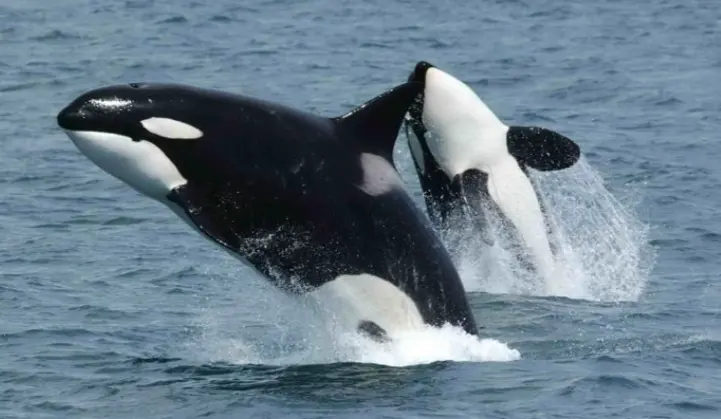
The great killer whale is considered one of the most exciting and terrifying creatures in the oceans. It has a host of unique traits that make it one of the most powerful marine animals on Earth. Here are some of the most notable features of this marine giant:
1. Enormous size: The great killer whale is described as the largest animal on Earth. It can reach a length of about 30 meters and a weight exceeding 180 tons. It is a being so huge it astonishes the mind.
2. Powerful jaws: The jaws of the great killer whale are among the strongest in the animal kingdom. Its massive jaws have the strength to grasp and tear apart prey with ease.
3. Sharp teeth: The great killer whale bears sharp, long teeth up to about 10 centimeters. These teeth are powerful hunting tools, used to subdue and rip apart prey underwater.
4. Advanced intelligence: Despite its brutality, the great killer whale is considered one of the most intelligent sea creatures. This intelligence allows it to read its environment cleverly and use advanced hunting tactics for survival.
5. Tremendous muscular strength: The great killer whale is one of the strongest marine animals, with powerful muscles that enable it to swim at speeds up to 35 miles per hour and to launch itself high above the water’s surface.
6. Complex social behavior: The great killer whale lives in complex social groups called herds. These herds, made up of several individuals and males, cooperate in hunting, breeding and protection.
With these unique and striking features, it is no wonder the great killer whale is at the top of the marine food chain and a symbol of the oceans’ strength and ecological importance. It is a mysterious and fascinating creature that deserves recognition and protection to maintain the balance of the marine ecosystem.
3. Multi-diet: What does the great killer whale eat?
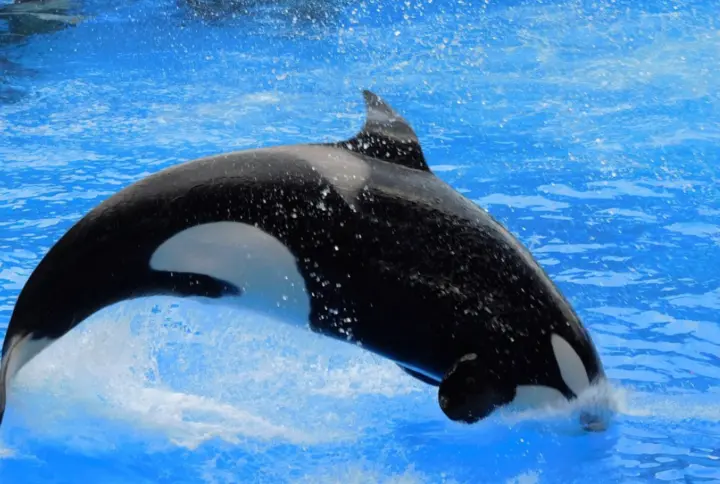
The great killer whale is an extraordinary marine creature with a varied diet. It feeds on a wide range of marine life, from small fish to large animals such as whales and octopuses. Its diet depends on the rich availability of prey in its marine habitat.
The great killer whale feeds mainly on fish and mollusks such as octopus and large fish. Thanks to its great size and its ability to swim at high speed, the great killer whale can catch its prey easily. Interestingly, it uses elaborate hunting tactics, employing the power of its huge body and strong tail to overpower prey so it can be devoured.
In addition, the great killer whale has sharp, strong teeth that can hold and tear prey. Its efficient digestive system allows it to process large amounts of meat quickly and effectively. The great killer whale is estimated to consume up to a ton of food in a day, making it one of the hungriest creatures in the ocean.
The great killer whale’s ability to follow a varied diet is one of the key reasons for its success as a top predator. Its reliance on diverse food sources reflects the balance of the ocean ecosystem and the importance of preserving marine biodiversity and protecting this remarkable creature in its environment.
4. Skilled Hunter: Great killer whale hunting tactics.
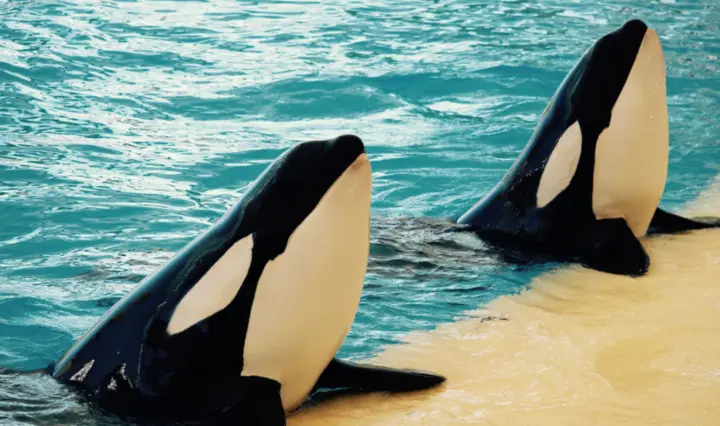
The great killer whale is regarded as one of the most intelligent and skilled hunters in the sea. It uses a range of tactics and abilities to obtain food and ensure its survival in the marine food chain. Below are some of the great killer whale’s hunting techniques.
First. Stealth hunting: The great killer whale relies on its ability to approach prey quietly and without being noticed. It swims carefully underwater, using its dark coloring to blend into the surroundings and close in on prey undetected.
Second. Group collaboration: The great killer whale is notable for its cooperative hunting. Individuals in the same area share fishing duties, exchange signals and coordinate to secure successful catches and efficient access to food.
Third. Strategic waiting: The great killer whale relies on patience and strategic waiting to reach its prey. It can remain in the water for long periods until it finds the right moment and the best opportunity to attack suddenly.
Fourth. Rapid attack: When the time is right, the great killer whale can swim at astounding speed toward its prey. It dives and then propels itself forcefully to strike large marine animals, such as sea snakes and dolphins.
Fifth. Smart use of tools: Some researchers suggest the great killer whale uses tools to aid hunting. It has been observed using birds to help detect schools of fish in the area, then taking advantage of their activity to locate and attack prey.
Sixth. Adaptability: The great killer whale’s ability to adapt to different environmental conditions is one of its most important hunting skills. It inhabits a variety of oceans and seas and employs a range of tactics and strategies to catch prey successfully.
With these remarkable skills, the great killer whale remains a masterful hunter. Thanks to its intelligence and adaptability, it survives and maintains its place in the marine food chain despite the many challenges posed by a changing marine environment.
5. Species distribution and living environment: where does the great killer whale live?
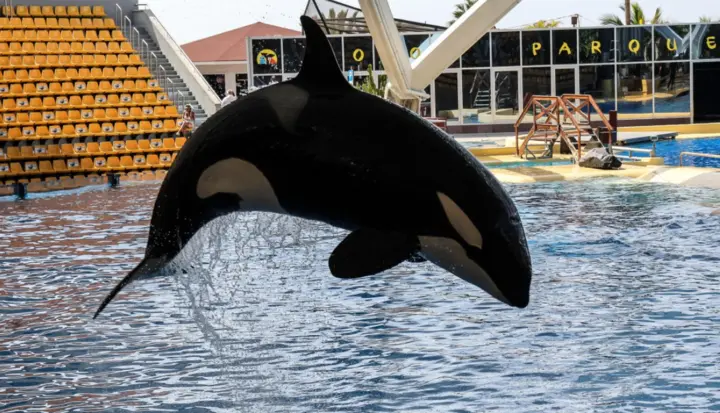
The great killer whale lives in cold and temperate oceans around the world, including the Pacific, Atlantic and Indian Oceans. It can be found in coastal waters as well as in the deep ocean, making it one of the most widely seen creatures in the seas.
In terms of geographic distribution, the great killer whale occurs in many marine regions worldwide, including the North and South Pacific, the Atlantic and the Indian Oceans. Distribution is influenced by factors such as water temperature, food availability and ocean topography. The great killer whale can be found in coastal waters and hundreds of miles from shore.
Although it appears in several regions, the actual distribution of the great killer whale varies among different subspecies. The article refers to two main types of great killer whale, the Atlantic (Orcinus orca orca) and the North Atlantic (Orcinus orca durchi). The Atlantic form is thought to be found mainly in the Atlantic Ocean, while the North Atlantic form is said to occur in the North Pacific Ocean. The text also mentions two other groups known as the West Coast and East Coast, each living in various coastal areas of the world.
Great killer whales live in social groups called tribes or families. These tribes can include up to 40 individuals and are closely bonded. They usually travel across the oceans in search of food and breeding grounds, avoiding areas with scarce food and places where competition from other tribes is high.
In short, the great killer whale is distributed across cold and temperate oceans worldwide and can be found in both coastal and deep-ocean areas. There is variation in subspecies distribution across different oceans. Killer whales live in social groups called tribes, and these tribes move across the oceans in search of food and breeding opportunities.
6. Future threats: Is the Great Killer Whale at Risk of extinction?
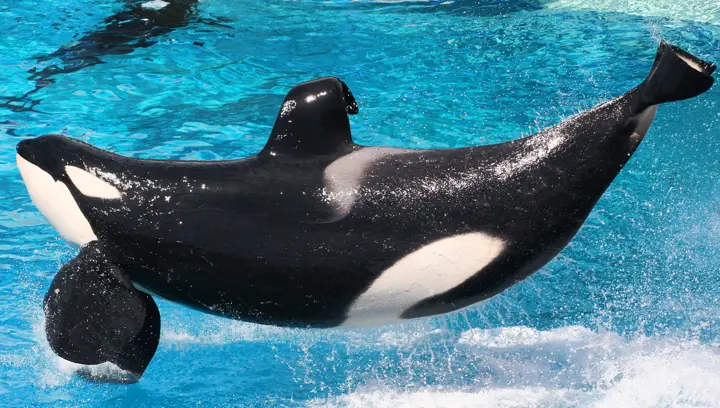
First. Climate change and ocean warming: Climate change and ocean warming are among the greatest threats facing the great killer whale. Rising water temperatures lead to changes in the oceans’ food web and affect the organisms that form the base of their prey. Climate change is also causing sea-level rise and the loss of coastal habitats where great killer whales breed and live.
Second. Marine pollution: Marine pollution is another serious threat. This includes oil spills, plastic waste and industrial and agricultural pollutants that contaminate the seas. The great killer whale is directly affected when it inhales or consumes contaminated prey.
Third. Poaching: With rising demand for products derived from great killer whales—such as ivory, whale oil and items used in traditional medicines—poaching of this valuable animal is increasing. Poaching weakens populations and can push numbers toward extinction.
Fourth. Collisions with ships: Collisions with vessels pose a real danger. A whale can suffer serious injury or be killed when struck by large, fast-moving ships.
Fifth. Spread of diseases and epidemics: As global contact and movement increase among whale populations, diseases and epidemics can spread between individuals. Diseases such as poxvirus and morbillivirus are mentioned as significant threats to great killer whales.
Addressing these future challenges requires global cooperation to protect great killer whales and provide them with a safe, sustainable environment. We must work together to preserve marine biodiversity and ensure the survival of this magnificent creature in the oceans for future generations.
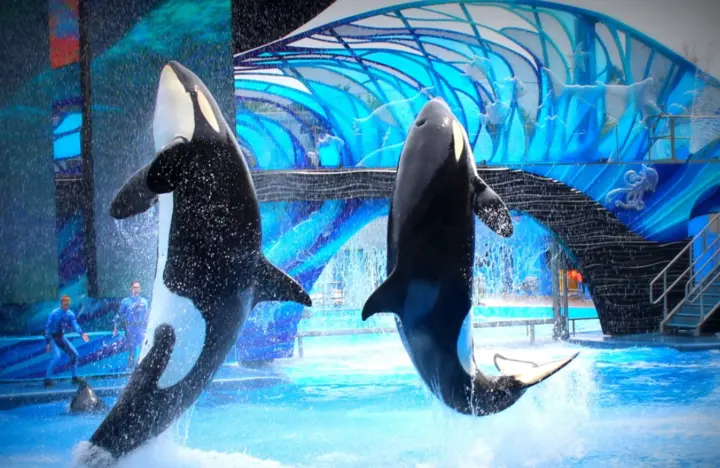
In conclusion, this journey to discover the great killer whale shows that this top predator is a true masterpiece of nature. The great killer whale is not only portrayed as the largest and most powerful animal in the oceans but also as one that possesses intelligence and remarkable hunting tactics. However, it faces serious challenges to its survival because of human threats and climate change. Therefore, protecting this creature should be a priority to preserve marine biodiversity for future generations. It is not just an animal, but a sign of nature’s beauty, diversity and boundless power.