Unveiling the Origins and Distinctive Appearance of the Abyssinian Cat

Show key points
- The Abyssinian cat originates from the Ethiopian plateau, historically known as Abyssinia, and may have even accompanied the ancient Egyptian pharaohs.
- This breed is celebrated for its elegant, slender body, triangular head, and large expressive eyes that enhance its graceful appearance.
- The Abyssinian cat's fur is soft, dense, and naturally shiny, coming in various unique color patterns like brown, red, and golden-orange that make each cat visually distinct.
- ADVERTISEMENT
- Its personality evolves over time from playful and curious in youth to calm and affectionate in maturity, offering companionship through all life stages.
- Caring for an Abyssinian requires attention to its active lifestyle, including engaging toys, training, grooming, and a balanced diet.
- The breed gained international recognition and popularity in the 19th and 20th centuries after being showcased at cat fairs in Europe and North America.
- With a rich cultural heritage and captivating looks, the Abyssinian cat continues to be a favorite among cat enthusiasts seeking a loyal and intelligent pet.
Abyssinian cats possess a unique beauty and distinct features that have won them many admirers. But where did this breed originate, and what sets its appearance apart? In this article we explore the origins of the Abyssinian cat and examine its striking looks.
The history of the Abyssinian cat breed
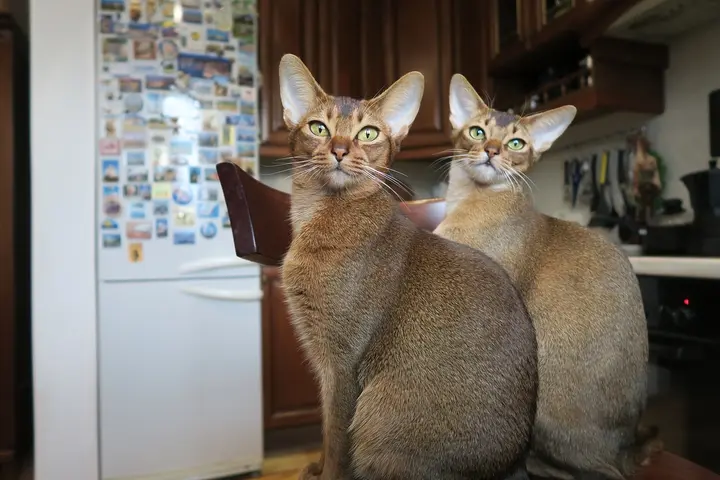
The origins of the Abyssinian cat trace back to the Ethiopian highlands—historically known as Abyssinia—located in northeast Africa. This elegant breed likely predates the Middle Ages and is believed to have been depicted alongside the pharaohs of ancient Egypt.
In the early decades of the twentieth century, Abyssinians were still considered rare. Over time the breed gained popularity, especially after appearing at cat shows in Europe and North America during the twentieth century.
Recommend
Abyssinian cats are documented in numerous ancient inscriptions and paintings. Many cultures in the region celebrated and revered these cats. They were noted for their short, dark brown coats, distinct facial features, slender bodies and striking eye markings.
During the nineteenth century some Abyssinians were brought to Europe and used in crossbreeding, which helped increase their numbers and spread them across the continent and beyond. Since then, the Abyssinian has become a favorite among cat lovers for its natural beauty and lively personality.
The shape of the Abyssinian cat
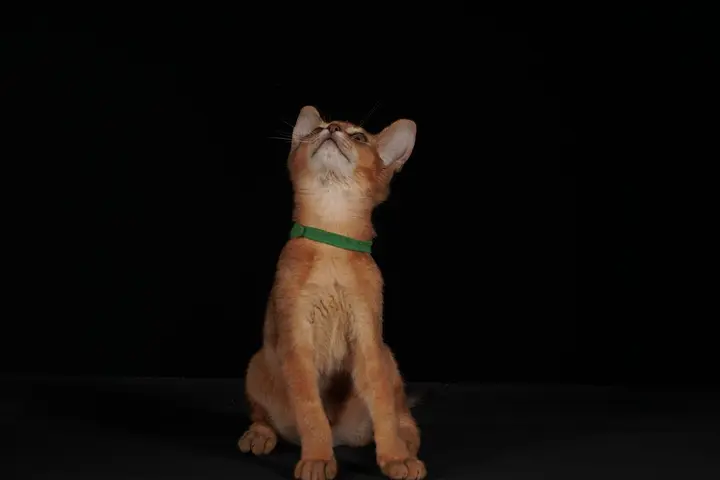
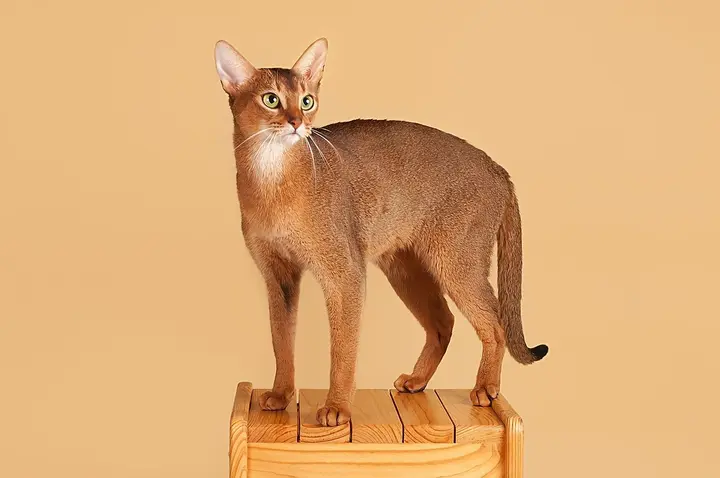
The Abyssinian is known for an elegant, athletic silhouette that combines agility with grace. They have a long, slim, well-toned body with strong muscles and an alert carriage.
The head is attractively wedge-shaped, with large, alert ears that enhance the breed's refined look. Their wide eyes give them an intelligent, keen expression, and dark rims around the eyes and lips add distinctive facial detail.
Abyssinians have a slender, flexible neck that allows smooth, fluid head movements. This blends into a long, lean torso that is muscular yet graceful, contributing to their speed and agility.
The tail is long and tapering, complementing the cat’s overall balance and elegant appearance as it moves.
Their coat is notable for its natural sheen and soft texture. Coat color varies between individuals, but it is generally a warm brown or lighter brown tone. The short, fine fur lies close to the body and emphasizes the cat’s lithe form.
The Abyssinian’s form combines exceptional beauty with striking proportions, making it one of the most visually appealing cat breeds. If you want a cat with a distinctive, graceful appearance, the Abyssinian is an excellent choice.
The distinctive colors that distinguish the Abyssinian cat
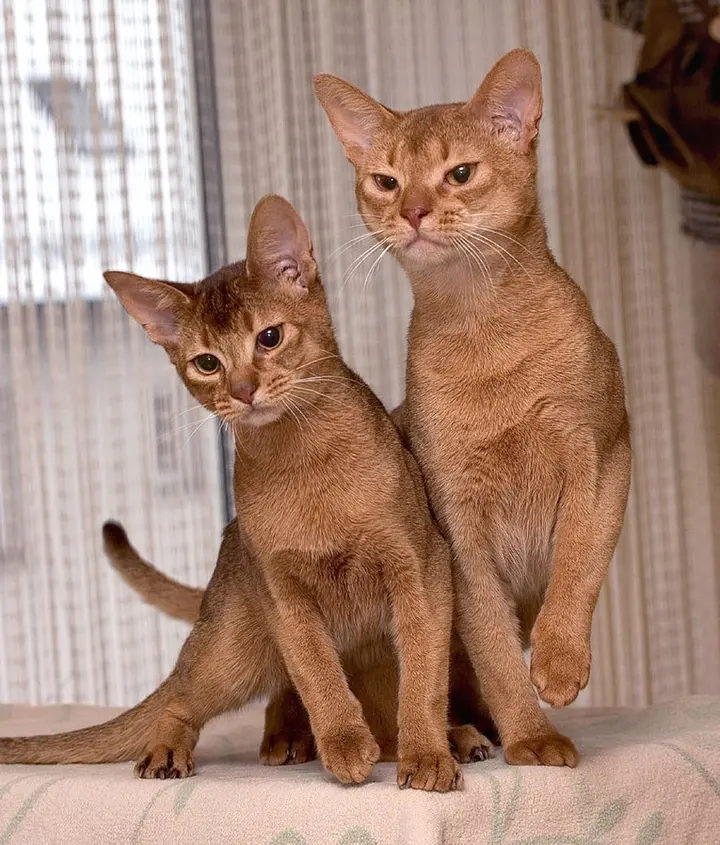
The coat colors of the Abyssinian are a central part of the breed’s appeal. This breed is prized for the variety and subtlety of its coat colors, which give each cat a distinct look.
Typically an Abyssinian’s coat shows a warm, light brown base with darker ticking or banding. Their fur often has a glossy, golden-orange sheen that gives the coat a vibrant appearance.
Abyssinians can be found in several color variations, including brown, blue-gray, ruddy (reddish), cream, and darker brown tones. These colors appear naturally across the body, creating a delicate, detailed pattern. The classic Abyssinian often carries darker coloration along the back and tail, with lighter tones on the sides and parts of the face.
Their eyes are another striking feature: large and bright, ranging from green to amber, and sometimes with blue tones, which enhances their expressive appearance.
Thanks to this range of colors, an Abyssinian can look like a living painting—warm, lively, and eye-catching. They are not an ordinary cat; they have a distinctive presence that draws attention wherever they go.
The unique texture of the Abyssinian cat fur
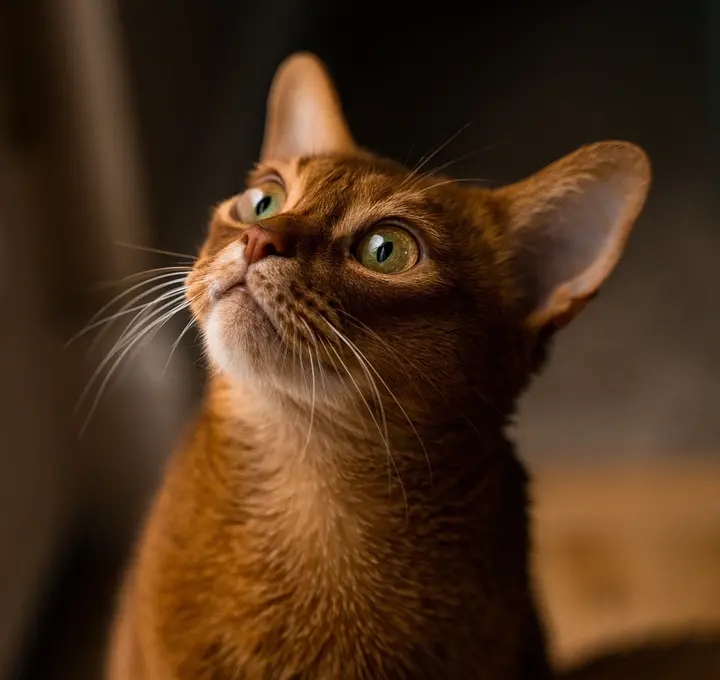
One of the most distinctive traits of the Abyssinian is its coat texture. Their fur is soft and dense, giving the body a sleek, attractive look. The coat consists of fine, resilient hairs that lie evenly over the body.
When you stroke an Abyssinian’s coat, you notice its softness. Lighter-colored coats can feel particularly fine, while some darker, brownish coats may feel a bit coarser. Compared with many other breeds, Abyssinians often have a dense, close-lying coat that adds to their elegant appearance. Fur length and texture can change subtly with age.
The Abyssinian’s coat also acts as a natural barrier against dirt and debris, which is useful for active cats that enjoy exploring outdoors.
The development of the mood of the Abyssinian cat
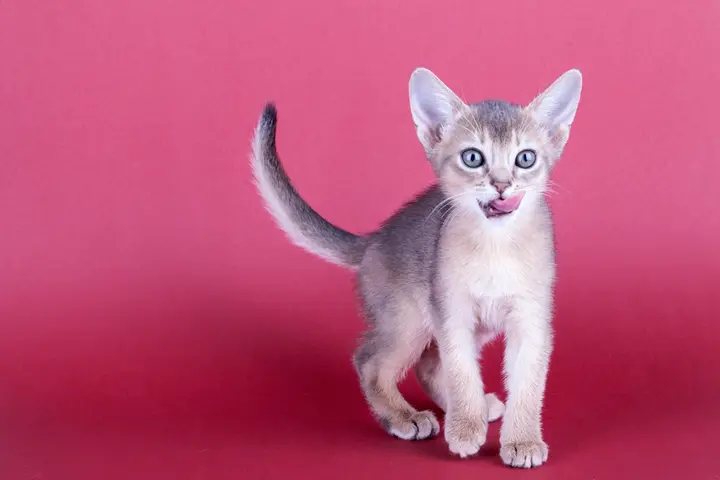
The Abyssinian is known for a lively, engaging temperament that develops in clear stages. They combine energy, loyalty, and curiosity, making them entertaining and affectionate companions. Their temperament typically develops in three stages:
1. Active childhood: As kittens, Abyssinians are playful and inquisitive. They explore their surroundings and learn by interacting with people and objects. Watching them climb, jump and play is a delight for owners.
2. Peaceful adolescence: As they grow, Abyssinians often become calmer and more settled. They enjoy resting and adapting to changes around them while still retaining a love of play and interaction with their owners.
3. Balanced maturity: In adulthood they tend to be steady and composed, while keeping some of their youthful curiosity and energy. Mature Abyssinians are confident in familiar surroundings and are affectionate companions to their families.
Overall, the Abyssinian’s temperament evolves from lively curiosity in youth to calm reliability in adulthood, making the breed both entertaining and companionable for lucky owners.
Caring for the unique Abyssinian cat
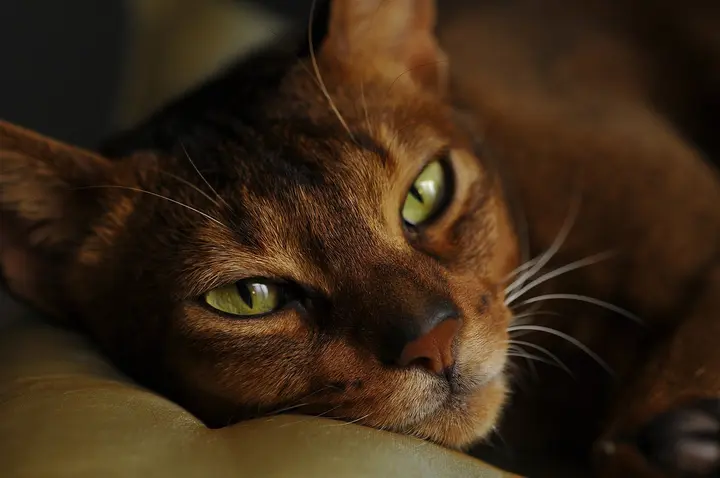
Abyssinians are active and independent, so caring for one requires attention and understanding. Below are key points to consider when caring for this breed:
1. Provide a stimulating environment: Abyssinians need outlets for both physical and mental activity. Offer toys, climbing structures and interactive play to keep them engaged.
2. Training and guidance: Abyssinians can learn simple commands and enjoy interactive activities. Use positive reinforcement and rewards to encourage good behavior.
3. Coat care: Their coat is soft and glossy, so regular brushing with a soft brush will remove loose hairs and keep it healthy.
4. Nail care: Trim nails regularly to protect furniture and people. Use proper pet nail clippers and avoid cutting the sensitive quick beneath the nail.
5. Balanced nutrition: Feed a complete, balanced diet that provides adequate protein, fats, vitamins and minerals. Consult your veterinarian for specific feeding recommendations.
Following these guidelines will help ensure your Abyssinian stays healthy and comfortable. With attention and affection, an Abyssinian can be a devoted companion for many years.
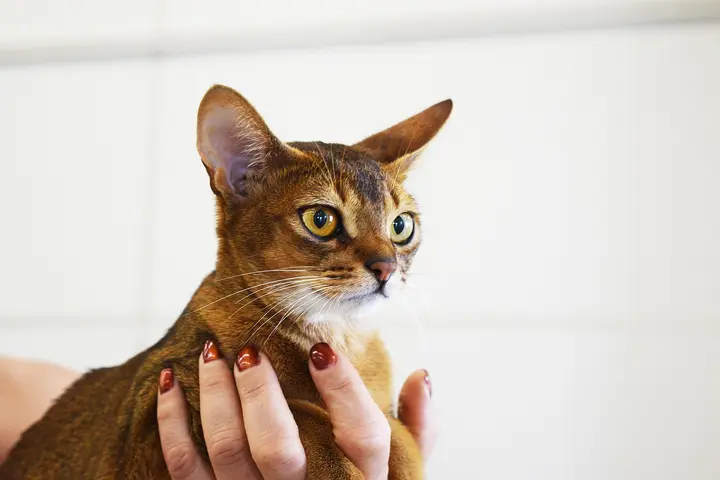
The Abyssinian is one of the most striking and beautiful cat breeds. Its long history and distinctive features have made it a favorite among cat lovers worldwide. By understanding its origins and characteristic appearance, we can set aside myths and appreciate the true beauty of this breed. With proper care and attention, an Abyssinian becomes a remarkable and beloved companion for anyone who prefers elegant, intelligent pets.